Korva is a scroll of the internet’s best ideas.
Tea was a vegetable first

From food to drink
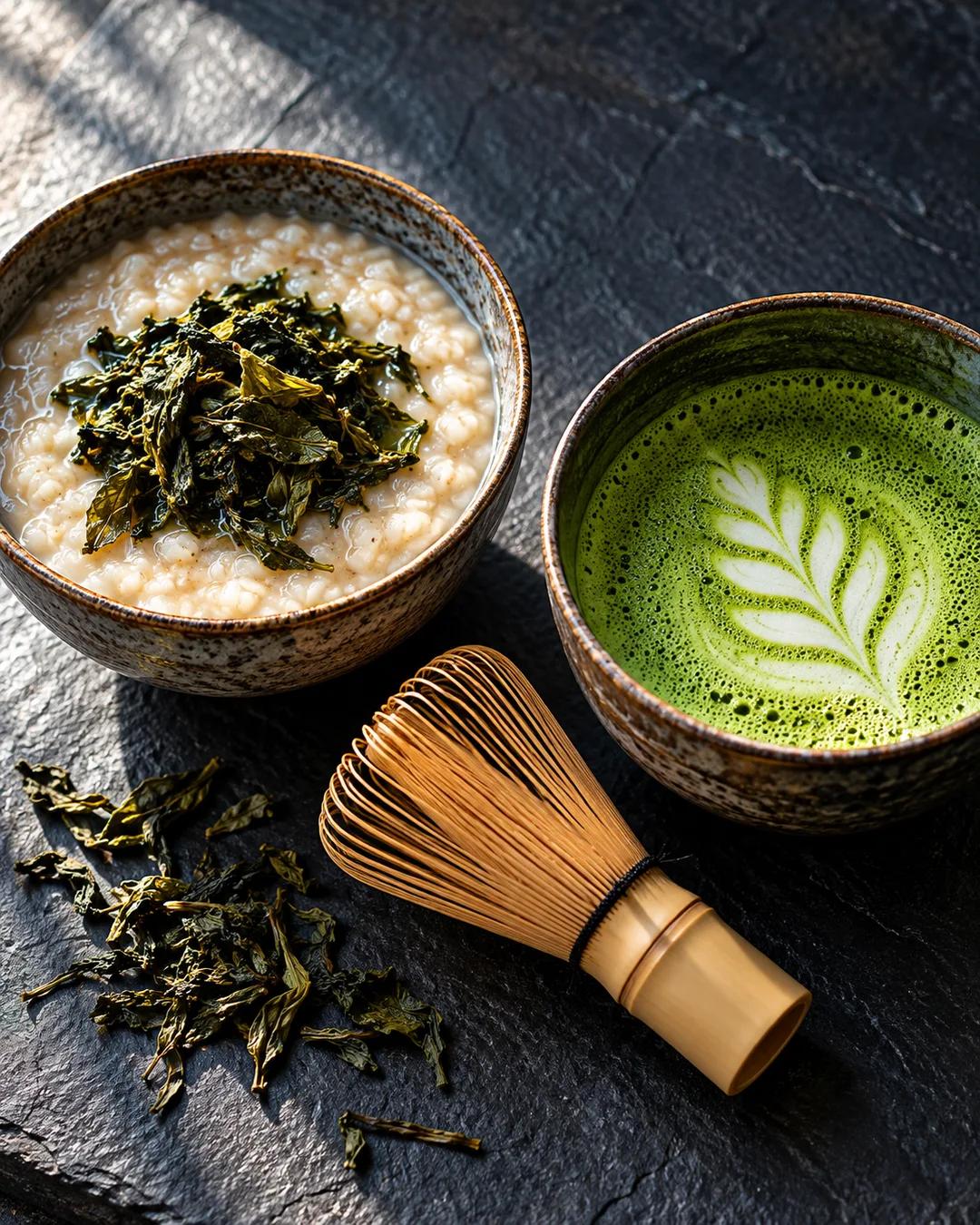
Tea only shifted from food to drink 1,500 years ago, when people realized that a combination of heat and moisture could create a complex and varied taste out of the leafy green. After hundreds of years of variations in preparation, the standard became to heat the tea, pack it into portable cakes, grind it into powder, and mix it with hot water. The beverage was called muo cha, or matcha.
Matcha and tea culture
Matcha became so popular that a distinct Chinese tea culture emerged. Tea was the subject of books and poetry, the favorite drink of emperors, and a medium for artists, who drew extravagant pictures in the foam of the tea, very much like the espresso art in coffee shops today.
Japan and loose leaf
In the 9th century, during the Tang Dynasty, a Japanese monk brought the first tea plant to Japan, where rituals developed that led to the Japanese tea ceremony. Then in the 14th century, during the Ming Dynasty, the Chinese emperor shifted the standard from tea pressed into cakes to loose leaf tea.
How do heat and moisture shape tea's flavor?
Fresh tea leaves hold enzymes that brown the leaf when it is bruised or left to wither, the same reaction that browns a cut apple. Heating the leaves with steam or in a hot pan stops that reaction and keeps them green. Letting oxidation run builds darker, richer flavors, and the leaves turn brown to black. Chinese tea makers learned to control the timing, which is why one plant yields teas ranging from grassy to malty.
Why was tea pressed into cakes?
Cakes were compact, dried to last, and easy to pack onto mules and boats. Pressed tea traveled the Tea Horse Road from Yunnan into Tibet, where it was traded for horses. In parts of Tibet, Mongolia, and Siberia, bricks of pressed tea served as currency into the twentieth century. Buyers broke or shaved pieces from the brick to boil.
How did Japan end up with the tea ceremony?
A later monk named Eisai returned from China in 1191 with tea seeds and Zen Buddhist practices, including the whisked powdered tea of the Song Dynasty. Zen monasteries adopted tea to help monks stay alert through long meditation sessions. In the 1500s, the tea master Sen no Rikyu refined the ritual into the form known as chanoyu. Japan kept powdered tea even as China moved to loose leaf.
What changed when emperors favored loose leaf?
The first Ming emperor, Hongwu, issued a decree in 1391 that tribute tea be sent as loose leaf, ending the labor of pressing cakes. Steeping whole leaves in hot water replaced whisking powder into a bowl. The new method brought the teapot into everyday use. Yixing's purple clay teapots became prized during the Ming period.
More from TED-Ed