Korva is a scroll of the internet’s best ideas.
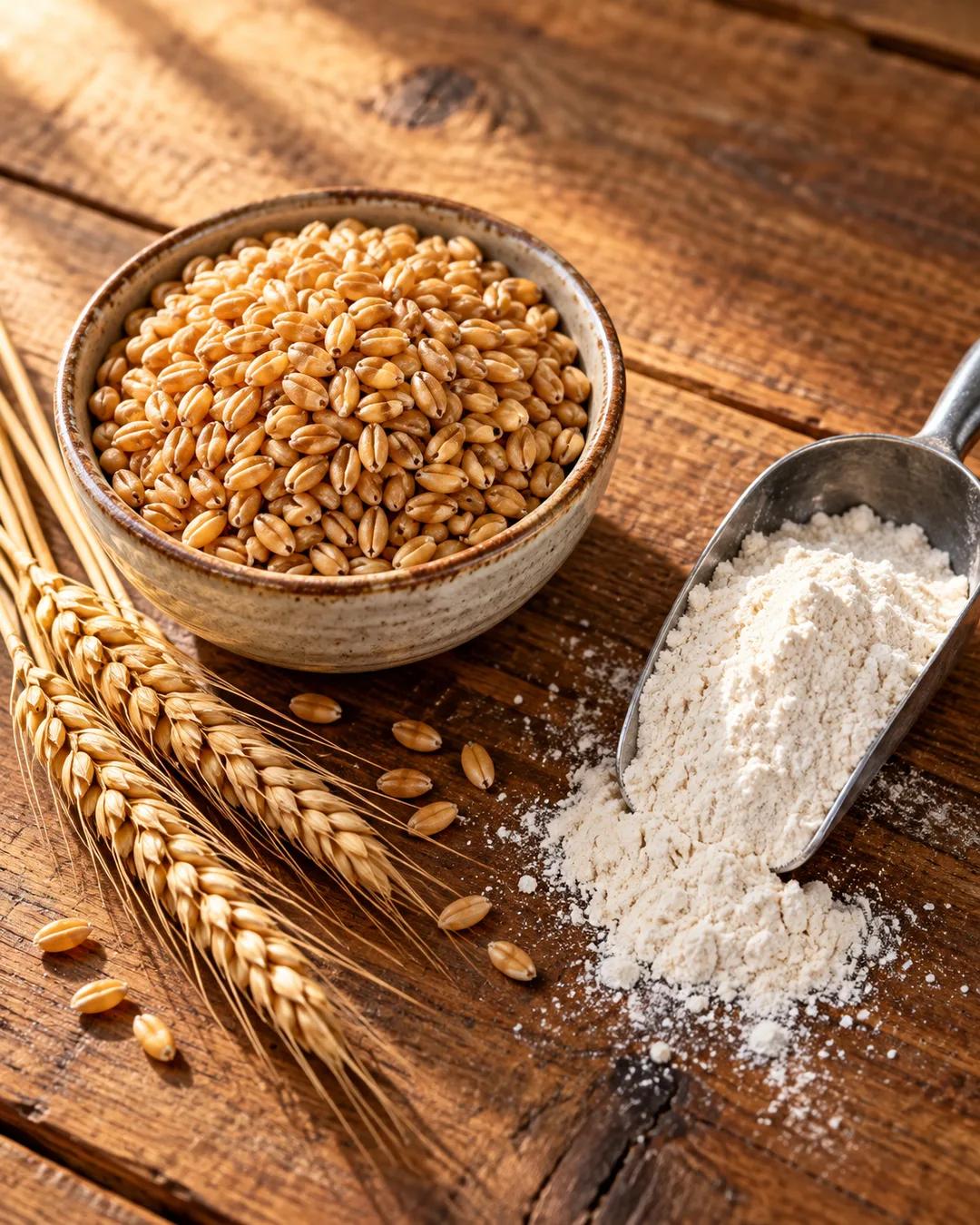
Wheat plus leucine matched whey

The experiment compared wheat, soy, egg, and whey. Protein was equated between the groups, calories were equated too, and each meal got 15 percent of its energy from protein, roughly the level of the old food guide pyramid. The researchers then measured muscle protein synthesis.
The egg and whey groups increased muscle protein synthesis. The wheat and soy groups did not.
Next the team went back to the wheat and added free leucine until it matched the leucine content of whey. The protein synthetic response came out identical to whey's. Leucine is an amino acid that whole plant proteins tend to carry less of, and in this experiment it appeared to be the piece driving the difference.
How does leucine switch on muscle building?
Leucine activates mTORC1, a signaling complex inside muscle cells that starts protein synthesis. The complex works as a sensor of amino acid supply, so a rise in leucine tells the cell that building materials are plentiful. Researchers have described this as a leucine threshold that a meal has to cross before synthesis ramps up. Whey is unusually rich in leucine, at roughly 10 to 11 percent of its protein by weight.
Why do wheat and soy carry less leucine?
Plants store protein in seeds as storage proteins, and their amino acid makeup is tuned to feed a sprouting seedling, not to build human muscle. Wheat's main storage proteins, the gluten proteins, are rich in glutamine and proline and low in lysine. Their leucine share runs closer to 7 percent, compared with the 10 to 11 percent typical of whey.
How do researchers measure muscle protein synthesis?
They give volunteers amino acids tagged with stable isotopes such as carbon-13 or deuterium. Small muscle biopsies taken hours apart show how much of the tag has been built into muscle protein. The rate of tag incorporation gives the fractional synthesis rate. This tracer method has been used in muscle research for decades.
More from Andrew Huberman