23,000 Boeing Engineers Walked Out to Defend Engineering, Not Just Pay
They won almost everything they asked for, worth $75 million, to stop a strike that could cost ten times more.
 American Scandal · Encore: Boeing | No Nerds, No Birds | 2
On the morning of February 9, 2000, Boeing engineer Stan Sorcher stood alone in the cold outside the Renton, Washington, plant where the 737 was built. It was five minutes past 9, the minute thousands of engineers were supposed to walk off the job, and no one had joined him.
Sorcher had worked at Boeing for nearly two decades and had a reputation as a perfectionist. In airplane engineering, he believed, mistakes can be deadly, so he checked his designs again and again.
By the end of that day, 23,000 Boeing engineers had walked out in what became the largest strike by office and professional workers in American history. They were fighting over bonuses and benefits, but for Sorcher the larger fight was over whether engineers still had a voice inside Boeing.
The tension had been building since the spring of 1999, when Sorcher read a companywide memo from a hedge fund, an investment firm that owned a large stake in Boeing. The investor warned that Boeing had to keep costs low and its stock price high or risk a hostile takeover, in which an outsider tries to buy control of the company.
To Sorcher and a coworker, the message was that executives were starting to treat airplanes like ordinary widgets. His coworker put it this way: "you can't just run a plane company the same way you run a widget company" when the product can kill hundreds of people at once.
Later that year, Boeing offered the engineers a contract with no bonuses and cuts to some health and dental benefits. The union rejected it in December, and Boeing president Harry Stonecipher refused to restart talks.
So Sorcher kept checking his watch that February morning. He knew some engineers thought strikes were for factory and mine workers, not for people with doctorates. He worried they had gotten cold feet.
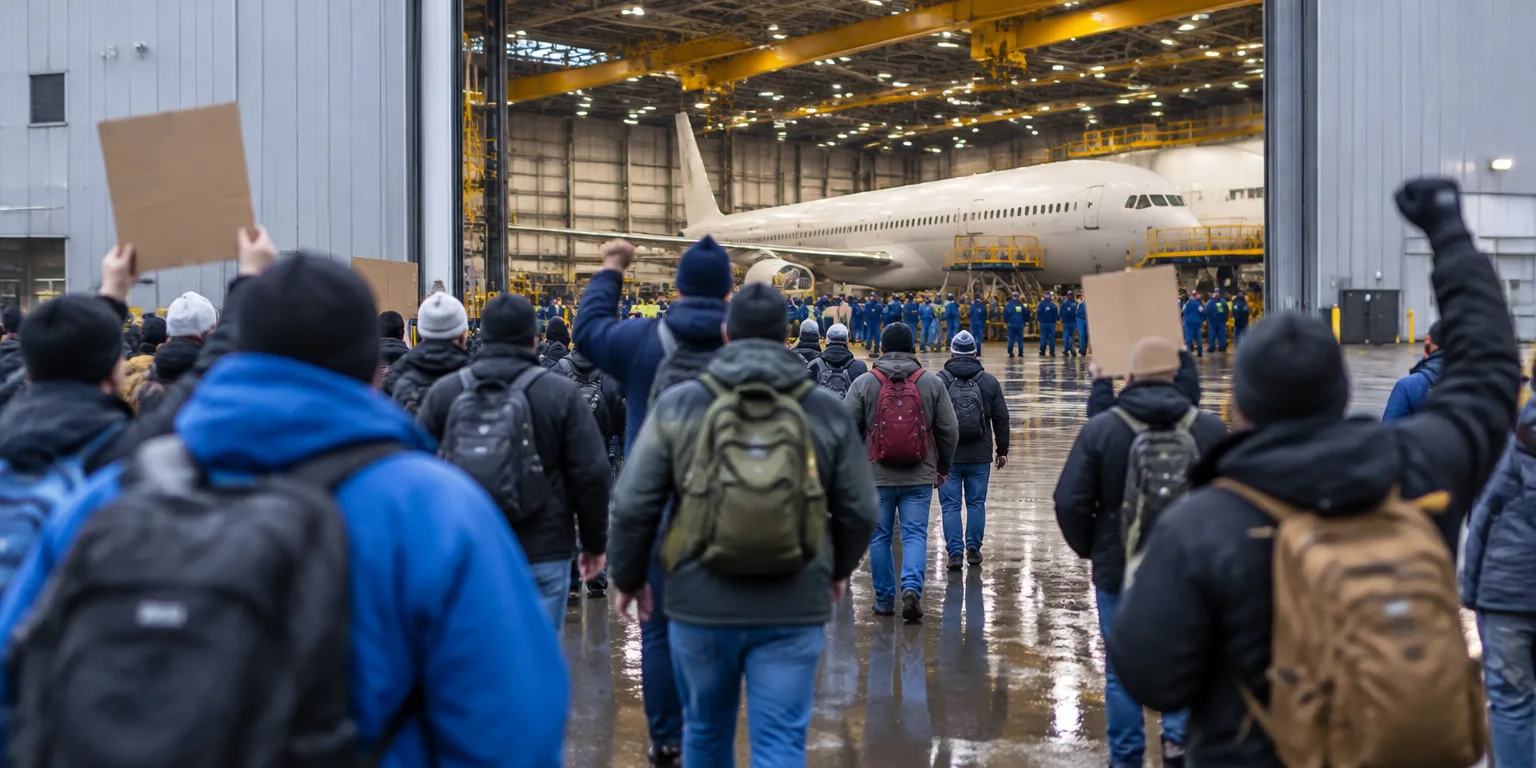
Then, just past eight minutes after the hour, he heard what sounded like a stampede behind him. A crowd of engineers poured out of the factory chanting, “No nerds, no birds.”
They told him they had first marched around the factory floor, where the hourly machinists who build the planes cheered them on and some managers looked startled. Wearing eyeglasses, bulky sports shoes and calculator-style wristwatches, they did not fit the popular image of strikers, and they turned that outsider look into a rallying cry.
Boeing leaders bet the engineers would soon break, and allowed the walkout to continue for weeks. Weeks into the stoppage, Sorcher and other union members took their case to a shareholder retreat and told the hedge fund representative that their demands cost just $75 million, while the strike could cost ten times as much.
A few days later, Boeing agreed to return to bargaining. After several more weeks, the company granted almost all of the union’s demands, but the victory did not bring what Sorcher most wanted, lasting respect for engineering inside the company.
Questions people ask
What makes this a white-collar strike?
A white-collar union represents office and professional workers, such as engineers, designers, and technical staff, rather than hourly factory workers. At Boeing, some engineers thought of strikes as something for other kinds of workers, not for people with doctorates.
What did the hedge fund mean by values-based management?
Value-based management is a way of running a company that puts raising the stock price first, often by cutting costs and returning cash to shareholders. Sorcher and his coworker worried it meant less attention to careful design and to speaking up about problems.
Why did the Seattle area matter so much to this fight?
Boeing long designed and built its jets in the Seattle area. The February 2000 walkout centered on factories around Seattle and Renton, Washington, where machinists cheered the marching engineers from the factory floor.