A Frenchman Sent to Buy Manuscripts Spent the Money Digging Up 24 Giant Boxes
He dodged Egyptian guards with hidden shafts and fake tablets, then crawled by candlelight into a tunnel of 100-ton stones.
 The Why Files · Atlantis Left Its Technology in Egypt
In October 1850, 29-year-old Frenchman Auguste Mariette headed into the desert near Saqqara and saw a carved stone head poking out of a dune.
It was a sphinx, about six feet long, one of many lining a buried road. Mariette, an Egyptologist sent by the Louvre museum in Paris, recognized what it might mark.
The Louvre had supplied him with state funds to purchase ancient religious writings from isolated monasteries. Instead, on a sunrise on November 1, 1850, he put 30 workmen under his orders and spent the manuscript budget on shovels.
He later wrote, in a memoir, that at that moment he forgot his mission, the church leaders, the convents, and the manuscripts, all of it. It was a gamble that might have put him behind bars, and it led to a remarkable find.
His crew dug out sphinx after sphinx, 370 in all, plus more than 1,000 small bronze figures of Egypt's deities. When Egypt's ruler Abbas Pasha learned France planned to send the finds to Paris, he claimed every piece and sent three army officers to count each find.
Mariette's foreman gave them an inventory counting 513 objects and said nothing about more than 500 others that had been hidden. From that night on, Mariette ran a smuggling operation, moving his packing work to the base of a deep pit out of sight of the officers.
He sank a second shaft and hid it under planks and soil by day, writing that a horse could ride right over it without knowing it was there. Each night, his men lifted the boards, descended with lamps to keep digging out of sight while a workman carved fake stone tablets to hand to the officers.
The real artifacts went into crates for France, a trick the Egyptians learned about only when Mariette boasted of the deception in his memoirs years afterward. On the evening of November 12, 1851, the hidden avenue of sphinxes stopped at a rock-hewn doorway.
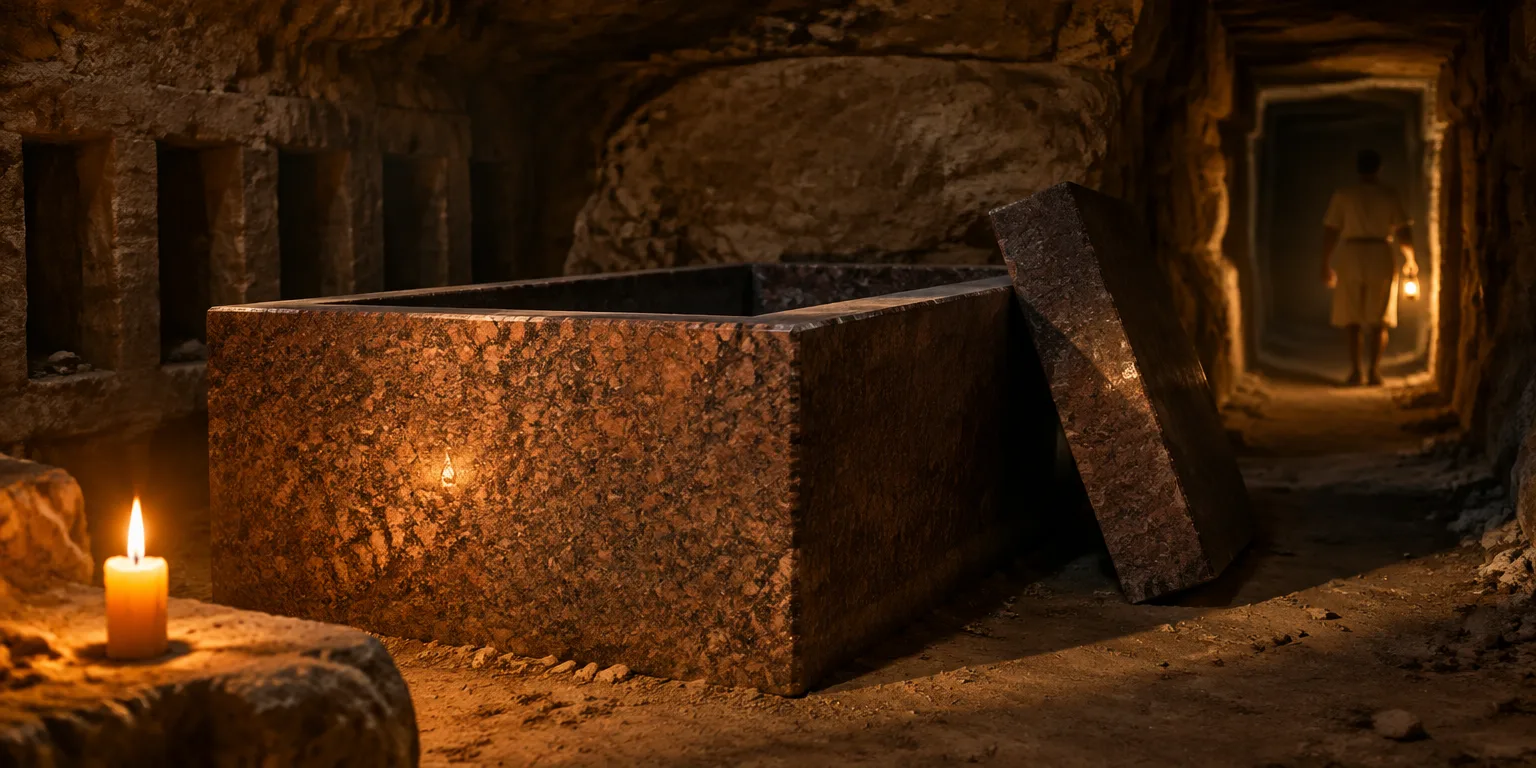
His men hammered through the night until a narrow gap opened before dawn. Mariette wriggled through holding a candle in either hand and found himself in a rock-cut chamber more than 600 feet long, with rooms on both sides.
In the rooms stood 24 giant boxes, each carved from one solid piece of granite from Aswan, almost 600 miles up the Nile. The largest was 13 feet long, more than seven feet wide, and 11 feet tall with its lid, with a 70-ton base and a 30-ton lid.
Getting them there meant floating the stone down the river, dragging it across the desert, and sliding it down a narrow underground ramp. Workers then had to haul each box down a corridor with just a few feet of clearance, turn it 90 degrees into a room barely wider than itself, and lower it into a pit in the floor.
They were empty, and no bull was ever found inside any of the 24 boxes. In an older tunnel next door, Mariette did find intact burials with bull bones in wooden coffins and gold jewelry.
Instead of punishing him, Egypt's new ruler hired its most successful digger to keep other Europeans from plundering the country, and in 1858, Mariette was put in charge of Egypt's antiquities and founded what became the Cairo Museum. The man who had looted the site was now in charge of protecting it.
Questions people ask
What is Saqqara and what was the Serapeum?
Saqqara is a vast burial ground south of Cairo, used for thousands of years by the ancient capital of Memphis. The Serapeum was its underground complex for burying Apis bulls, animals worshiped as living gods.
How could ancient workers move a 100-ton block without trucks?
They likely used sledges, rollers, levers, wet sand to reduce friction, and river barges for the long trip from Aswan. Experiments and ancient drawings suggest large crews, water, and patient leverage could move very heavy stones without machines.
Where did the sphinxes and bronzes he dug up end up?
Many went to the Louvre, where Mariette had been sent from, and helped make its Egyptian collection one of the largest in the world. Others were seized or stayed in Egypt, especially after Mariette later took charge of antiquities and founded the Cairo Museum.