Egypt's Empty Granite Boxes Were Robbed Long Ago
Nearby bull bones, gold jewelry, and more than 800 dated tablets point to centuries of Egyptian burials and tomb robbery.
 The Why Files · Atlantis Left Its Technology in Egypt
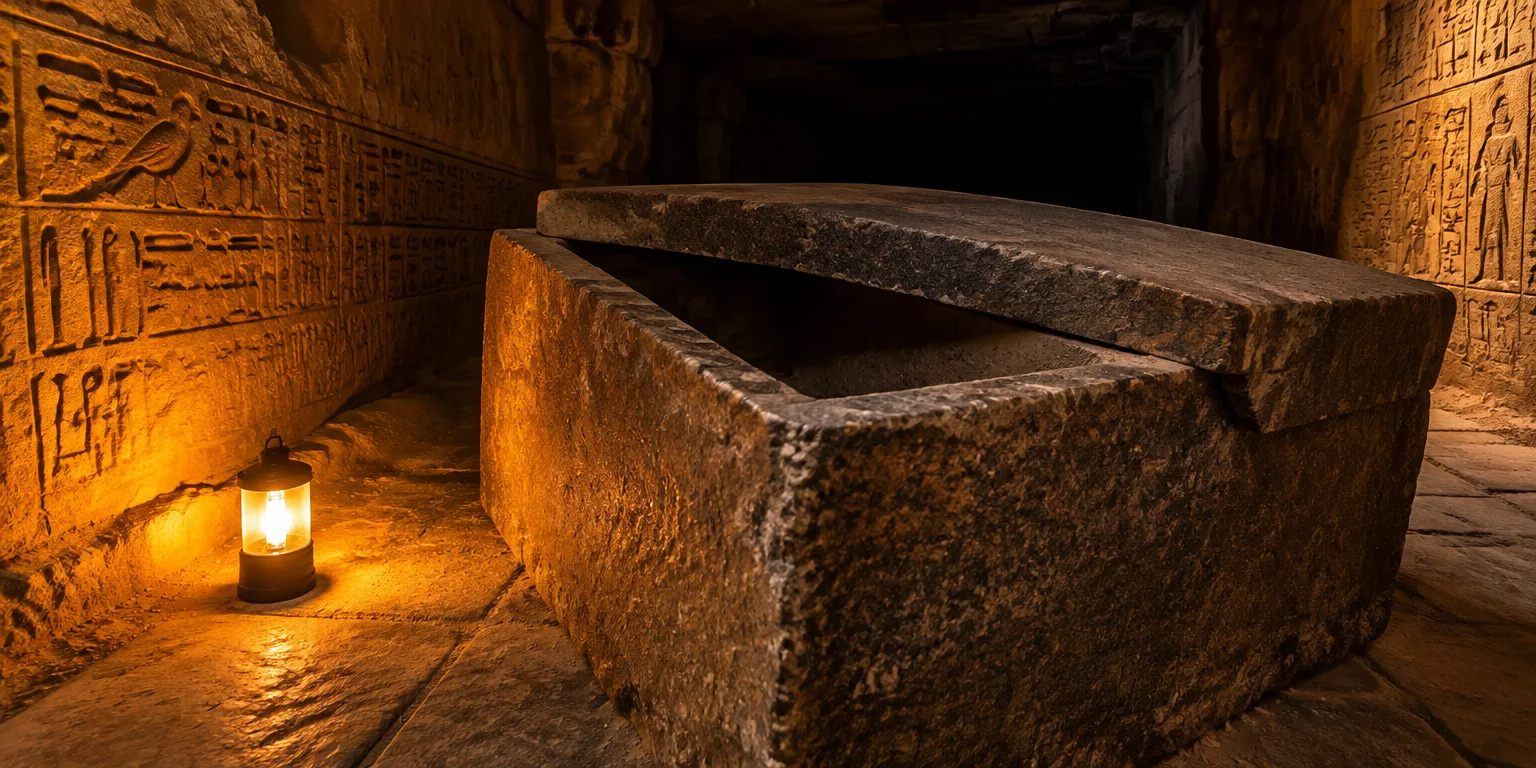
Historians offer a simple explanation for the 24 giant granite boxes found in tunnels beneath Saqqara. They say ancient tomb robbers pried open the lids and took what was inside.
The discoverer was Auguste Mariette, a French excavator who later became Egypt's antiquities chief in 1858 and founded the Cairo Museum. He found the huge boxes just as empty as they are today, with not a single bull inside any of them.
The burials were for sacred Apis bulls, living animals kept at Memphis and honored as holy. When one died, priests mourned it and buried it with ceremony and offerings.
In a separate older passage close by, Mariette found what the granite rooms were missing. He entered a closed chamber dating to the reign of Ramesses the Great. Inside were bull bones laid in wooden coffins, accompanied by gold jewelry.
Historians say that nearby find explains the mystery. As Egypt grew wealthier over the centuries, priests upgraded bull burials from wooden containers to limestone and then to hard granite. In their view, the granite boxes were the richest burials, and so the most likely targets for thieves hunting gold.
One colorful detail about the discovery is wrong. Mariette never blasted open a sealed box with dynamite, which appeared only 16 years after his entry into the tunnel. He employed gunpowder to remove collapsed roof stone in the older gallery. More than 800 dated tablets, left by crews, priests, and visitors, date activity in those galleries from about 650 B.C. through the era of Cleopatra.
Questions people ask
Why were Egyptians burying bulls in giant boxes?
The Apis bull was a living sacred animal kept at Memphis, chosen for special markings and treated as an oracle. When it died, it was mourned and buried with great ceremony, which is why priests provided coffins and offerings.
Where did the granite come from?
The stone came from quarries around Aswan in southern Egypt. Moving such massive blocks north to Saqqara and placing them in narrow underground rooms was a major undertaking.
What are the 800 tablets on the tunnel walls?
They are short inscriptions left by work crews, priests, and visitors, many with royal names or dates. Together, they date activity in the galleries from about 650 B.C. through the era of Cleopatra.