A Lunch Meeting Became an Espionage Sting in a Russian Restaurant
He had been told not to accept anything, and the moment he did, officers closed in.
 Armchair Expert with Dax Shepard · Evan Gershkovich (on surviving a Russian prison)
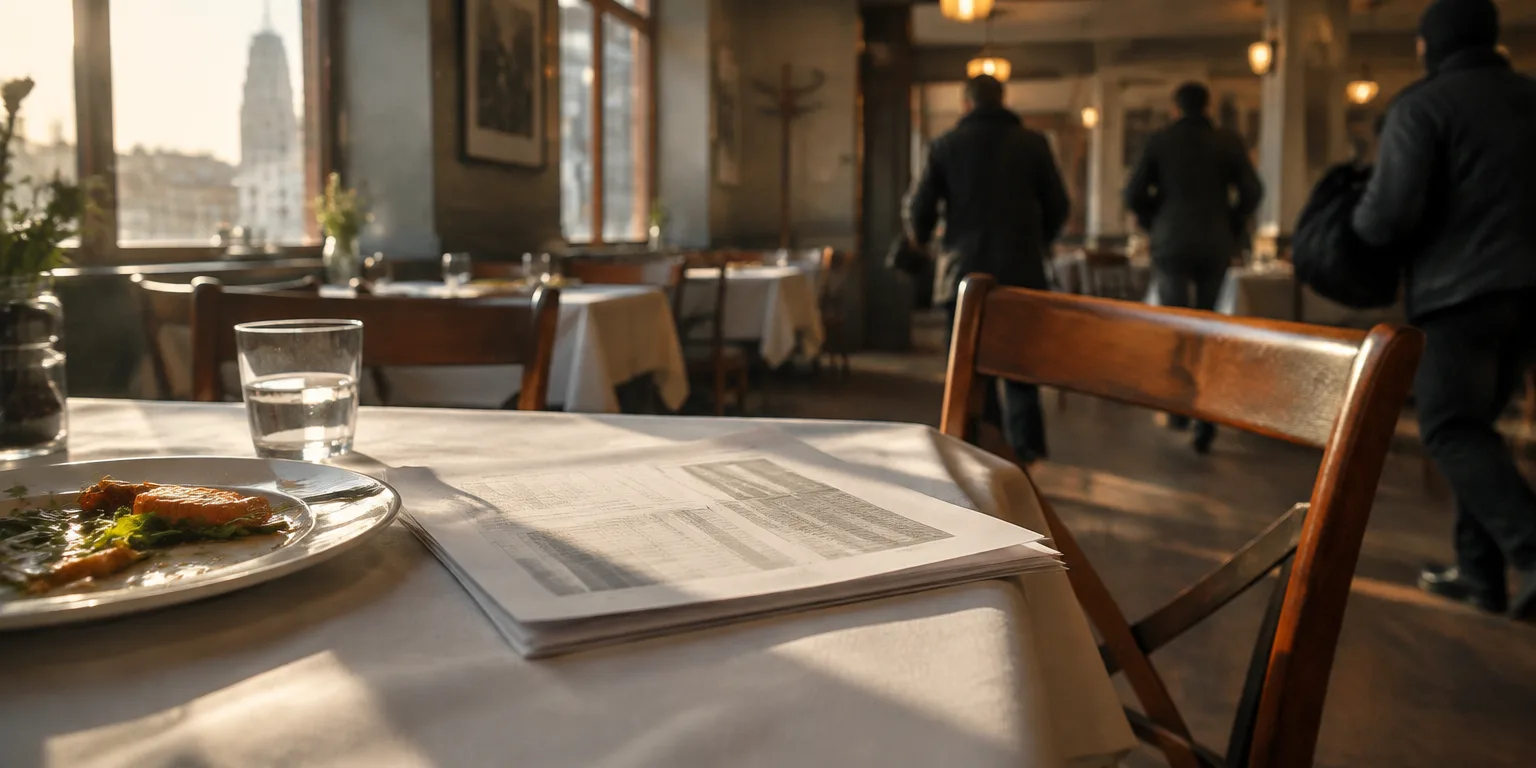
At 4 p.m., the dining room at Bukowski's Grill in Yekaterinburg was half empty. Evan Gershkovich, a Moscow correspondent for The Wall Street Journal, sat with his back to the wall, facing his contact across the lunch table.
The contact, a man Gershkovich knew as Pavel, slid across papers that looked like official production tables for a tank factory. Against his editors' instructions, Gershkovich took them.
That handoff was the trap. Within moments, a half dozen masked men moved in and announced that Gershkovich was under arrest by Russia's Federal Security Service, known as the FSB, on an espionage charge.
Gershkovich had come to Yekaterinburg for a Journal investigation into Russia's shift to military production. The team was looking at how workers were laboring around the clock, and it wanted more detail on tank factories and their output.
In an earlier recorded meeting, Pavel had raised what he called the factory's production potential. Gershkovich later said he casually agreed that it sounded interesting and moved on, only to learn that authorities called that detail classified.
At the time, Gershkovich read the warning as pressure, not a prelude to arrest. He assumed the worst outcome would be the loss of his visa and accreditation, and the reporting trip had been discussed with his bureau chief, editors, lawyers, and security staff.
At lunch, his editors had said notes were fine but told him not to take anything from the source. When Pavel handed him the papers, Gershkovich accepted them anyway, a decision he later called the decisive point in the sting.
He looked up at the sound of marching feet and saw half a dozen men entering the dining room. The men opened with a disorienting line, that they believed they had booked that table, and Gershkovich froze before he registered the balaclavas.
As officers dragged him down, Gershkovich tried to shove the papers into the narrow gap behind his seat. Out of what he called animalistic fear, he was still worried about Pavel, but he watched Pavel step away into the crowd.
Officers put a bag over his head and took him to a van. In the van, they removed the bag and asked who he worked for, and he answered the Wall Street Journal. After that, they covered his head again and punched him.
At the station, they calmly handed him espionage charges. They did not interrogate him and did not ask anything about Pavel.
Questions people ask
What story was Gershkovich working on?
Gershkovich was reporting on Russia's conversion to wartime manufacturing ahead of Ukraine's expected 2023 counteroffensive. The Journal team was examining factory staffing, round-the-clock work, and tank production.
What is the FSB?
Russia's Federal Security Service is the country's main domestic security and counterintelligence agency. It is the successor to the Soviet KGB's domestic functions and also conducts surveillance, investigations, and espionage cases.
What happened after the arrest?
He was held for more than a year, convicted of espionage in a case the United States called wrongful, and released in August 2024. The release came through a large multinational prisoner exchange involving the United States, Russia, Germany, and other countries.