AI Learns Math Quickly Because Math Can Start From the Same Spot
A correct answer matters, but the machine also needs a task that resets so it can learn from the difference.
 Dwarkesh Podcast · Grant Sanderson (@3blue1brown) – AI disproved a famous math conjecture. Now what?
Artificial intelligence is pulling ahead in math and computer code for a plain mechanical reason. In those worlds, it can rerun the same challenge many times from the same starting point and see which try worked.
Dwarkesh Patel, who interviews guests about AI, says checking an answer is only half the story. The other half is being able to repeat the same task without the setup changing.
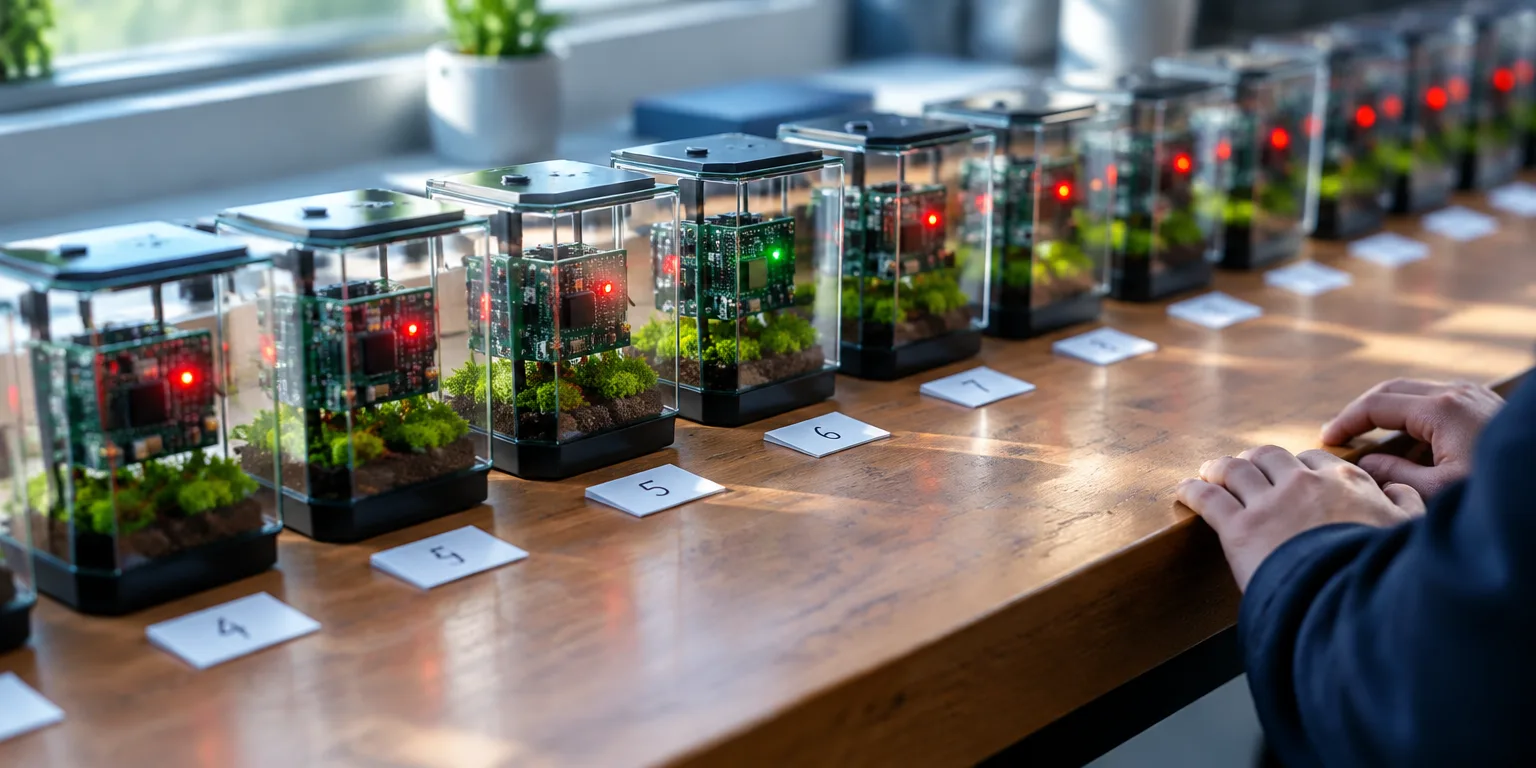
Coding shows how it works. Engineers can freeze a software project in an isolated copy, make hundreds of matching copies, and ask the AI to add the same feature in each one. Because each copy behaves in a steady and predictable way, researchers can compare a success with a failure and spot the change that made the difference.
Researchers call that puzzle the credit assignment problem, or figuring out which step deserves the credit. Math offers the same stable setup. A conjecture sits still while the machine tests ideas against it, day after day.
Everyday computer use does not. It is easy to check whether an Etsy package is coming or whether an event is booked. But running a thousand matching checkouts on Amazon to learn the system is extremely difficult, because bot detectors shut that kind of mass repetition down and building copies of every website takes too much work.
The wider world is even less stable. Trying to build a successful business or trade markets for a day means dealing with conditions that change day after day, so there is no simulator to replay and learn from in the same way.
Patel offers a related theory for why writing improves more slowly. Code and math are modular, so many rough versions of a computer function can still run correctly, just as many clumsy paths to a small helper proof can still be correct.
An essay offers no such cushion, in his view. Readers judge the sentences themselves, not a separate result the words produce, so rough wording cannot hide behind a working outcome. Judging prose is also easier to fool, because a smooth but shallow essay can score well for hitting the surface marks of good style.
Grant Sanderson, a mathematician who makes animated math videos, questions how far that lag extends. He says he often pastes something he is reading into a chatbot, because the explanation he gets back is clearer than the human original he started with.
Questions people ask
What does this kind of repeated trying look like in practice?
Programmers place AI agents inside separate copies of a software project, ask them to add a feature or fix a bug, and run automatic tests to see which copy passes. Because the setup is deterministic, they can compare a success and a failure and identify the change that made the difference.
Why has AI been slower at using computers if clicks can also be checked?
Online errands such as checking an Etsy order, an event booking, or an Amazon checkout are easy to check. They are hard to repeat at scale, because bot detectors block mass repetition and building copies of every site takes a great deal of work.
Does this mean AI will always be bad at writing?
Not always. These systems keep getting better at explaining and summarizing existing material. What lags is original judgment, or knowing which point is worth making and exactly when to make an unpredictable move.