A Molasses Tank Burst, and Its Owner Blamed Anarchists
A veteran investigator found no bombing, only a poorly built tank, and the payout ended the parent company.
 Stuff You Should Know · Short Stuff: Boston Molasses Flood
While crews were still pulling bodies from thick, congealing molasses in Boston, the company that owned the tank had an explanation ready.
Purity Distilling Company said anarchists had bombed its giant molasses holding tank. It was not us, the company insisted, and it beat that drum the whole time.
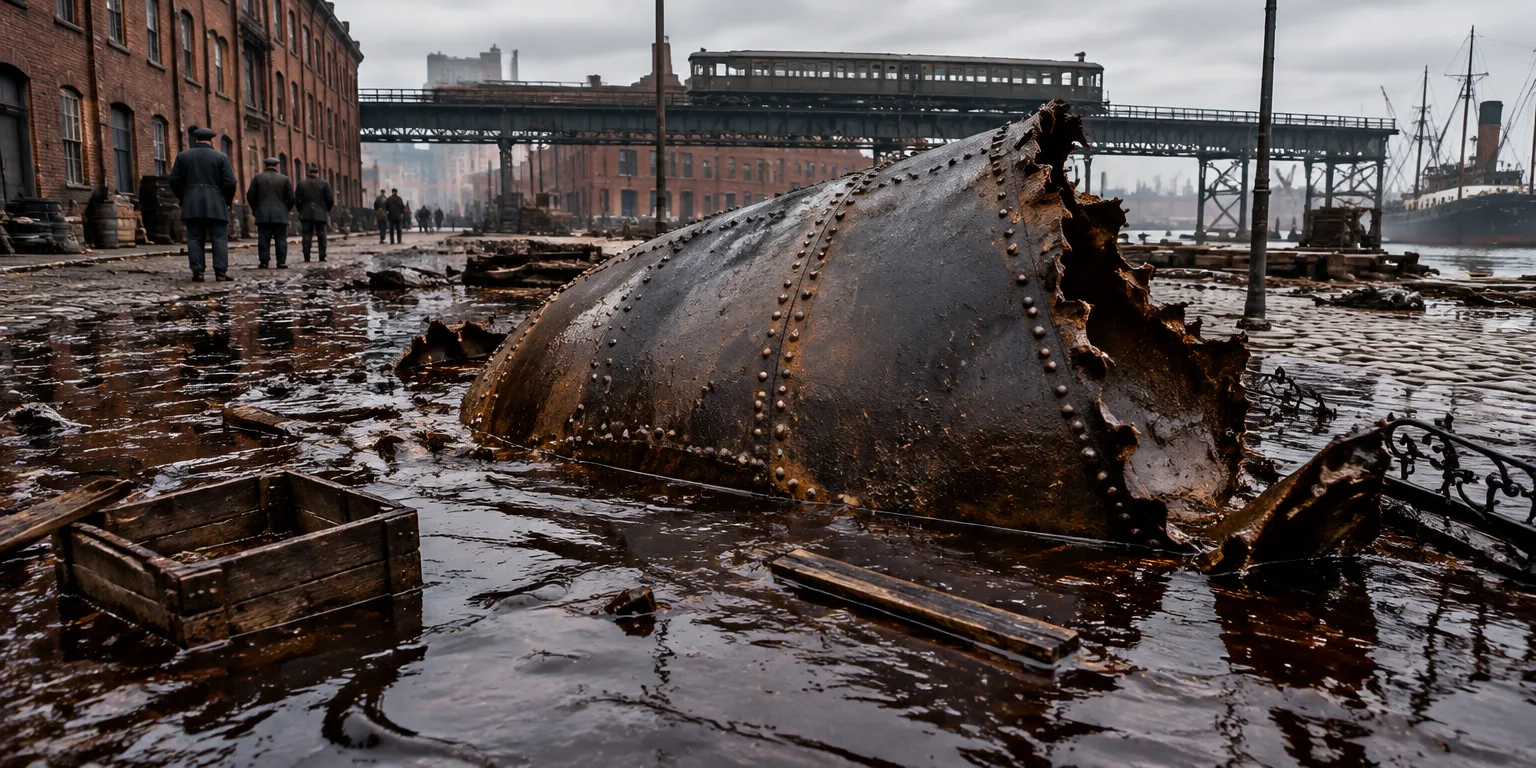
The defense failed. An inquiry found that no bomb had gone off at all, and that the company itself was responsible for a shoddy tank that burst under millions of gallons. Its parent was ordered to pay about $1 million in damages.
The reckoning came from Hugh Ogden, a decorated World War I veteran tasked as an auditor to get to the bottom of what happened in 1919. He concluded fairly quickly that the disaster was 100 percent the company's fault and responsibility.
The idea of an explosion was understandable, but misleading. Witnesses had heard a tremendous noise, and molasses had rushed out so quickly that it could easily have seemed like a blast.
What they actually heard was the tank failing, its steel giving way all at once. Even by the standards of the day, the company had used below-standard materials, a reckless shortcut for a structure built to hold about 2.5 million gallons.
U.S. Industrial Alcohol, the parent company of Purity Distilling, paid the price. Forced to pay the damages, it ultimately went out of business.
Questions people ask
Why did blaming anarchists sound believable at the time?
The claim landed during the First Red Scare, when fears of radicals ran high. In the spring of 1919, anarchists mailed or planted bombs targeting officials and businesses in several American cities, so sabotage did not sound far-fetched to the public.
How could a steel tank burst without a bomb?
The tank held more than two million gallons, weighing well over 10,000 tons, pressing outward on riveted steel walls. If the steel was too thin and the rivets too weak, that enormous weight could tear the tank apart suddenly, releasing a wave with force enough to sound like an explosion.
How much was $1 million in damages worth in today's money?
About $1 million in 1920 would be roughly $15 million to $16 million today, depending on the inflation measure. The money was divided among families of the 21 people killed, about 150 injured people, and property owners whose buildings, goods, and animals were destroyed.