Why Boston's Molasses Flood Was Deadlier Than Water
The syrup struck with extra force because it was denser than water, and solidified molasses slowed cleanup.
 Stuff You Should Know · Short Stuff: Boston Molasses Flood
On January 15, 1919, a tank in Boston's North End failed and sent more than two million gallons of sticky syrup through the streets as a wall reported to be 25 feet high and moving at 35 miles an hour.
Molasses looks slow and harmless, but it is denser than water. That extra density meant the wave struck people, horses, and buildings with more force than the same volume of water would have, killing 21 people and injuring about 150.
Then came the second danger. Once the surge stopped moving, it began to cool, thicken, and congeal. People knocked down by the wave would have struggled to escape as the syrup congealed around them.
That same thickening made cleanup harder. Debris was stuck in solidified molasses and hard to remove, including pieces of buildings and an elevated train.
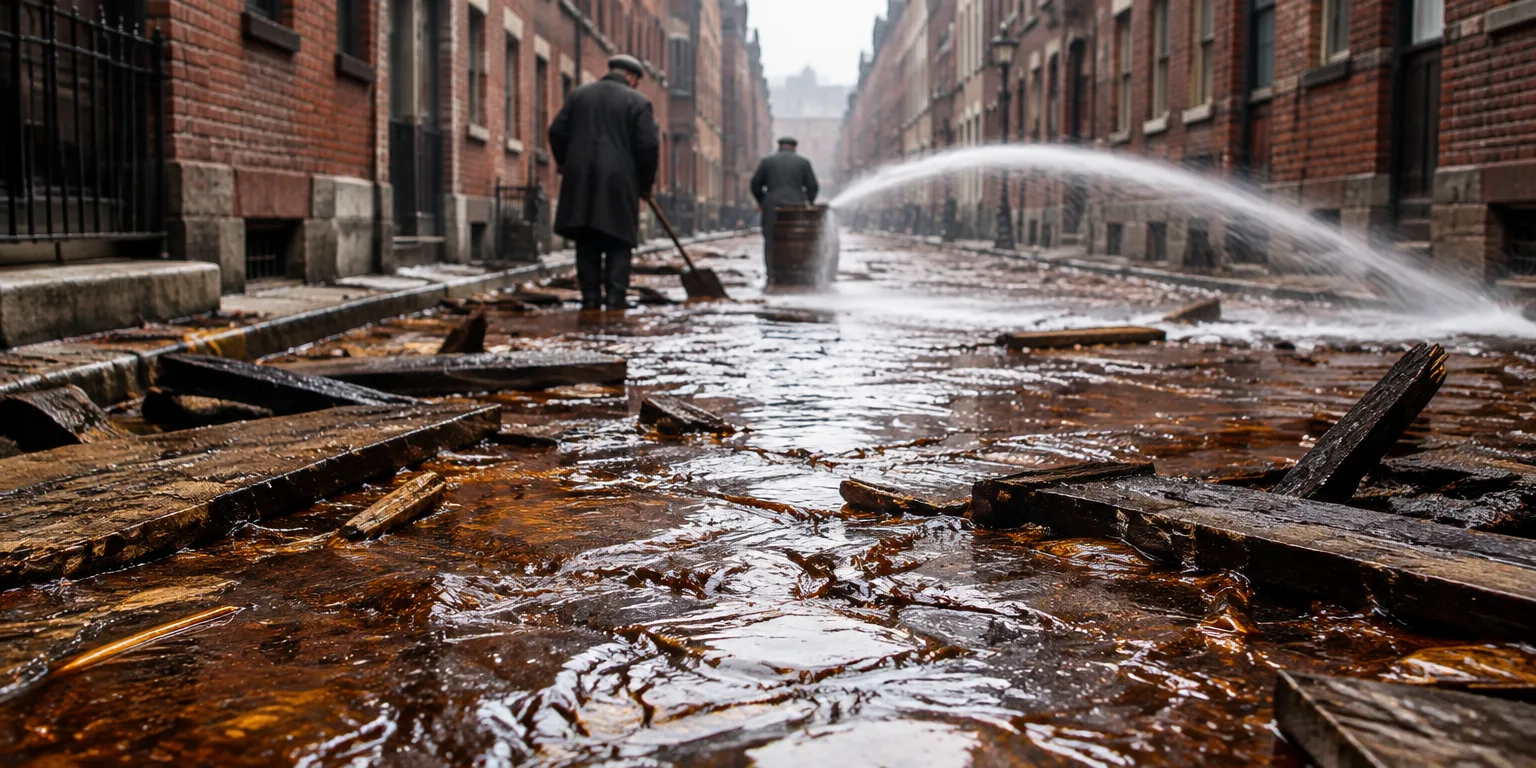
Crews found that saltwater breaks down molasses. They pumped water from the harbor, using the fireboat from Engine 31, to loosen and wash away the coating.
Even so, recovery was slow. The last body was reportedly found four months later.
Questions people ask
How much denser is molasses than water?
Molasses is about 40 percent denser than water, weighing roughly 11 to 12 pounds per gallon compared with about 8.3 pounds for water. In a fast-moving wave, that extra mass means substantially more force on anything it hits.
Why did the molasses congeal so quickly?
Cold makes molasses much more viscous. In January in Boston, the warm syrup that burst from the tank thickened rapidly as it spread and cooled in the winter air, turning from flowing liquid toward a sticky solid.