A Starving Rugby Player Climbed an Impossible Mountain to Reach His Father
Starving and unequipped, Nando Parrado kept climbing because he believed his father needed him to survive.
 My First Million · Robert Greene almost died. Here’s what it taught him about living
High on a 14,000-foot mountain in the Andes, Nando Parrado faced a wall of rock and ice as sheer as a skyscraper.
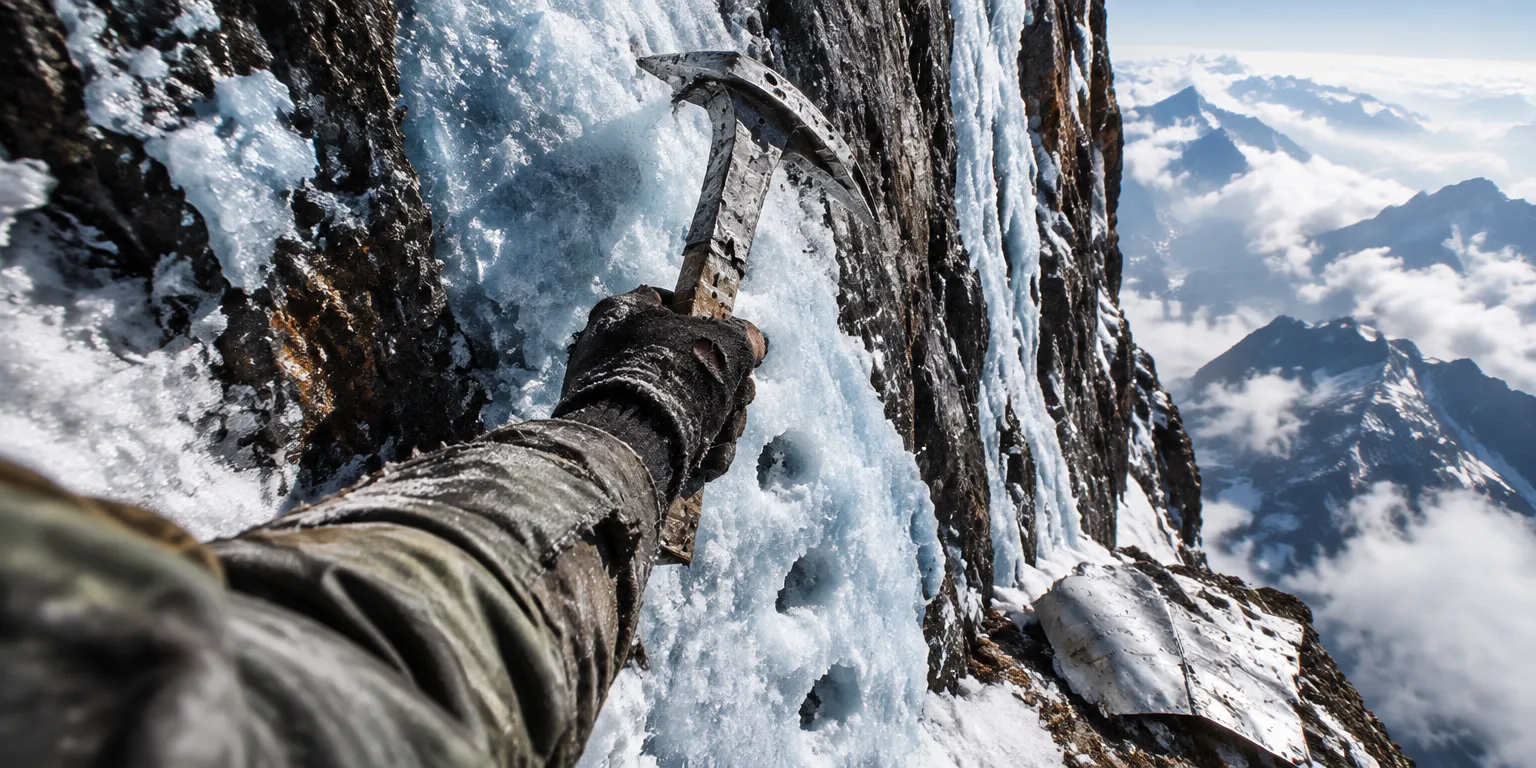
He was starving, freezing, and breathing hard in the thin air, carrying no ropes and no climbing gear, only a makeshift pick fashioned from wreckage of an airplane.
Parrado was a young Uruguayan rugby player whose plane had crashed on its way to Chile, leaving the survivors stranded at the foot of the peak in spring clothing.
Author Robert Greene tells the story to make a point about human ability: people carry powers they do not realize they have until an impossible situation brings them out.
Of the roughly 45 people aboard, many died in the crash, and those who lived faced cold and hunger every day with no equipment and no experience climbing mountains.
When the food ran out, the survivors stayed alive by eating the bodies of passengers who had already died.
Parrado's mother and sister had died in the wreck, and his mind stayed on his father back in Uruguay.
Greene retells his reasoning this way: if his mother and sister were gone and he died too, his family-minded father would not survive the loss, so Parrado had to get out.
Others had tried the mountain and turned back halfway, beaten by altitude and cold.
Parrado decided he would climb it anyway because he had to reach his father, and he set off with two companions.
His heart pounded from the altitude, and the other climbers were ready to quit, but he kept going.
Near the summit, he cut small holes in the ice and rock with his crude tool, fit his hands and feet into them, and pulled himself upward for about two hours until he reached the top.
From there he expected rescue and instead saw more mountains, with only a possible gap between two peaks pointing toward farmland in Chile beyond the range.
He persuaded one companion to continue with him, and they spent the night high on the mountain. Greene suggests they were probably the first humans to see the stars from that spot.
Even amid suffering and death, Greene says, Parrado was struck by how beautiful the world looked.
The descent down the far side was steeper and harder than the climb up, but the two men kept walking until they found people and brought back a helicopter for the others left at the crash site.
Experienced climbers later said the ascent should have been impossible without proper gear, yet the starving amateurs had done it.
Greene offers the same lesson that psychotherapist Viktor Frankl drew from Auschwitz, where Frankl found that prisoners who survived often held onto a future obligation, a book to write or a family member to reach.
A fixed reason to live, whether a father in Uruguay or a task still undone, can carry a person further than strength alone.
Questions people ask
Did this Andes crash really happen?
Yes. It was Uruguay Air Force Flight 571, which crashed in October 1972 with a rugby team aboard. After about 72 days in the mountains, 16 people were rescued, and Parrado and Roberto Canessa trekked out to find help.
Why did the survivors eat the dead?
They had no food, no cold-weather clothing, and no rescue in sight. The survivors later said they regarded it as a last resort, and the decision has been widely discussed as an act of necessity rather than choice.
Who was Viktor Frankl?
Frankl was an Austrian psychiatrist held in Nazi concentration camps who later wrote Man's Search for Meaning. He argued that prisoners who maintained a sense of future purpose were more likely to endure extreme suffering.