A Mushroom Is the Brief Fruit of a Vast Underground Network
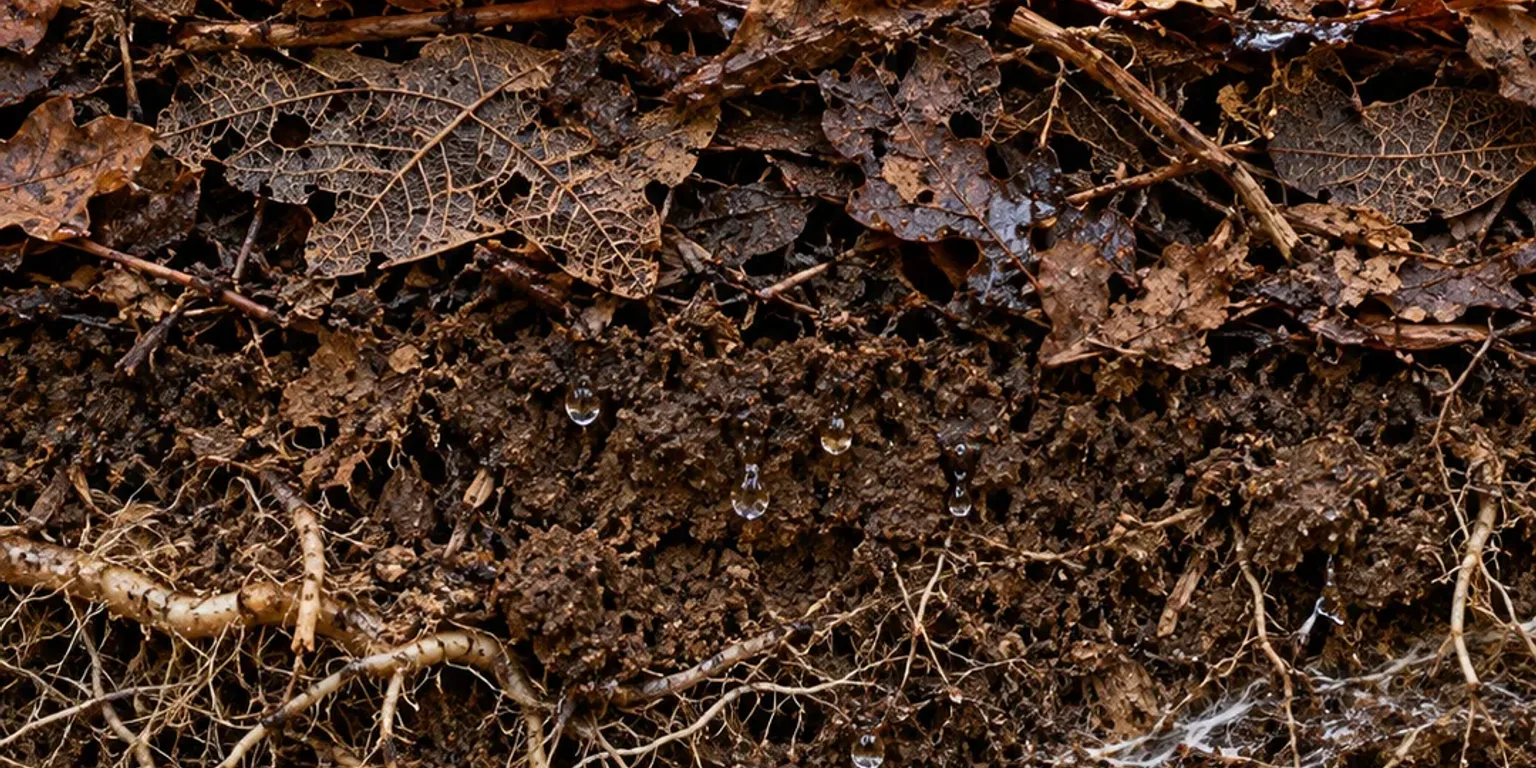
In a single cubic inch of soil, mycelium can stretch for miles, digest food externally, and turn on far more genes than the mushroom it produces.
 Andrew Huberman · Mushrooms for the Mind & Immune System | Paul Stamets
The mushroom on a forest floor is not the organism. It is the brief, edible fruit of a much larger organism living out of sight.
That larger organism is mycelium, a dense web of fine threads that spreads through soil, wood, and other damp places. Mycologist Paul Stamets describes mushrooms as clumps of mycelium gathered into a temporary package.
Fungi and animals took separate evolutionary paths about one billion to one and a half billion years ago, he says. Animals evolved to take food inside the body and digest it internally, in something like a stomach, while fungi evolved to digest food externally and then absorb the nutrients.
Underground, that strategy creates astonishing density. Stamets says a single cubic inch of rich soil can hold one to eight miles of mycelial threads, interwoven with more than a million kinds of bacteria and more than a billion individual microbes.
Mycelium does not live alone in that crowd. It forms alliances with helpful bacteria, produces antibiotics such as penicillin, and helps push back against harmful bacteria, including germs that also infect people. In effect, the network organizes a crowded neighborhood into a working ecosystem.
That defense work is why Stamets calls mycelium the immune system of the fungal life cycle. A mushroom has little defense of its own and rots very quickly, but mycelium must maintain defensive networks in order to generate a mushroom at all.
Stamets says fungi as a group produce “hundreds or thousands of novel molecules” found nowhere else. Mycelium is still busier than the mushroom, turning on “10 to 100 times more genes” than a mushroom, by his estimate.
The mushroom, by contrast, is built to be perishable, attracting insects and animals that eat it and carry its spores to new ground. There may be two million to four million fungal species. About 200 mushrooms are well established as compatible with human digestion.
Each one offers a small entry point into a far larger system that digests food externally and maintains defenses so mushrooms can form.
Questions people ask
How does external digestion actually work?
It releases enzymes into the surrounding soil or wood that break down complex material into simpler nutrients, then absorbs the dissolved nutrients through its threadlike walls. It is similar to digesting a meal before swallowing it, rather than after.
Why would a mushroom be designed to rot so quickly?
Short life is the point. A soft mushroom attracts insects and animals that eat it and carry its spores to new ground.
What does it mean to call mycelium an immune system?
The work is largely defensive and chemical. Mycelium makes antibiotics and other compounds, favors beneficial microbes, and competes with disease-causing organisms. Stamets suggests that studying those long-tested defenses could someday offer ideas for supporting human immunity, though he presents that as a prospect rather than a proven treatment.