A Free River Carves Gorges Upstream and Builds Wetlands at the Sea
With no dams to trap water or sediment, one Albanian river keeps cutting rock upstream and adding land at the coast.
 National Geographic · The Vjosa: Exploring One of Europe's Last Wild Rivers | National Geographic
For a course of more than 250 kilometres ending at the sea, Albania's Vjosa runs free of dams. With nothing to hold it back, it constantly moves water and sediment that reshape the land around it.
The carving starts upstream past Përmet, where the valley tightens and the current quickens as it runs toward Këlcyrë Gorge.
In a steep, narrow stretch like that, fast water has extra force to wear away rock and soil. Over time, that cutting leaves behind the rugged gorges seen along the upper river.
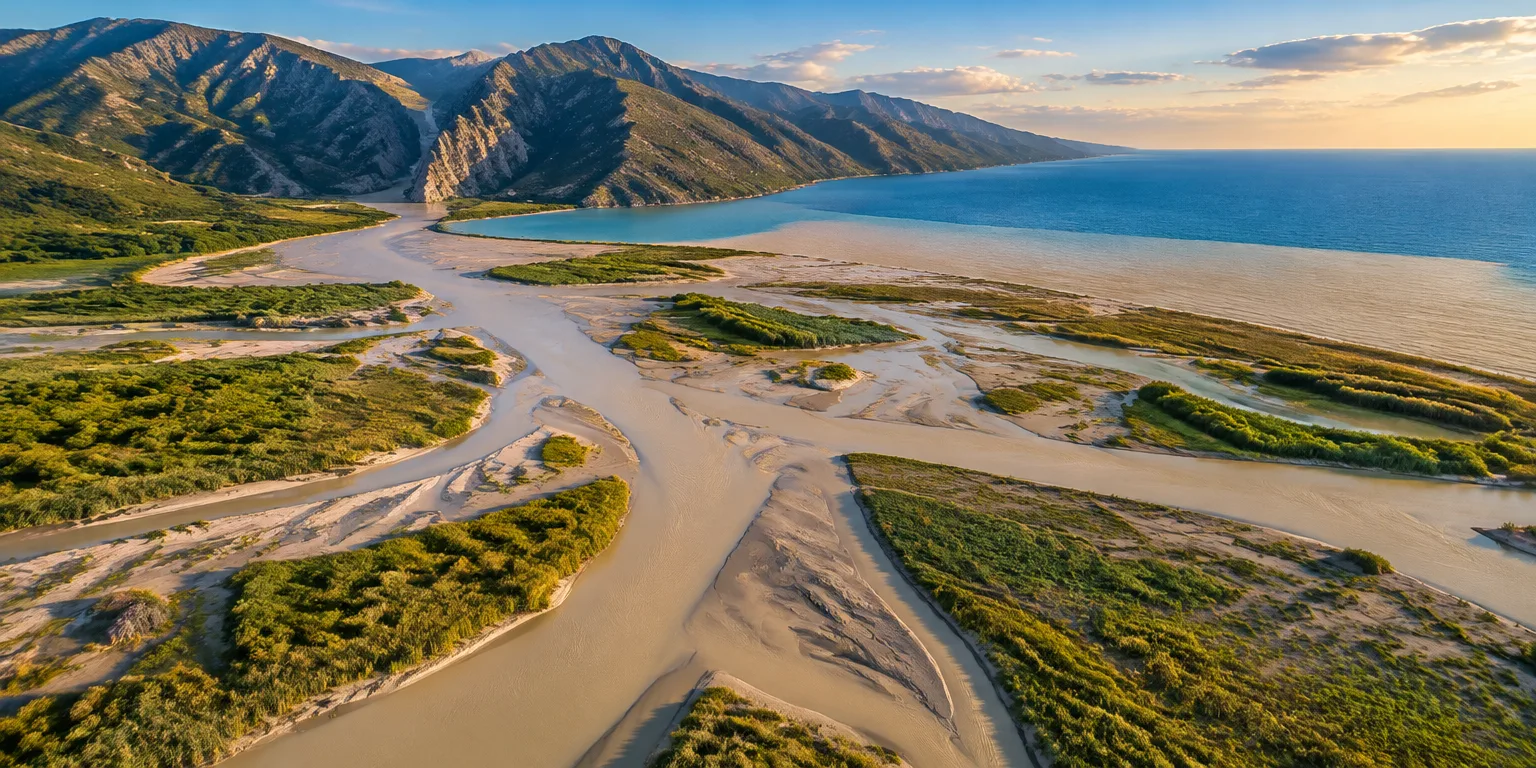
That same unblocked flow keeps changing form farther down. The river spreads across braided plains, where it splits into shifting channels around islands of sand and gravel and keeps carrying its load downstream.
The building happens at the delta, where the river meets the sea. The Vjosa delivers its sediment to Narta Lagoon, a calmer landscape of marshes and shallow water.
There the flow spreads out and slows down. As the current loses strength, it can no longer carry as much material, so sand and mud settle and add new ground that supports wetlands.
That steady supply is why the mouth looks so different from the mountains. Material cut away upstream becomes the foundation for wetlands downstream.
Questions people ask
What makes a river wild or free flowing?
It means water, sediment, and fish can move up and down the river without hitting a dam or other large barrier. Natural rises and falls in flow remain, so channels can shift, floodplains can flood, and sediment can travel from the mountains to the sea.
What is a braided plain?
It is a wide, fairly flat stretch where a river divides into many small, shifting channels around temporary islands of sand and gravel. The pattern forms when the river carries more sediment than one channel can move, so water keeps finding new paths. From above, the channels look woven together like braids.
How can the same river both carve and build land?
It does both by moving material from one place to another. Upstream, steep and fast water picks up rock, sand, and mud through erosion. Downstream, where the slope flattens and the flow slows near the sea, that material settles out and builds deltas, wetlands, and beaches.