More Than 200 Bird Species Gather Where the Vjosa Meets the Sea
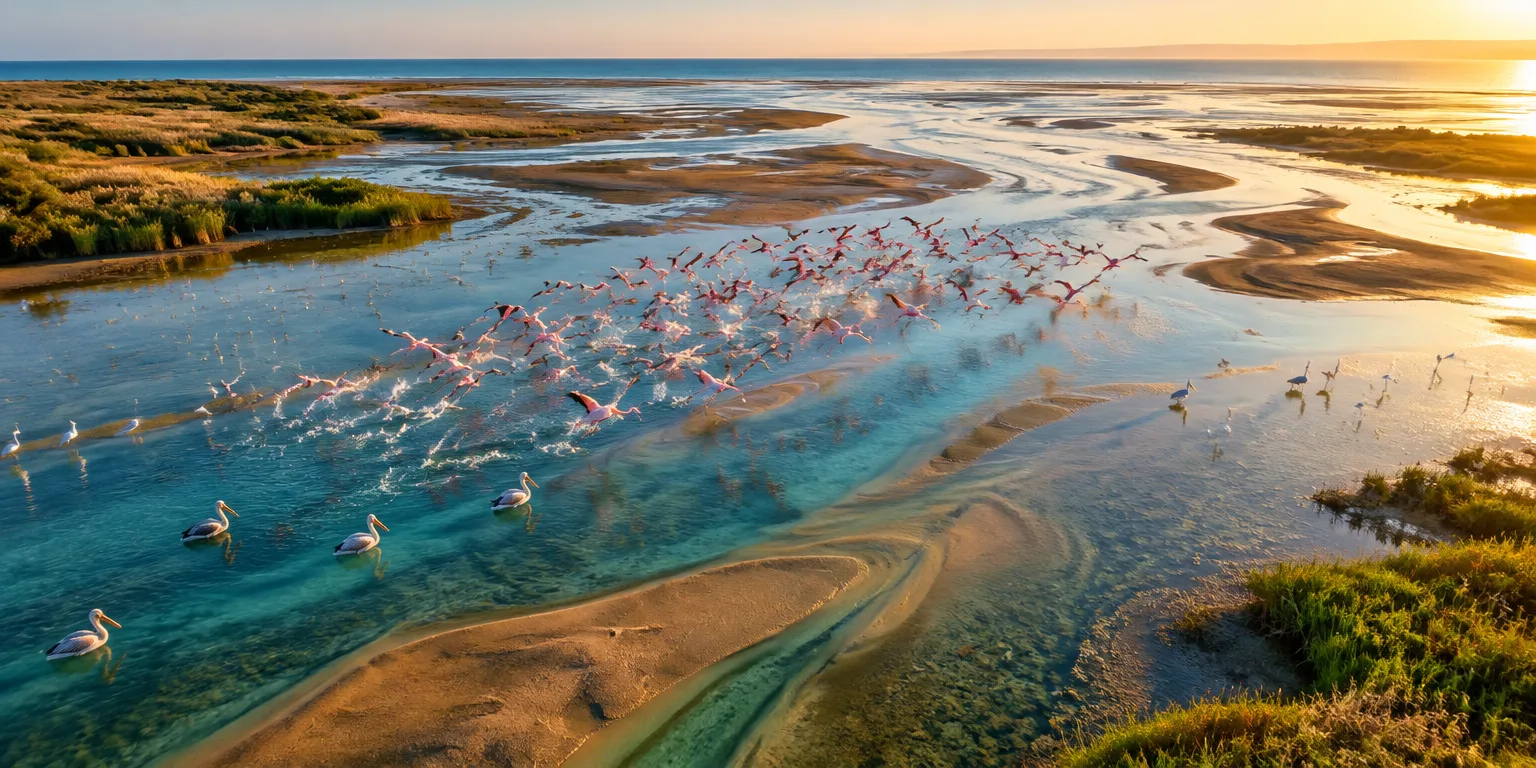
Sediment carried down the free-flowing Vjosa helped build the wetlands of Narta Lagoon.
 National Geographic · The Vjosa: Exploring One of Europe's Last Wild Rivers | National Geographic
More than 200 bird species have been counted in the wetlands where Albania's Vjosa River meets the sea.
The site is Narta Lagoon, where the river meets the sea. Joni, an ecologist familiar with the area, says sediment carried downstream by the river helped create this landscape of wetlands and open water.
That meeting of land and sea made it a magnet for birds. Describing the birds, Joni said more than 200 species are counted there and that visitors have seen thousands of flamingos flying just overhead.
Questions people ask
Where is the Vjosa River?
The Vjosa runs about 270 kilometers from the Pindus Mountains in Greece, where it is called the Aoos, through southern Albania to the Adriatic Sea. In 2023, Albania made its valley one of Europe's first wild river national parks, and it remains largely free of dams.
Why do so many birds gather in a place like this?
Shallow water, mudflats, and lagoons offer abundant food, from fish and shrimp to algae and insects, plus shelter and nesting ground. Deltas that mix fresh and salt water tend to be especially productive, so many species can feed side by side. That is why they are important stops for migrating birds.
Can visitors still see flamingos at Narta Lagoon?
Yes. Greater flamingos still winter in large numbers at Narta Lagoon and the wider Vlore area, along with pelicans, herons, and ducks. Numbers vary by season and water conditions, so winter usually brings the biggest concentrations.