A Whale Call As A Picture Shows A Dark Main Tone With Faint Lines Above
One rare call split into the shape of the letter C, with no clear explanation.
 The Why Files: Operation Podcast · The Basement: Julia Mossbridge | Time Loops, Cosmic Consciousness, and Psychic Children
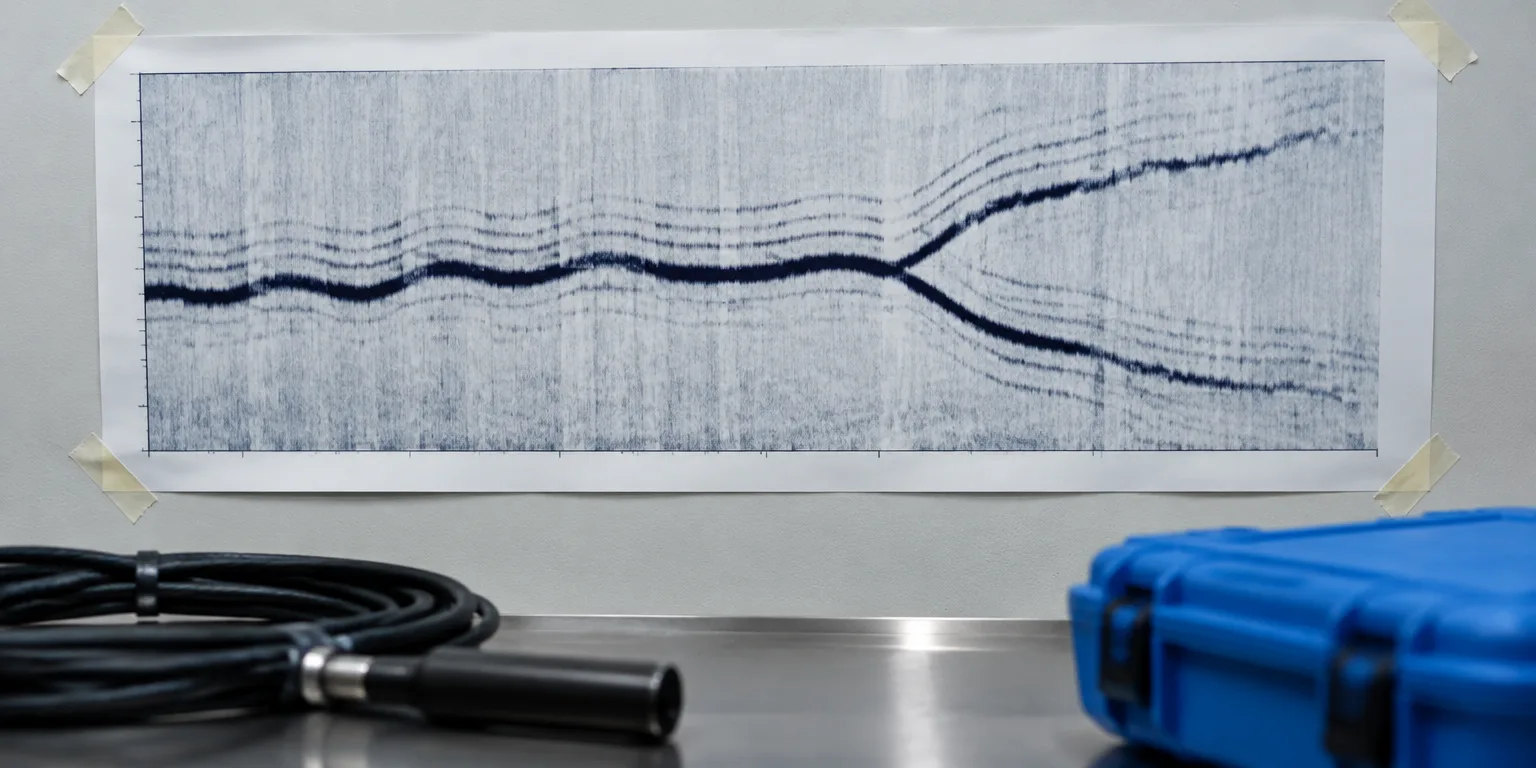
A killer whale call, frozen as a picture, shows up as a dark main tone with fainter lines stacked above it.
The description comes from Julia Mossbridge, a researcher who spent years analyzing marine mammal recordings. She offers guesses about what she saw, not a firm answer.
Time runs left to right across the chart, and pitch runs up. Pitch is what scientists call frequency.
A low whistle sits near the bottom, and a high whistle sits near the top. Mossbridge imitates a killer whale call as a series of oohs that would trace a wavy path, while noting that real calls sound more whistly.
The darkest part of the path is the fundamental frequency, the main tone with the most energy. The fainter lines above it are harmonics, which are multiples of that tone.
When she was measuring calls about 30 years ago, Mossbridge tracked the fundamental frequency because it is easier to see. It sits at the bottom of the stack.
Sometimes, Mossbridge said, "the fundamental frequency would look like a letter C," branching "out into a higher and a lower frequency."
She said she knew of no body mechanism that would let a killer whale split its main tone that way. She offered several possibilities, including a vocal trick like human throat singing, the position of the whale relative to the underwater microphone, or an effect that looked like time reversal, and she stressed that the pattern was rare and its meaning uncertain.
Questions people ask
What exactly is frequency?
Frequency is how fast a sound wave vibrates each second, measured in hertz. Faster vibration sounds higher in pitch, so a soprano sings at higher frequencies than a bass. On the chart, higher frequencies appear higher on the vertical scale.
What are harmonics, and why do they matter?
Harmonics are higher tones produced along with the main tone, at two, three, four times its frequency, and so on. They give an instrument or voice its distinctive richness, which is why a violin and a piano sound different on the same note. On the chart, they appear as fainter lines above the dark fundamental.
Why look at sound instead of just listening to it?
In general, researchers use the picture as a measuring tool, not just as an illustration. A chart makes rapid changes in pitch and energy easier to compare across calls and to track over time. That can be especially useful for brief or very high animal sounds that are hard to catch by ear alone.