Turkeys Are Not Stupid, They Just See Sideways
Side-set eyes give turkeys wide, sharp, colorful vision, and a strong memory guides them back to food on schedule.
 Stuff You Should Know · Selects: Gobble Gobble: Turkeys!
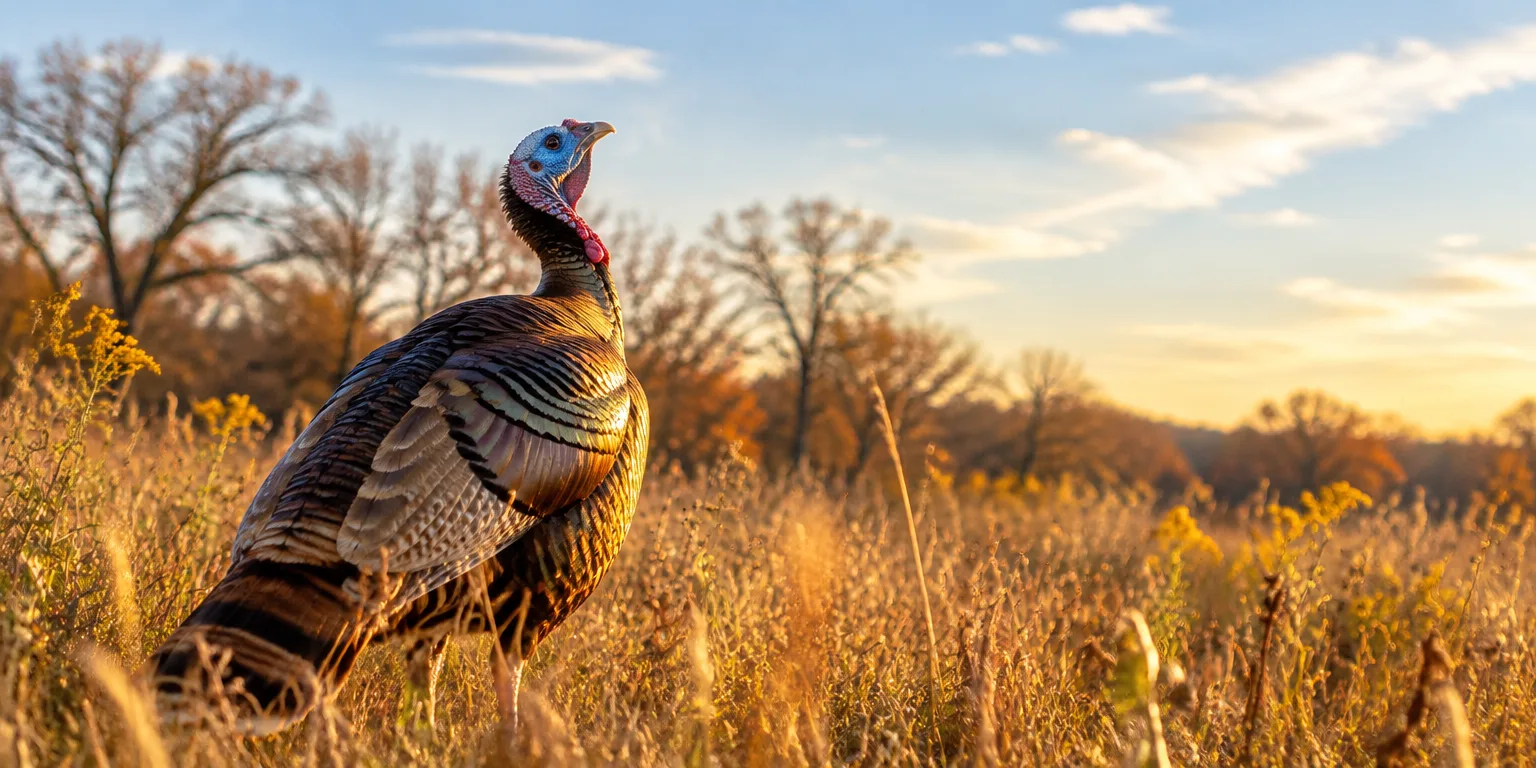
A turkey cocking its head sideways to stare at the sky is not being stupid. It is using the only eyes it has, set on the sides of its head.
That placement gives a wild turkey a field of view of 270 to 300 degrees, compared with about 180 degrees for people. It also sees in color, with about three times the sharpness of average human vision.
The tradeoff is depth perception. Without forward facing eyes for binocular vision, a turkey switches from one side to the other to judge distance, like flipping quickly through images.
What it cannot see in depth, it can partly make up for with hearing. Its hearing is excellent at locating where a sound comes from.
That side-eyed vision is one reason the old story that turkeys drown by staring straight up in the rain is wrong. A turkey would look sideways, not straight up, to check what is overhead. The myth may have grown from something else seen on farms.
Observers had seen something similar in domesticated factory farm turkeys. A farm worker may have seen a factory-farm turkey suffer a seizure as it gazed upward in the rain and died.
The smarter picture is in the memory. Wild turkeys can return to a precise feeding spot miles away at the same time of day, and they can reportedly tell human faces apart.
Benjamin Franklin also favored the turkey, but for character rather than smarts. He called the eagle dishonest for stealing fish from other birds, and praised the turkey as a native bird bold enough to confront an intruder in its farmyard.
Questions people ask
Can wild turkeys actually fly?
Yes, for short distances. Wild turkeys sleep in trees at night and can run 10 to 20 miles per hour, then burst into flight at up to 55 miles per hour to escape predators or reach a roost.
Do male turkeys really turn red, white, and blue?
In breeding males, the bare skin of the head and neck can flush red, white, and blue. Hens keep feathers up the back of the head, while males usually have bare heads and leg spurs.
Can turkeys smell well?
Turkeys are often described as weak smellers. That matters little because their eyesight and directional hearing do most of the work in finding food and avoiding danger.