Baby Turkeys That Cannot Fly Survive by Freezing in Place
For about 17 days on the ground, poults hold still at their mother's warning until they are old enough to sleep in trees.
 Stuff You Should Know · Selects: Gobble Gobble: Turkeys!
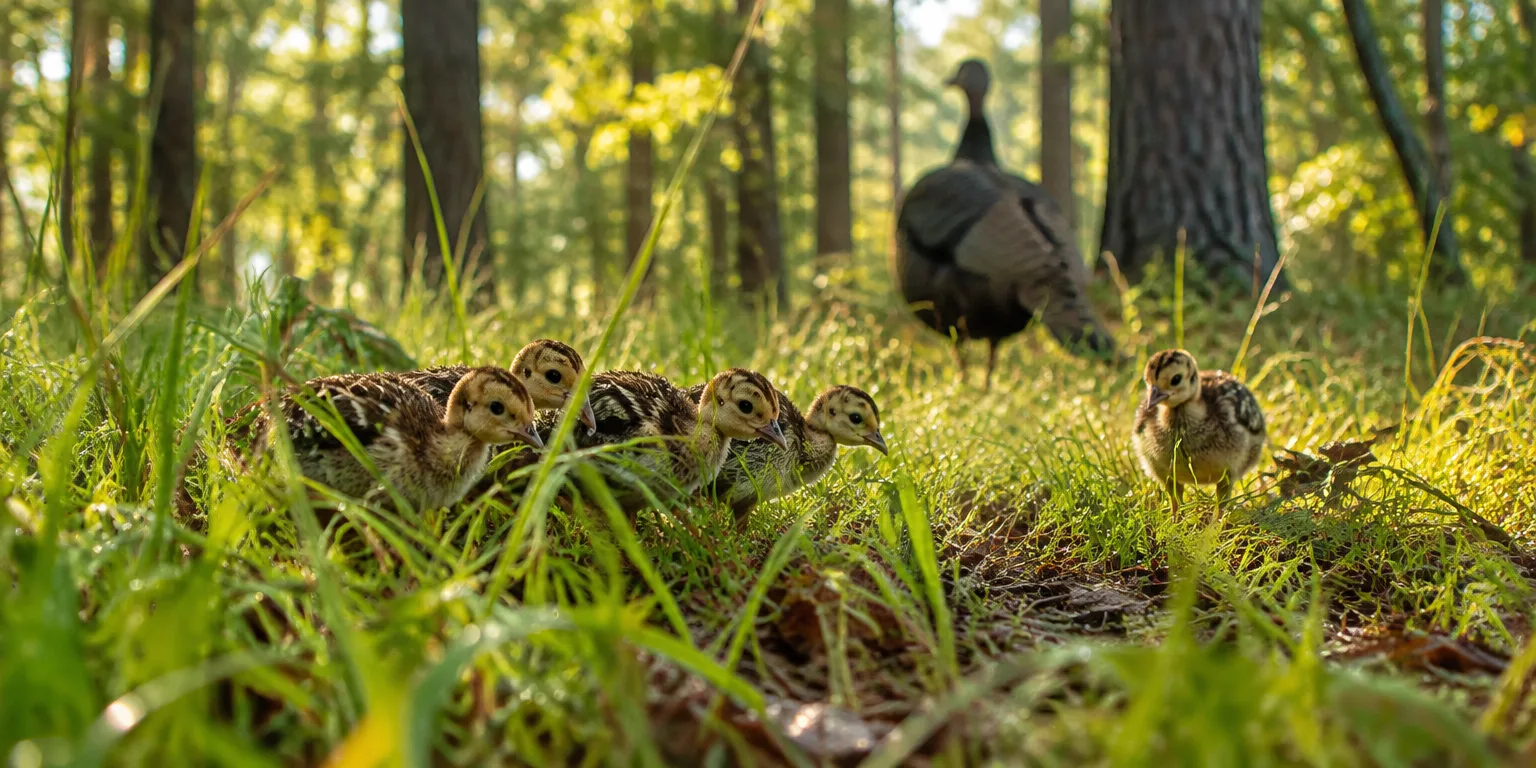
A newborn turkey cannot fly, so it does something simpler when danger comes. It scatters from its brothers and sisters and freezes like a statue, sometimes for up to half an hour.
The hen, or adult female turkey, nests on the ground in a grassy spot near the woods. She lays one egg a day, covers it, and leaves, then returns about the same time the next day to lay another.
After she has laid a clutch, she stays to guard and warm the eggs. About a day before hatching, the chicks, called poults, begin peeping inside the shells, and the hen answers with soft clucks.
Each poult breaks out using an egg tooth, a tiny hard tip for cracking the shell. The whole brood can take about a day to hatch, and the chicks can walk almost right away.
For the first couple of days, the poults stay close to their mother and siblings. In large part, what they are doing is learning the sound of their own mother's alarm call, a sharp warning that means a predator such as a raccoon or bobcat is near.
That lesson matters because the family lives on the ground. Until they can fly, they cannot roost in trees, so stillness is their defense.
At the alarm, they dart apart and hold motionless in the grass. With little movement or sound to follow, a hunter scanning for prey can pass them by.
At about 17 days old, the poults can finally fly. They start roosting in trees, at first tucked close to their mother to sleep, then spreading to nearby branches as they gain confidence.
Questions people ask
Does the father turkey help protect the babies?
No. The hen nests, incubates, and raises the brood alone. Male turkeys gather in spring to display and mate, but they do not help with eggs or chicks.
Why does freezing work against predators?
Many predators that hunt turkeys, including foxes, bobcats, and hawks, key on movement and sound. A tiny, mottled chick that goes silent and still in tall grass is much harder to find than one that runs.
What do poults eat while they cannot fly?
They feed themselves quickly. Within days of hatching, poults walk through grass pecking up insects, which give them the protein they need to grow fast enough to fly at about two and a half weeks.