Scientists Tagged a Deep-Sea Shark After It Slammed Their Sub
The crew had two tags, one miss, and a 12-hour recorder that had to be found at sea.
 National Geographic · Diving Into Deep Sea Mysteries | MEGA EPISODE | National Geographic
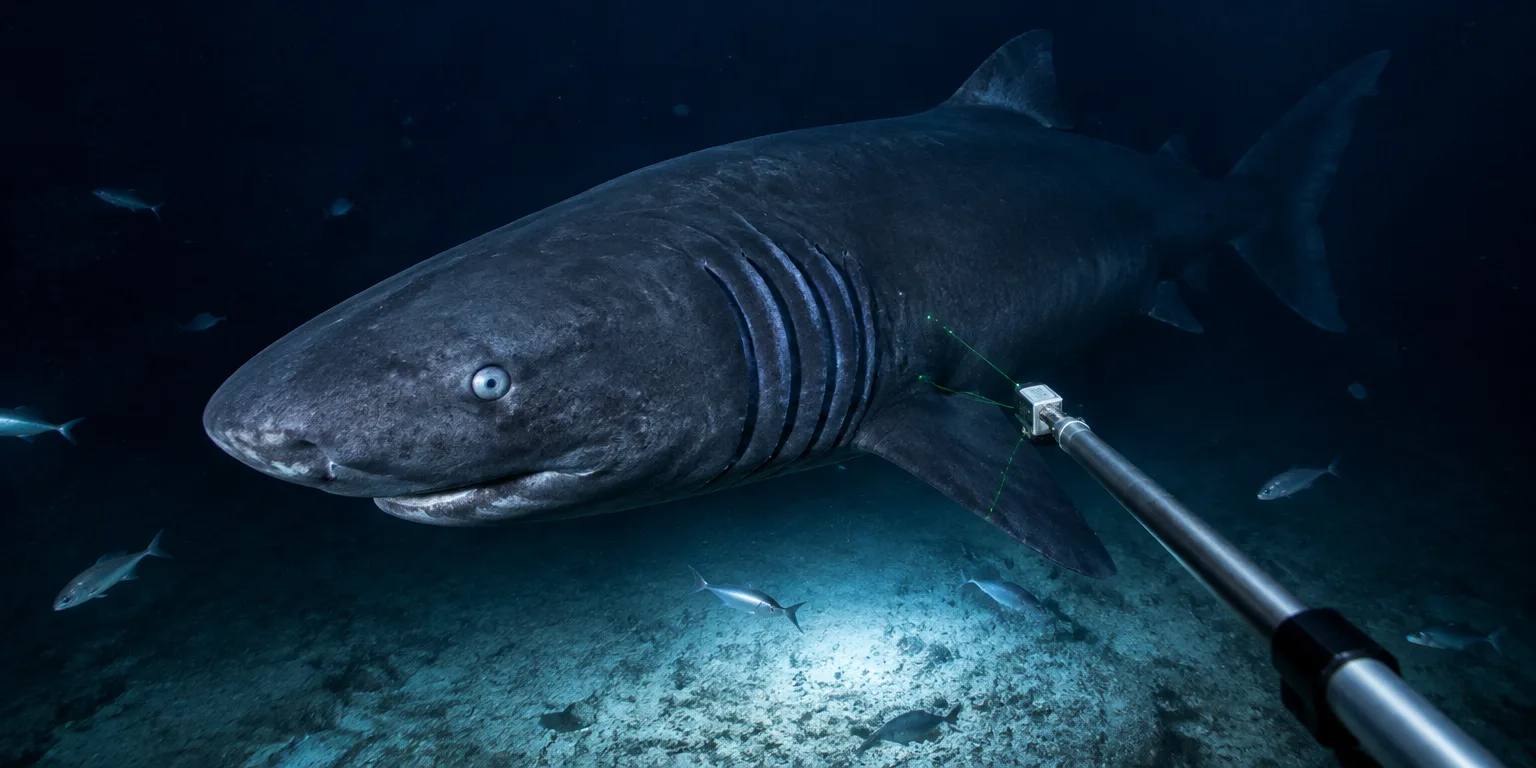
Inside the submersible, the thud came out of nowhere. Shark biologist Melissa Marquez watched a female sixgill hit the hull and slide underneath. After the hit, the crew armed its tagging gear.
Marquez had studied sharks for her doctorate but had never met a sixgill. Before the dive, she had said she was nervous about getting close, saying, "if it wants to clamp on to some part of the sub and shake us around a bit."
The crew was trying something no one had pulled off. Expedition member Zoleka Filander put it this way: "Nobody has managed to tag a sixgill shark from a sub at depth and get the data back." Only one earlier attempt had been made, and its data was never recovered.
The stakes were clear because sixgills live deep, in cold and darkness, and are rarely seen. Earlier that night, Marquez had estimated one female they encountered at about 15 feet long, an adult in water that was only 39 degrees.
To reach them, shark scientists Pedro Afonso and Jorge Fontes, from the University of the Azores, had built a prototype electronic tag with very fine sensors to record movement. The sub carried a firing rig aligned by lasers to place a shot within a few centimeters.
Fontes, the sixgill researcher handling the rig, had warned, "We just need to find the right shark with the right attitude." When the aggressive female turned toward the bait, the pilot switched the lasers on and the crew armed the system.
Fontes fired and missed by inches. With only one spare tag left, another miss would end the mission.
Then a second, lone female appeared, locked onto the bait, and followed the end of the pole into the beam. The crew talked her in, Fontes fired again, and the tag stuck. Marquez shouted, "You did it!"
The shark stayed around and came back for more fish, its eye rolling back as it fed. Filander explained that sixgills lack a protective membrane, so they roll the eye back in case prey fights back.
The plan was for the tag to track swimming and depth for 12 hours, then release, float up, and signal its position by satellite. The next day, crew member Aldo Kane, sent by boat to collect the floating tag, grabbed it from the swell near the cliffs.
The recovery saved the payoff. The tag carried video showing the sub's light, the seafloor, scattering fish, and the shark taking the bait, footage Marquez joked meant a shark had finally photographed her.
Its sensors also showed the shark roaming up and down, climbing to 200 meters before dropping deeper as the sun rose. Two brief speed increases might have been hunting, and Fontes said moonlight might have been enough for its sensitive eyes to see prey above, though he stressed that it could be.
Questions people ask
Why are sixgill sharks so hard to study?
Sixgills usually live hundreds to thousands of feet down, in cold, dark water under intense pressure. They come shallower at night, but researchers still need submersibles, bait, and luck to meet one face to face.
Does tagging hurt the shark?
No. The tag used here was designed to ride on a short tether for about 12 hours, record swimming data, and then release and float to the surface. The team said explicitly that it would not hurt the shark.
How does a tag sent into the deep get its information back to scientists?
These are called pop-off tags. After a preset time they detach, float up, and transmit their location by satellite so a boat can pick them up. If no one recovers the tag, the detailed sensor data is lost.