America Buys Exquisite Weapons It Cannot Afford to Lose
Weichert argues China is pulling ahead by flying an early version and learning by building more, while Washington perfects a few planes he says it is afraid to risk.
 The Tucker Carlson Show · Trump’s Reaction to the Midterms, the Democrats’ Strategy, and What Happens Next in Iran
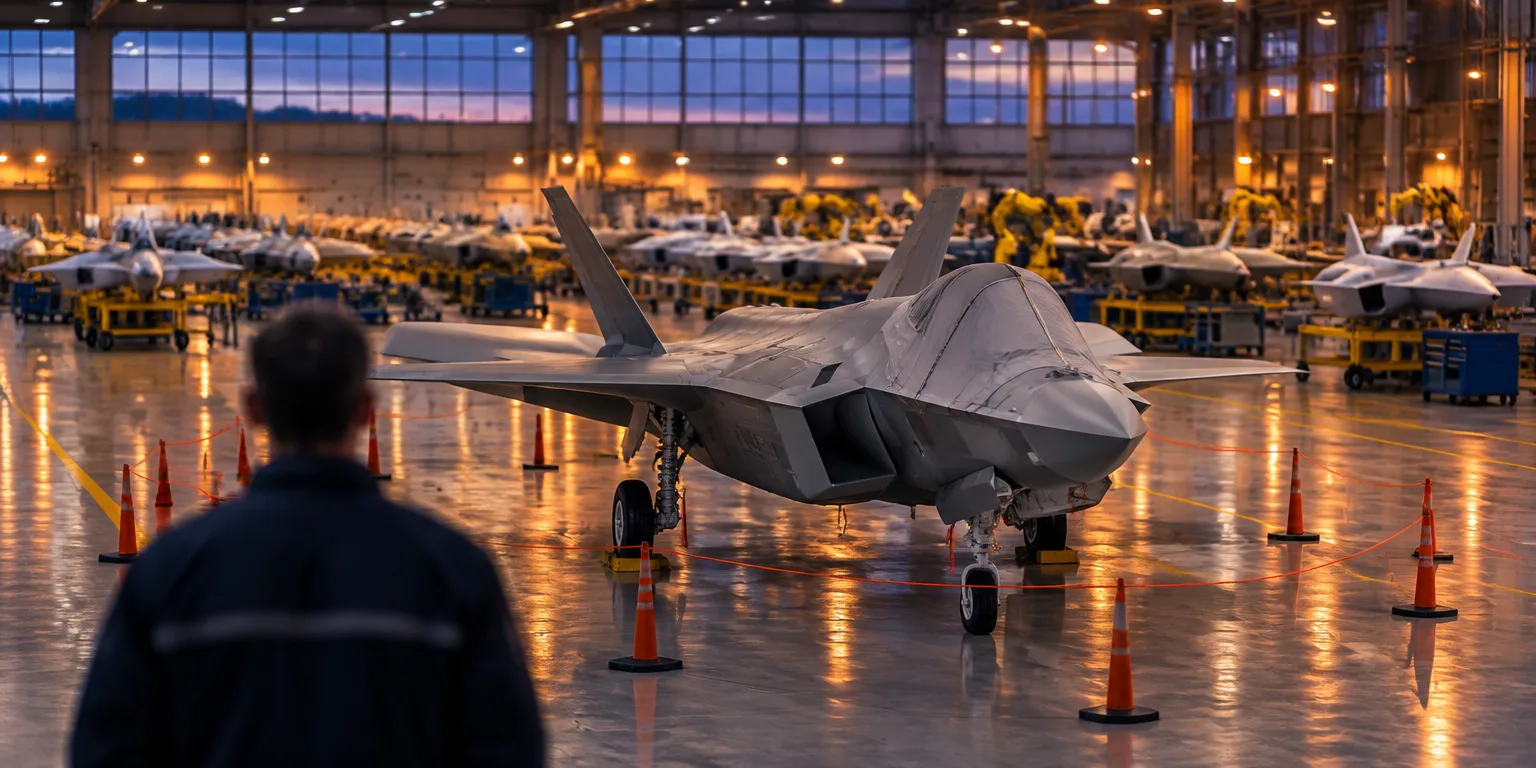
The American military tries to build perfect weapons, and China tries to build plenty of good ones and improve them as it goes.
Geopolitical analyst Brandon J. Weichert argues that difference explains why Washington is falling behind in production, even as it prepares what he says will in all probability be next year's $1.5 trillion Pentagon budget, which he thinks is the largest defense budget ever, with three aircraft carriers under construction.
The American sixth-generation fighter, Weichert says, is still being perfected and tested. China's "sixth generation plane, the J-36" has been flying around Shenyang since December 24, doing what he calls victory laps while the United States is "still trying to put the wings on our plane."
In his account, the mechanism is manufacturing. China puts out a prototype that is not as refined as an American fighter, then uses mass production to learn and revise. Weichert says China has paired an industrial robotics boom with artificial intelligence, allowing it to "mass produce fifth and sixth generation warplanes" while America hand-crafts exquisite aircraft he estimates it may build only about a dozen of by 2040.
He calls it Rolls-Royce versus Toyota, and says Toyotas win wars. A Rolls-Royce is too precious to risk, while cheaper systems can be tested, lost, replaced, and improved.
That logic extends to ships. Weichert calls the aircraft carrier obsolete and points to the newest Gerald R. Ford class carriers. Citing former destroyer commander Bobby Jones, he says the test is whether the Navy will confidently return to Bahrain, and argues fear of losing big ships is keeping it away.
Washington stays stuck, in his account, because the procurement system rarely punishes failure. He contrasts the United States, where he says corruption has never really led to punishment in 80 years, with China and Russia, where military officials face execution or removal. The exception he cites is the Marine Corps, the only service that consistently passes the Pentagon audit, which he attributes to its small size and constant pressure to justify its existence, adapt to land wars, and keep difficult aircraft like the Harrier flying for 30 years.
Questions people ask
What makes a warplane sixth-generation?
A sixth-generation fighter is meant to be the next step after today's most advanced jets, with better stealth, sensors, computing, and teamwork with drones. The exact definition is still debated, since no sixth-generation plane is in full service. In this account, the point is that China is flight-testing its design while America is still refining its own.
Why would anyone call an aircraft carrier obsolete?
An aircraft carrier is a huge ship that serves as a floating airfield, letting a country launch planes far from home. Critics say long-range missiles, drones, and satellites now make big carriers easier to find and hit. Supporters say carriers still project power and deter rivals because few countries can build or operate them.
What is the Pentagon audit the story mentions?
Each year outside accountants examine whether the Defense Department can track its money, weapons, buildings, and supplies. The Pentagon has failed these audits since they began, largely because its records are spread across old computer systems and hundreds of locations. The Marine Corps is much smaller, which supporters say makes its books easier to clean up.