Some of America's Most Famous Sites Stand on Made Land
That filled ground holds memorials, an exposition island, airports, and whole neighborhoods.
 The Works in Progress Newsletter · Why San Francisco isn’t bigger
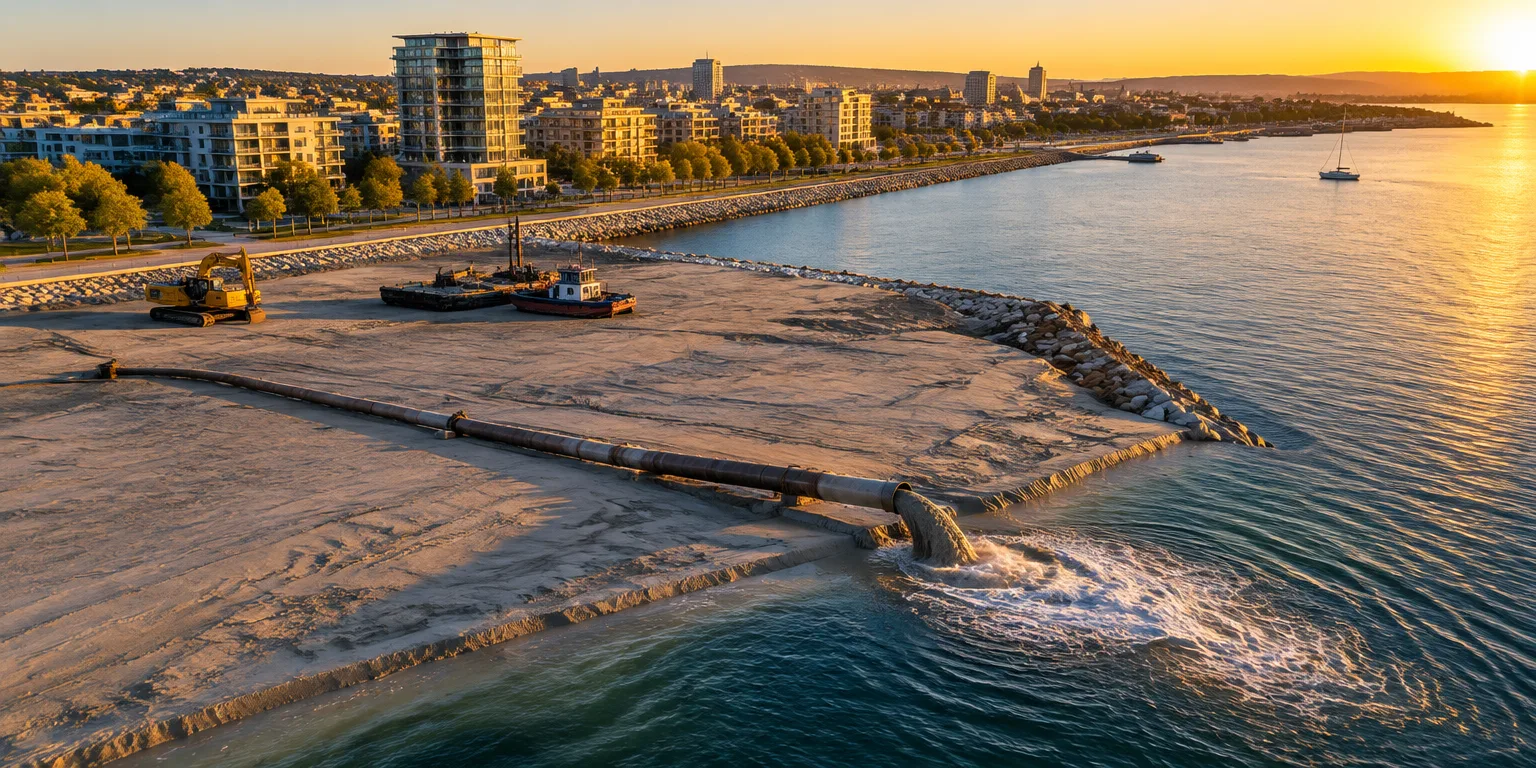
Some of America's most famous ground was built from water. About 8 percent of the land in large coastal cities lay underwater in the 1890s and was later filled.
That includes memorial ground in Washington. The Lincoln Memorial, the Second World War memorial, and the Reflecting Pool stand on ground filled from low wetlands by the Potomac in the early 1900s.
Treasure Island was built up from waters off San Francisco to host the 1939 Golden Gate International Exposition, a fair. On Lake Michigan, Chicago's Northerly Island used fill from the lake to finish the 1909 plan for the city drawn up by Daniel Burnham, the Chicago architect and planner.
The filled land also holds airports and neighborhoods. It underlies Newark, Boston Logan, and San Francisco International airports and districts including Boston's Back Bay, San Francisco's Financial District, and Camden in Philadelphia.
Boston and Charleston each doubled their size by filling coastal water.
Building new city land has largely stopped since the 1970s. As of the July 2026 article, the country had built no major city project on new fill since Battery Park City, the Manhattan neighborhood built on fill, was finished in 1976. The author rejects simpler ideas that good sites ran out or that improved transportation made fill unneeded, blaming 1970s environmental rules instead, and says easing those barriers could open room for a very large number of new houses close to downtown in the priciest cities.
Questions people ask
What do those 1970s laws actually require for filling water?
The author points especially to NEPA, a federal environmental review law that requires study of effects and alternatives, and to a Clean Water Act permit for placing dredged material in waterways and wetlands. Dredged material means sand or mud dug from the bottom. Decades of lawsuits have turned those reports into thousand-page documents that take years, and every reclamation needs the permit because filling the coast counts as discharge.
Why does the author doubt the simpler explanations for the stop?
One idea is that the easy sites were used up, and another is that improved transportation let cities grow inland instead. The author argues neither fits the sudden nationwide halt, since every one of 37 cities studied slowed after 1970. Other countries kept filling under conditions at least as difficult, the author writes, which also cuts against geography or technology as the cause.
Why reconsider reclamation now?
The author's case is housing and value: downtown land values have risen so much that reclamation costs would be dwarfed by the value of the land created. That could allow hundreds of thousands of new homes near the centers of our most valuable cities. It is the author's proposal for changing the laws, and any project would still need to complete environmental review.