Parker Charged Double for an Orange Pen and Dropped It From a Plane
The 1920s Duofold cost $7 when $3 bought a good pen, so the company made it impossible to miss.
 The Rest Is Science · The Fluid Dynamics of Fountain Pens
Michael Stevens, a science presenter trying fountain pens, ended up with ink all over his hands. The culprit was a short pen in burnt orange that kept marking his fingers.
Hannah Fry, a mathematician and pen collector who had brought her own pens for him to try, laughed at the mess. Inky hands were an occupational hazard, she said, and showed how hard she had been working.
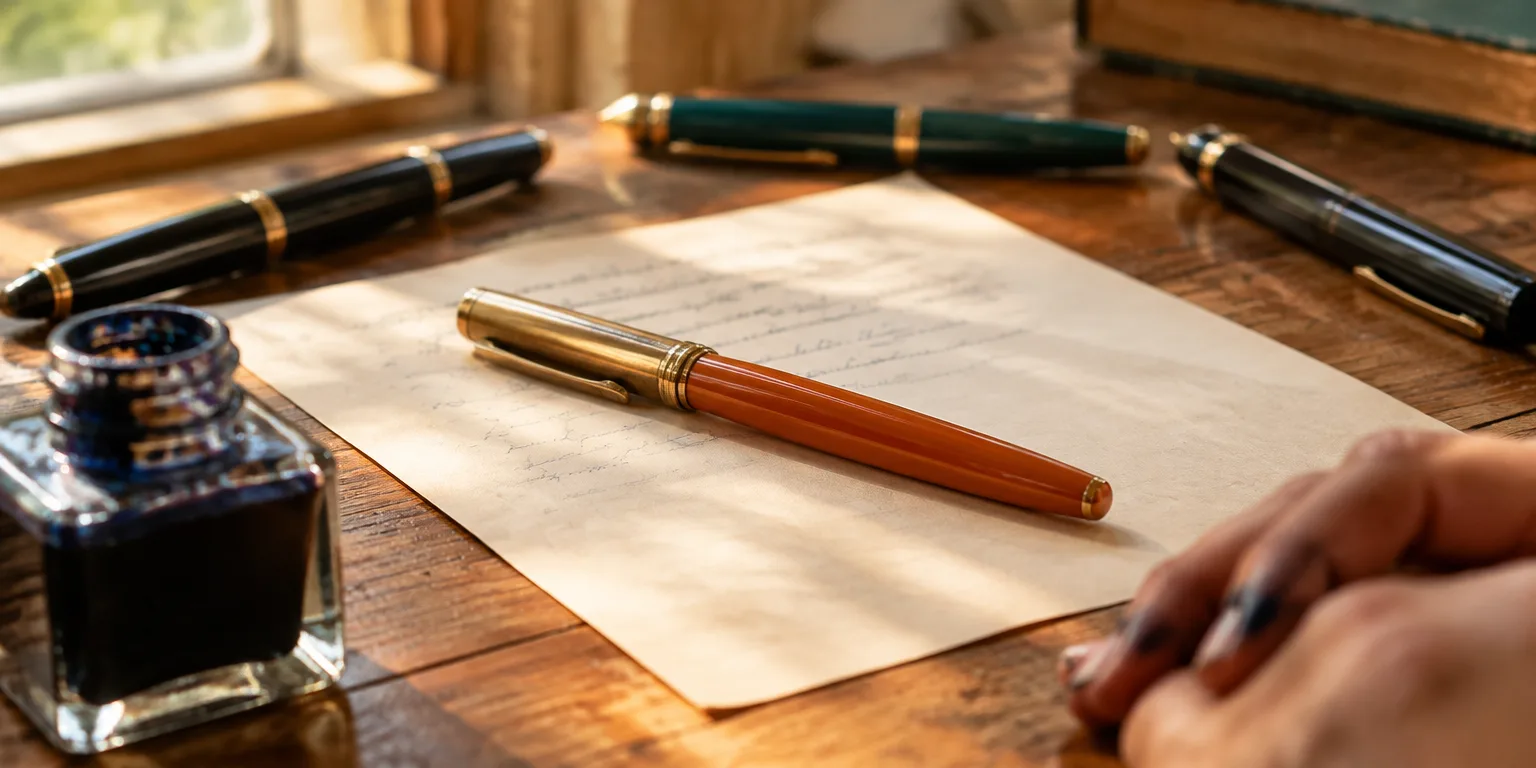
The pen was a Parker Duofold from the 1920s, what Fry called the loud American cousin. It was much thinner and shorter than the others on the table, and Fry asked, "Could you imagine all of the things that this has written in the last 100 years?"
Stevens said it was much thinner. He said he thought he could write smaller with it, which he liked to do.
Fry disagreed. She said it was way thinner than she liked and too scratchy for her, and that she liked pens that were wetter and put down more ink.
Inside, the Duofold worked on the same principle as the other early pens around it. It held a little rubber bag for ink in the barrel, and you unscrewed the end and pulled and pushed a small button to squeeze the bag and then let it expand, drawing ink in.
Fry warned him to be careful and not pull the button all the way out, or ink would go everywhere. The idea, she said, was squeezing the bag to push air out and then letting it expand to draw ink in, though the rubber inside could perish over time.
At its release, Fry said a good pen cost about $3. Parker charged $7, more than double. Fry said they "wanted to make this pen super famous."
So Parker deliberately made it in that burnt orange, a shade Fry said reads like an alarm. Then came the stunt Fry said was meant to make the pen famous.
Fry described a stunt in which the company took the pens up in airplanes, threw them out, recovered them, and said, "Look, they still work." It survived, Stevens said, and the trick was not better plumbing but making people notice, pay more, and believe the pen was tough enough to fall from the sky.
Questions people ask
Would a fall from an airplane actually damage a fountain pen?
It can. A hard landing can bend the thin nib, crack the feed underneath it, or break the barrel. Whether a pen survives depends on what it hits and how it lands.
How much was $7 in the 1920s in today's money?
Roughly $120, depending on the exact year and inflation measure. A $3 pen would have cost roughly $50 today.
Did the gamble work?
Yes. The Duofold became Parker's flagship product through the 1920s and one of the best known fountain pens in America. The short, thin, brightly colored pen helped establish the idea that a pen could be a status object, not just a tool.