One Houseplant Can Be Enough When Nature Is the Material
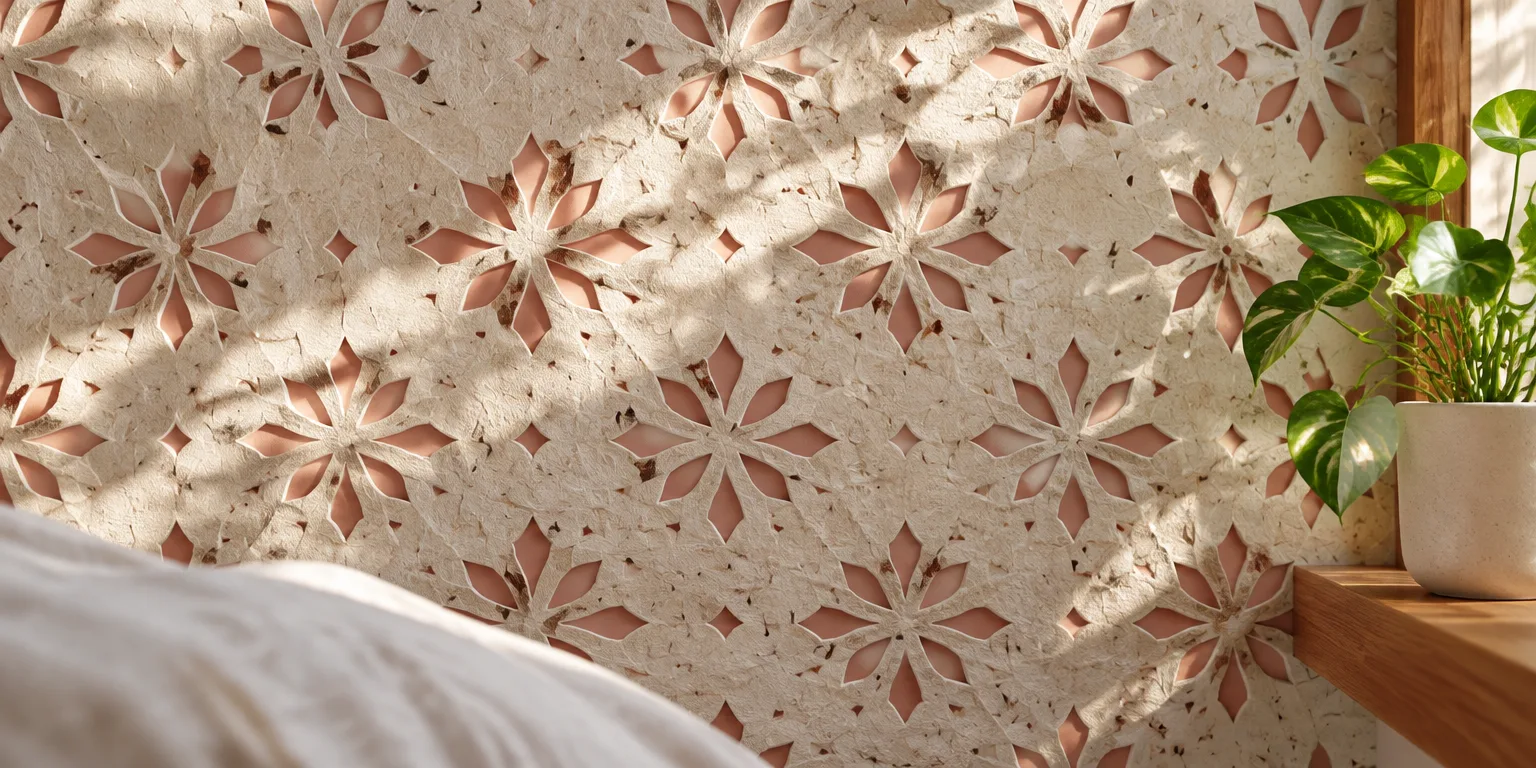
A New York designer’s bedroom wall, made from banana fiber with cutouts, shows the paint beneath.
 Slow Style Home: Decorating Personal, Meaningful Interiors · More Than a Houseplant: Bringing Nature Home with Lori Weitzner
Zandra, author of a book on slow-styled homes, visited the New York loft of her friend Lori Weitzner, a New York pattern designer known for nature-inspired fabrics and wall coverings. Weitzner lives and works in a busy city, and Zandra wanted to see how she had made her home feel like an escape from it.
Weitzner and her husband both live and work in what Zandra calls a bustling concrete jungle. Zandra says they "have purposely created an oasis at home to escape all of that," a "haven, where you can breathe and soak in the sunlight."
Zandra looked for the usual proof of that oasis. She counted only one houseplant.
That surprise led to the line Zandra builds the visit around. As she puts it, "the nature in Lori's home isn't added on top of the design."
In Zandra's words a moment later, "It's what the design is made of, both literally and conceptually."
She means that nature is in the fabrics, the accessories, even the walls, not only on the windowsill. Her clearest example is the primary bedroom.
The bedroom wall is covered with a paper made from banana fiber blended with some mulberry. The paper is full of cutouts.
Imagine, Zandra says, the paper snowflakes you used to cut out as a kid, or an accordion of paper dolls. The wall is not fully covered.
Whatever paint color sits underneath shows through the openings, so the finished wall mixes plant fiber and paint. Change the paint, and the pattern changes.
For a city dweller who craves nature, Zandra suggests, relief can come from what a room is made of. One plant can be enough when the walls themselves carry nature.
Questions people ask
What is a banana fiber wall covering?
It is a wall covering made from fibers taken from banana plants, beaten into pulp and formed into sheets or tiles. The sheets dry firm and slightly irregular, so the wall feels textured to the touch. In Weitzner’s bedroom it is mixed with a little mulberry fiber.
How does a cutout wall covering use paint?
The fiber panel is installed over a painted wall, but parts of it are cut away. Those openings act like small windows to the paint layer, so the color becomes part of the pattern. A different paint color would give the same paper a different look.