An Air Force Jet Merged With an Unknown Blip and Vanished
The single blip did not drop toward the water, and 40 minutes later another pilot heard a five-second voice through static.
 The Why Files · Aviation Mysteries: Horror at 30,000 Feet
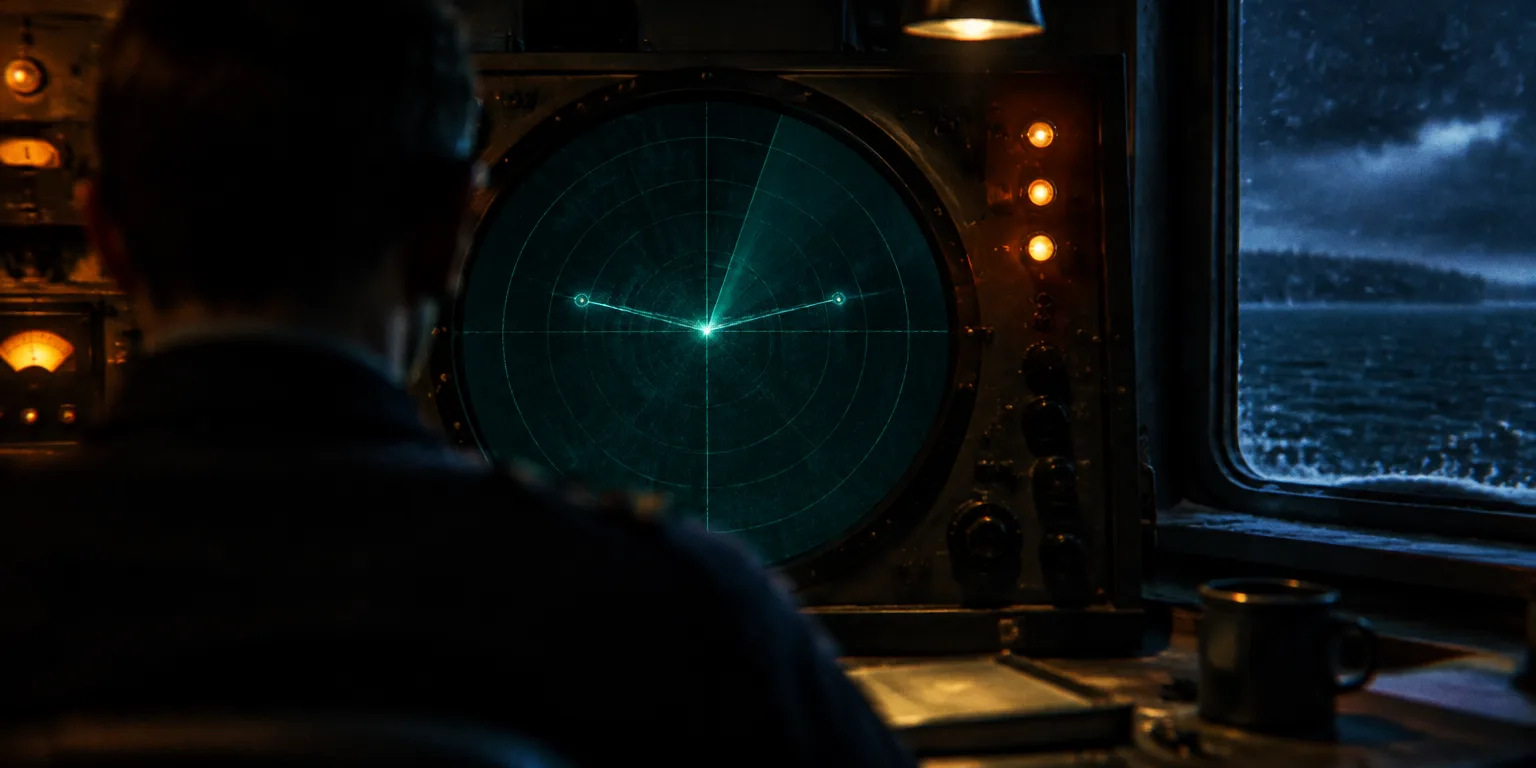
In the dark tracking area, the operator followed two pale dots as they closed the last empty space between them over Lake Superior. Shortly before 7 p.m., about 70 miles from the Michigan shore, they became one.
The jet was a Scorpion fighter, call sign Avenger Red, sent up on the evening of November 23, 1953. Flying it was 27-year-old First Lieutenant Felix Moncla, called Gene, an experienced pilot with more than 800 hours, a wife, and a five-month-old daughter at home. Behind him sat 22-year-old Second Lieutenant Bob Wilson, handling the onboard radar.
The Cold War was at its height, and the Air Force was guarding the Soo Locks between Michigan and Canada, narrow waterways that moved nearly all the iron ore used by American forces. That night brought snow showers and heavy clouds, and at 6:17 p.m. a Michigan radar station picked up a target that matched no scheduled flight.
Five minutes later Moncla and Wilson took off from Kinross Air Force Base into the storm, climbed to 30,000 feet, and raced north at 500 miles per hour. Almost at once the onboard radar would not hold a track, losing the object each time it changed course, while heavy static choked the radio. By 6:45 p.m. the radar was blind, Moncla asked whether to call off the chase, and ground control told him to continue.
Controllers on the ground still held both craft clearly, helped by the fighter's transponder beacon, a device that kept sending an identifying reply. At 6:47 p.m. they ordered Moncla to turn left and descend below the clouds to seven thousand feet. At 6:52 p.m. they told him the unknown was about ten miles ahead and slightly to his left, moving west to east, and Moncla clicked his microphone to confirm. It was his last confirmed transmission.
Over the next three minutes the two blips touched, as fighters and targets briefly do during an intercept, and then they did not separate. Seconds after the merge, Moncla's beacon cut dead, and calls to his aircraft brought no answer. If two planes had collided, the remaining blip should have sunk toward the lake and disappeared. Instead the single blip stayed aloft, sped up, and traveled beyond radar range.
Minutes later the base scrambled a second Scorpion, flown by Moncla's squadron mate Lieutenant William Mingsbach. At 7:35 p.m., 40 minutes after the merge, he heard Moncla's voice through the static for five seconds before it stopped in mid-sentence. A five-day search by American and Canadian aircraft, helicopters, and Coast Guard vessels found no cushions, rafts, fuel slicks, or other debris.
At first the Air Force acknowledged that the jet had been tracked until it joined an unidentified target. Officials then said the object was a Canadian cargo plane 30 miles off course, which Moncla had identified before suffering vertigo and crashing. The Canadian pilot denied it, saying he had stayed on course and was never intercepted.
Two officers later gave Moncla's widow conflicting accounts, one saying her husband flew too low and one saying the aircraft had blown apart high above the lake, and the Pentagon later said all files on the mission had been erased. Fifteen years later, two prospectors found scorched, dark red military jet metal on the remote Canadian shore, which visiting officers confirmed and removed.
In 2006, a group calling itself the Great Lakes Dive Company shared sonar pictures from 500 feet down at the merge spot. It said an F-89 lay largely intact with its canopy shut and one wing missing, and the company said, "And right ahead of the nose, half buried in the mud at the end of a long trench, is a metallic teardropshaped object."
Maritime researchers who tried to check the group found no such company registered in either Michigan or Canada. Days later its website was wiped, its phones were cut, and its spokesman, Adam Jimenez, had disappeared.
Questions people ask
What did the Air Force mean by vertigo?
Vertigo is spatial disorientation, when a pilot loses the sense of up and down, especially in clouds, darkness, or snow when no horizon is visible. It can cause a pilot to bank, dive, or misjudge altitude while believing the plane is flying level. Investigators sometimes cite it when a capable pilot crashes without an obvious mechanical failure.
What is a transponder beacon and why did its loss matter?
A transponder beacon is an onboard radio device that automatically replies to ground radar with an identification signal. It lets controllers tell friendly military or civilian aircraft apart from unknown targets, even in bad weather. In this account, its sudden loss meant the ground station could no longer positively identify Moncla's jet.
Why was the military guarding that stretch of Lake Superior so closely?
The Soo Locks are canals and locks that let ships pass between Lake Superior and the lower Great Lakes. During the early Cold War they mattered because they carried iron ore used for American steel and weapons production. That is why Air Defense Command kept radar stations and fighters on five-minute alert nearby.