Bootleggers Started America's Obsession With Fast Cars
Outlaw drivers chasing speed created drag racing and stock cars, and taught Detroit that track victories move cars off dealer lots.
 National Geographic · How Muscle Cars Reshaped American History (Full Episode) | Cars That Changed History | Nat Geo
America's speed craze did not start on a racetrack. It started with criminals trying to outrun the police.
When the United States banned making and selling alcohol in 1920, a black market quickly grew around moonshine, or illegally made liquor. Runners who hauled it across the country needed cars that could disappear down a back road, and speed could mean the difference between getting paid and going to jail.
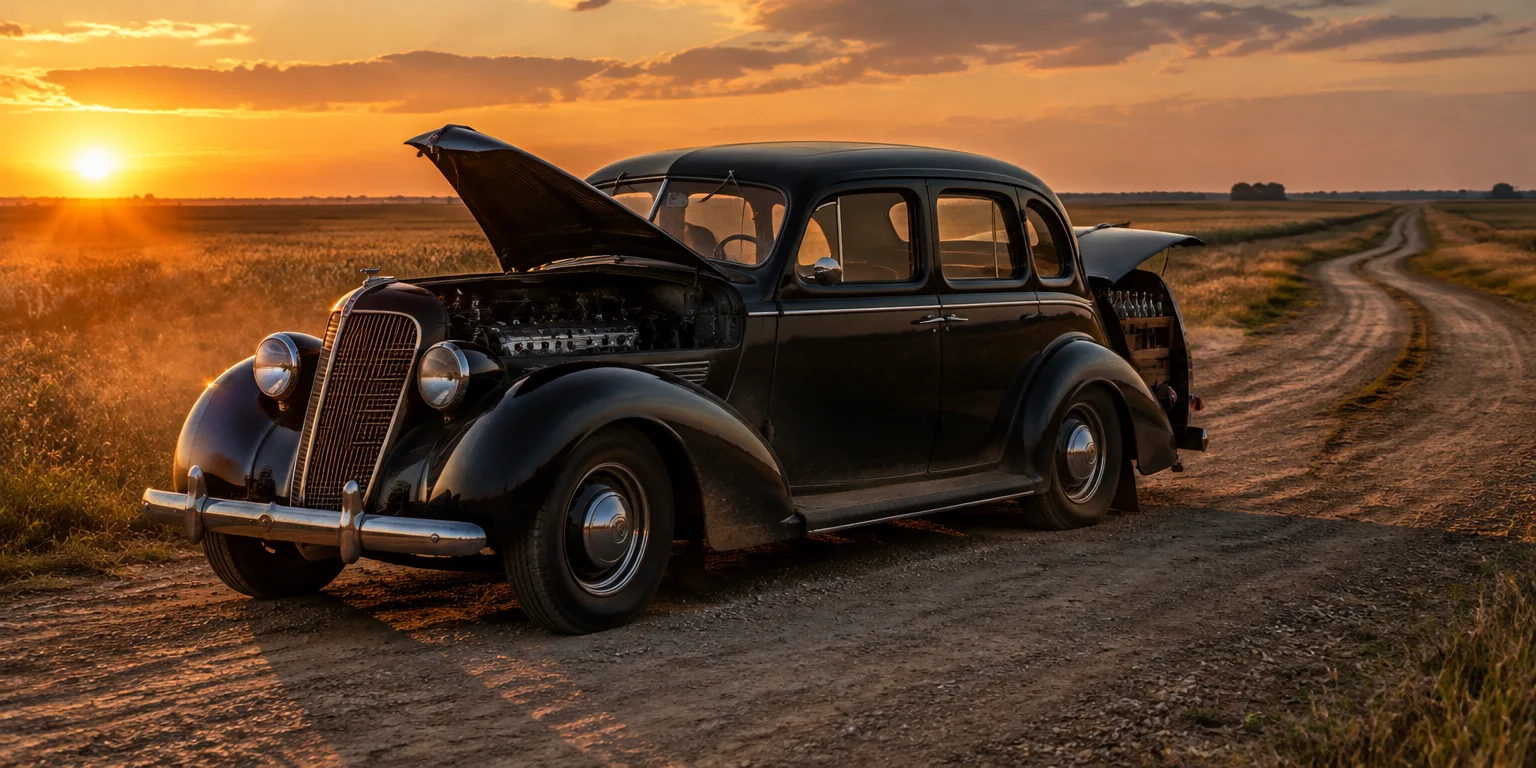
So they built the ideal getaway car. They stiffened the springs so a loaded car sat level, added secret spaces to stash the bottles, and tuned the engine for more speed.
The breakthrough arrived in 1932, when Ford released an affordable engine with eight cylinders arranged in a V shape. Most cars at the time had four or six cylinders in a single line, so the new design was like packing two four-cylinder engines together, with more room for fuel and air. More fuel and air means more power, and bootleggers quickly made it the outlaw engine of choice.
Prohibition ended in 1933, and the pressure to escape the police vanished almost overnight. The taste for speed did not. After World War II, drivers who no longer needed to flee the police still wanted a reason to drive fast, so they began racing one another.
That hunger produced drag strips, straight stretches where drivers tested modified cars head to head, sometimes legally and sometimes not. By the late 1940s, the informal contests had matured into stock-car racing, soon known as NASCAR, which puts ordinary production cars, tuned for racing, through grueling long-distance tests.
Because the racers were versions of showroom models, fans could buy what they cheered for. Automakers learned that buyers wanted the engines and cars they had seen win, and as one expert puts it, a shopper might choose one model over another 'because it did well that Sunday.' Detroit turned an outlaw habit into a business strategy, and Ford and General Motors began an arms race for power.
Questions people ask
What exactly happens at a drag strip?
A drag strip is a short, straight track, usually a quarter mile, where two cars start side by side from a standstill and race to the finish line. The format tests pure acceleration and engine tuning, not cornering or endurance, which made it a natural outlet for drivers with modified street cars.
What makes stock-car racing different from other auto racing?
Stock-car racing uses production-based cars that have been strengthened and tuned for racing, rather than one-of-a-kind prototypes built only for the track. Because the starting point is a model the public recognizes, fans can closely connect a race winner to a car they could buy. That link is why the sport became so useful for marketing.
Why was the V8 such a big advantage?
Power depends on burning fuel and air, and a larger engine can process more of both with each cycle. An eight-cylinder V shape packaged much more capacity in a compact, affordable unit than the four- and six-cylinder inline engines common at the time. The result was faster acceleration and higher top speed, exactly what a loaded getaway car needed.