Pontiac Used a Loophole to Put a Big V8 in a Small Car
Regular Saturday brainstorms and an options-list gap turned the stodgy Tempest into a six-second sensation.
 National Geographic · How Muscle Cars Reshaped American History (Full Episode) | Cars That Changed History | Nat Geo
In the early 1960s, John DeLorean's team of Pontiac engineers made a habit of meeting most Saturday mornings to brainstorm how to lift the image of their brand.
The leader was John DeLorean, a Detroit-born engineer who had held a student job with Chrysler and then climbed through General Motors to its Pontiac division. He was suave and ambitious, but stuck at a brand many buyers saw as a grandma car.
The country around them was changing. Postwar optimism had given way to distrust of authority over civil rights and Vietnam, and that spirit of defiance was showing up in rock and roll and in cars.
A member of the team, William T. Collins, offered a simple fix. Drop Pontiac's biggest V8 into its little Tempest Le Mans coupe.
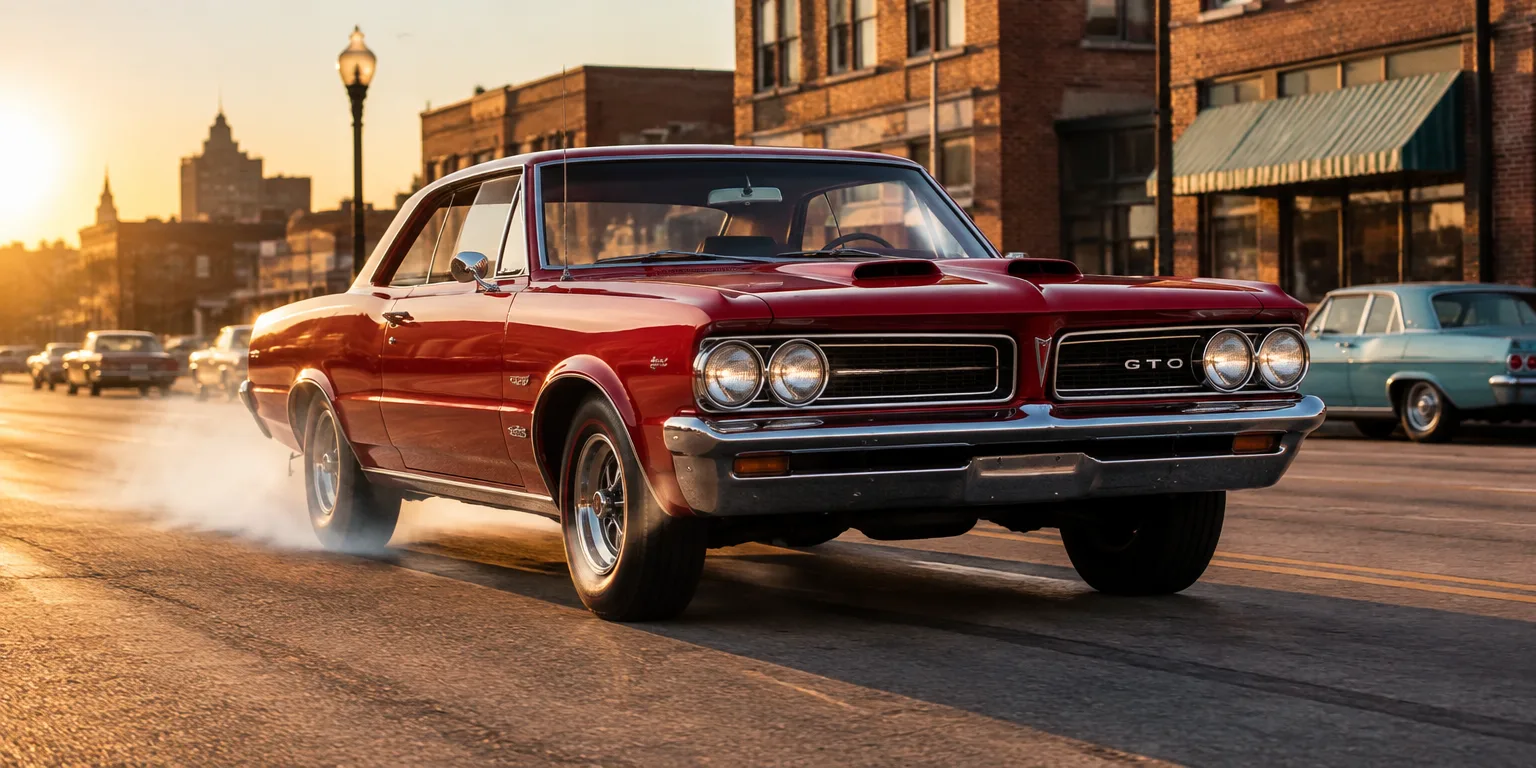
The idea ran into an internal General Motors rule that barred large engines in midsize cars, a holdover from the industry pullback from motor racing. DeLorean thought the rule was boring, and he spotted a loophole that would create the 348-horsepower Pontiac GTO.
The team realized the restriction applied only to a car's standard, base engine. That reading let them build the GTO with the big V8 offered as an option the customer could choose.
When the Pontiac GTO was unveiled in 1963, it revived an older trick first used by the 1949 Oldsmobile Rocket 88, widely credited as the first muscle car, pairing a hefty V8 with a lighter body, and gave it a meaner edge.
DeLorean deliberately geared the car for quick launches. With 348 horsepower, it could sprint from zero to 60 miles per hour in just six seconds, with smoke every time the driver pressed hard on the gas.
The car was a sensation and drew almost 5,000 orders right away. What Americans had done for decades in garages and back streets, modifying ordinary cars for speed, was now available straight from a Detroit showroom.
Ford's top executives knew they had to answer.
Questions people ask
Why did GM ban big engines in small cars in the first place?
After a Mercedes crashed into the crowd at Le Mans in 1955, killing 82 people, American automakers feared regulation and bad publicity. In 1957, their trade group agreed to stay out of racing directly, and GM added internal limits, including against putting its largest engines in its smaller cars.
What does GTO stand for?
It stands for Gran Turismo Omologato, Italian for grand tourer homologated for racing. Pontiac borrowed the name from Ferrari, which used it for a celebrated race-bred coupe, a cheeky signal that an American family-brand car meant serious speed.
Is this the same DeLorean behind the famous stainless-steel sports car?
Yes. About a decade later, the same John DeLorean left GM and started his own company to build the stainless-steel, gull-wing sports car later made famous in Back to the Future. The GTO was his earlier act of rebellion, staged from inside the system.