Britain Exported Irish Food While Irish People Starved
London defended open ports as hands-off economics while merchants made large profits and warships were sent to contain unrest.
 After Dark: Myths, Misdeeds & the Paranormal · The Great Irish Famine
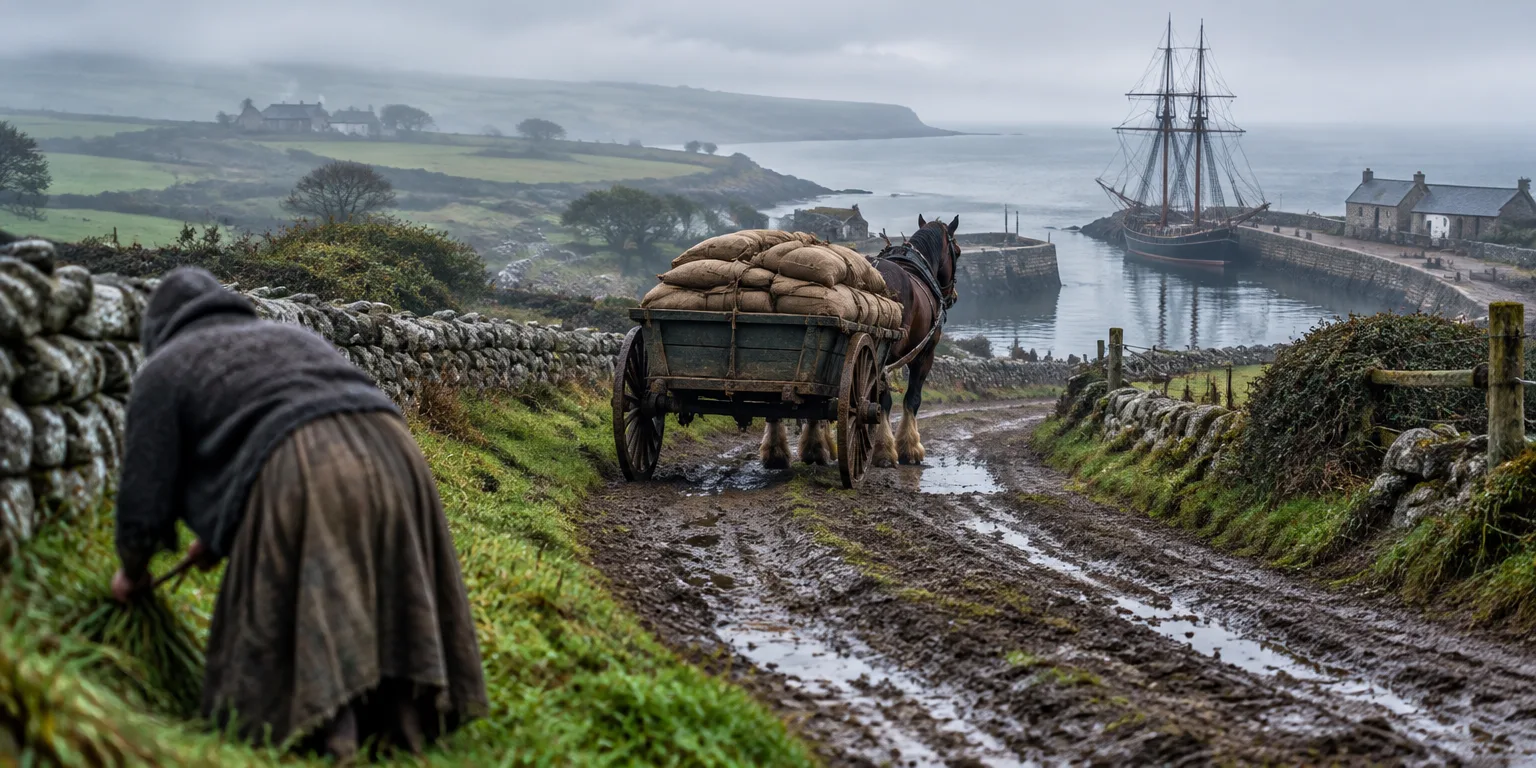
While Irish families searched the countryside for grass to eat, vessels kept sailing from Ireland's eastern harbors carrying harvests meant for Britain.
The account puts the flow at nearly 770,000 pounds worth of Irish grain every week, sent on to feed people in Britain even as hunger spread at home.
The food was treated as the property of landlords and merchants under market rules that London left in place. With Irish ports kept open, carts rolled through parishes like County Meath toward docks for Liverpool, Plymouth, and elsewhere.
Parish priest James McEnvoy of County Meath watched those carts pass and said: "Self-preservation is the first law of nature" and "The right of the starving to sustain existence is far and away paramount to every right property confers."
Irish political leader Daniel O'Connell argued that keeping Irish produce in Ireland and selling it at reasonable prices might have curbed the hunger. The account says he cited 200,000 head of livestock, along with grain totaling two million quarters and flour totaling hundreds of millions of pounds claimed from Ireland while Irish people starved.
A Dublin Mansion House committee headed by O'Connell asked as early as 1845 for the ports to be closed so food would stay in Ireland. The request was repeated through the famine, and closing ports had been done before, but the government refused in the name of laissez-faire, the belief that government should not interfere in markets.
Historian Christine Kinealy says a government memo acknowledged the strain of watching people starve while merchants were taking profits of one-half or more.
In Galway, posters warned that merchant stores would be broken open if more corn was exported. Britain answered by sending warships and soldiers to curb protest in destitute towns and cities.
Kinealy says the British government could not control the potato blight, or its return, but it could have provided food and medicine. Instead, she says, it allowed more than one million people to starve and nearly two million to emigrate.
She calls laissez-faire a convenient excuse. The same government intervened heavily in Irish education and poor relief, in shipping rules, and abroad when it forced China to accept opium it did not want. In Ireland, she says, fear of creating dependency helped make the Irish poor seem expendable.
Questions people ask
What did laissez-faire mean in practice?
Laissez-faire means the government stays out of buying, selling, and prices and lets markets decide. In Ireland it meant refusing to stop exports, fix prices, or supply food on a large scale, on the theory that interference would do more harm.
Why didn't hungry families just keep the grain?
Most of the tenants did not own the harvest. They paid rent to landlords and often owed merchants, so grain, cattle, and flour were sold to pay debts and fetch the best price in Britain. Potatoes were the food they grew to eat themselves, and when that crop failed they had little legal claim to the other food leaving the docks.
Had Ireland ever closed its ports before?
Yes. Ireland had closed ports in earlier shortages to hold food at home, which is why the Mansion House committee kept making the request from 1845 onward. The famine policy was a choice to break with that precedent.