Britain Fed Three Million Irish People, Then Stopped
The kitchens showed mass hunger could be relieved, then relief shifted to workhouses in the famine's worst year.
 After Dark: Myths, Misdeeds & the Paranormal · The Great Irish Famine
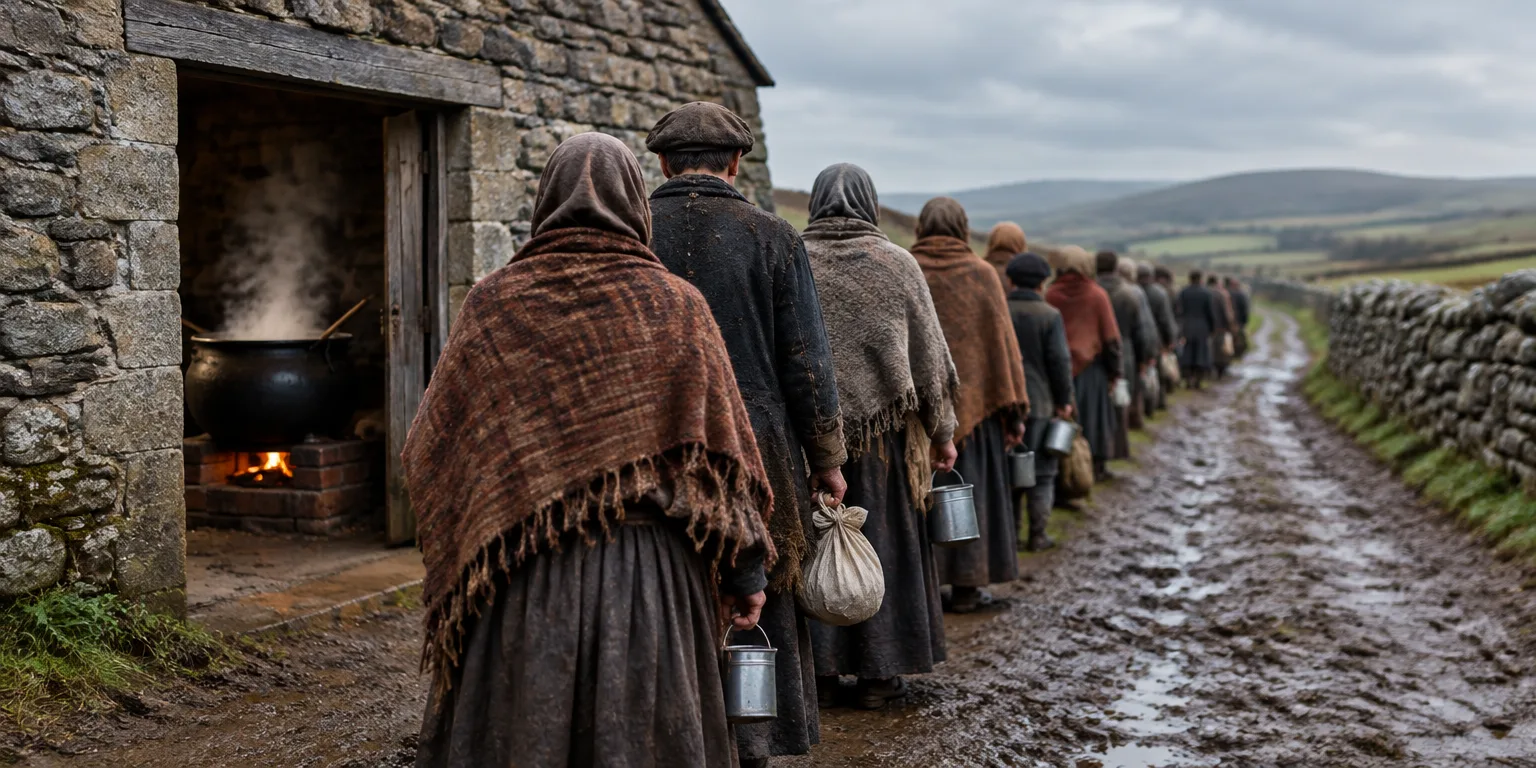
In July 1847, soup kitchens across Ireland fed more than three million people, about 40 percent of the population. In August, Britain closed them.
The kitchens were an emergency measure during the famine's worst year, known as Black '47. A French chef working in London devised 10 to 12 soup recipes, and designed kitchens so people could eat and leave very quickly.
The scale was enormous. Historian Christine Kinealy, a scholar of Irish history, says “what it shows, and I think conclusively, is that the British government had the logistic and the administrative ability to feed the Irish people.”
Public works had been mostly closed that March in a decision associated with civil servant Charles Trevelyan, who viewed the famine as divine punishment. After the kitchens closed in August, relief shifted to the workhouse-based Poor Law.
Around the end of 1847, foreign donations ended after the government said the famine was over, though it was far from finished.
Questions people ask
What did the soup kitchens actually serve?
The recipes were cheap, bulk soups meant to be nutritious and served fast, with soup and bread distributed at the kitchens. They were designed for speed and scale rather than comfort, moving large crowds through quickly.
What replaced the soup kitchens?
The Poor Law, administered through local workhouses, became the main relief system. It placed the cost on Irish taxpayers and required destitute people to enter often crowded workhouses, which had far too few beds for the need.
What were the public works that closed before the soup kitchens?
Public works employed destitute people on building and road projects in exchange for wages to buy food. They were expensive to run and required a large bureaucracy, and they were largely shut in March 1847 before the soup kitchens opened.