Clinically Proven Has No Official Meaning
Clinically tested means a test happened, and cosmetics do not need approval before they go on sale.
 ecohomescience.com · How to Read a Skincare Study (Before and After Photos)
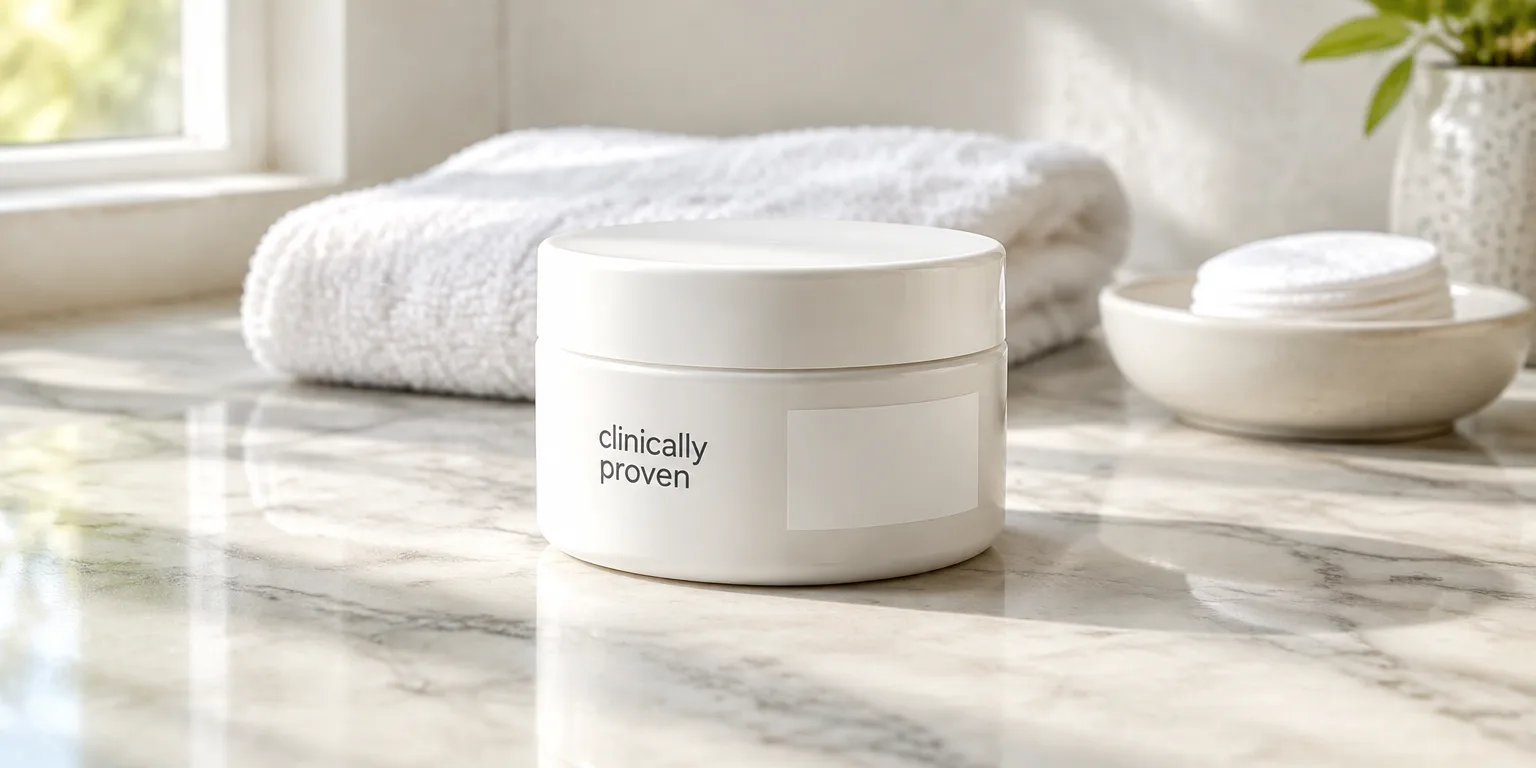
On a cosmetics counter, clinically proven sounds like a seal of approval. It is not.
Serge, an environmental science writer who covers skincare evidence, says he found no official definition of clinically proven. He treats the phrase on a moisturizer as marketing language to verify personally, not an independent certification.
Clinically tested is even thinner. It signals that researchers ran some kind of trial, without saying the outcome favored the product. Clinically proven makes a stronger assertion of success while leaving the supporting data unspecified.
The same gap applies to other grand phrases. He reports finding no set definition for scientifically proven or medically proven. A dermatologist recommendation reflects a professional view rather than proof from a trial.
Regulators set a standard for health claims without defining the label. Guidance from the Federal Trade Commission calls for solid, trustworthy science behind health benefit assertions, usually trials in people that are randomized and controlled.
That means people are assigned by chance to get the product or a comparison, often the same cream without its active ingredient. Lab dish and animal results alone are not enough, the guidance says, and customer surveys are never sufficient.
The catch is scope. The federal guidance applies to broad categories including foods, supplements, and medicines, yet never singles out skin creams specifically. According to the Food and Drug Administration, cosmetics can be sold without advance approval.
There is one exception that matters. An item intended to alter skin structure, for example by smoothing lines or building collagen, falls under drug or device rules. Even there, the agency material stops short of saying wrinkle creams have to demonstrate efficacy.
Wording can also stretch an ingredient into a product claim. The trade commission warns that clinically tested ingredient can imply proven benefit, so the finished cream may need testing, not only its star ingredient.
Questions people ask
What does randomized and controlled testing mean in skincare?
It means participants are assigned by chance to receive the product or a comparison, often the same formula without the active ingredient. Chance assignment helps ensure that the groups are similar, so a difference in skin is more likely due to the product. Ideally, neither the participants nor the judges know who received what.
Why is a customer survey not enough to prove a cream works?
People often report improvement when they expect a product to work, and skin naturally goes up and down. A questionnaire captures impressions, such as whether skin feels smoother, rather than a measured change in moisture or wrinkle depth. That is why measured results carry more weight than opinions alone.
What is a fair way to test a product on myself at home?
It means only that one product was changed while the rest of the routine stayed steady, usually for four to six weeks. Take photos in the same place, lighting, and time of day, then compare the whole set at the end. Test a small patch first in case of irritation.