Feeling Smoother Is An Opinion, Not Proof A Cream Works
One reports feelings, the other does not show the formula did anything.
 ecohomescience.com · How to Read a Skincare Study (Before and After Photos)
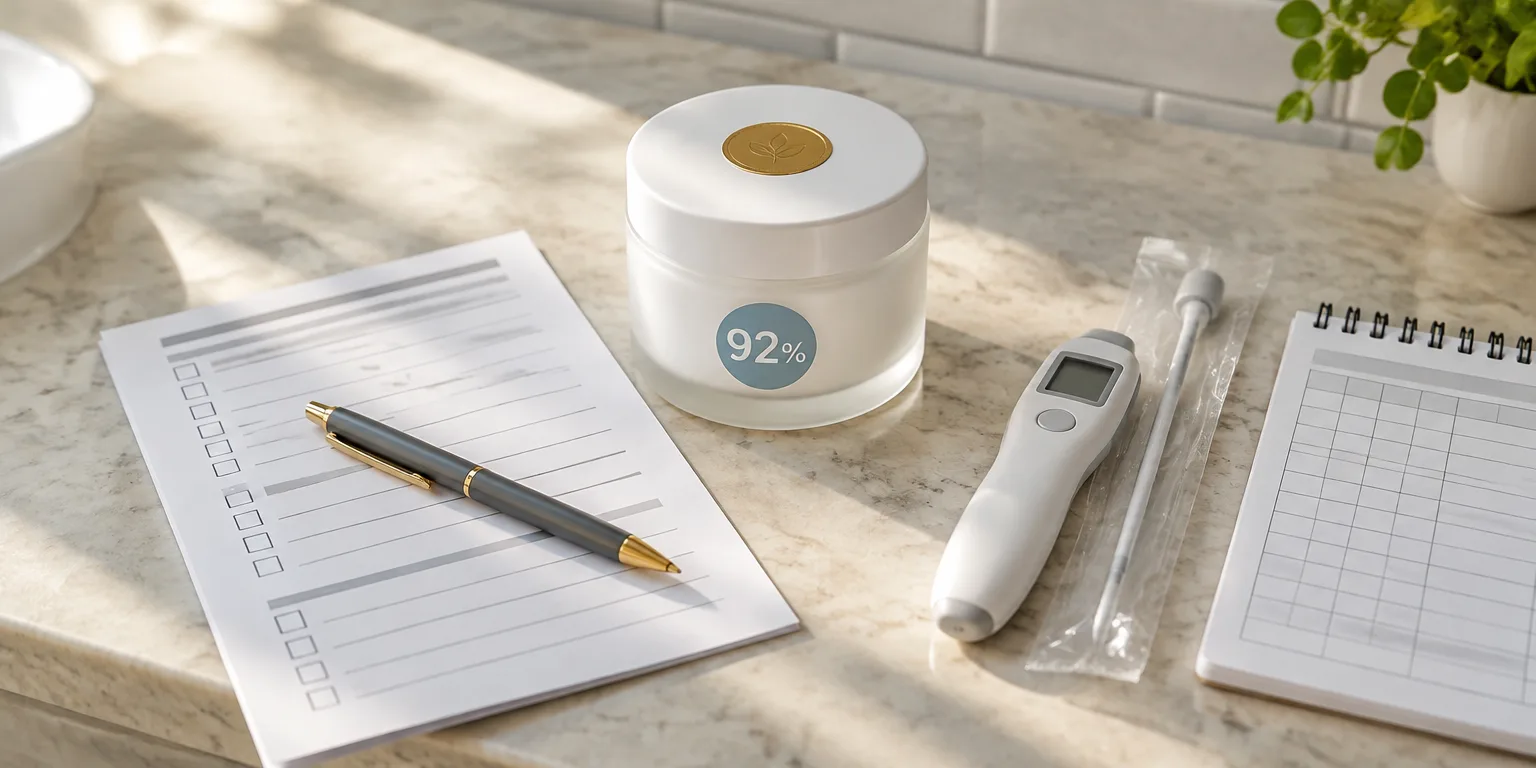
When a jar says 92 percent said skin felt smoother, that figure usually comes from asking users for their impressions.
Those answers show personal impressions rather than a measured change in the skin itself.
Official sounding seals are similar. “Dermatologist tested” and logos on the package are not evidence that the formula delivers a benefit.
They describe a check or an impression, not proof of smoother, firmer, or clearer skin. What matters for performance is what was measured and what changed.
Questions people ask
What does dermatologist tested actually mean?
Usually it means a dermatologist supervised some kind of test, often a patch test to check for irritation or allergy in a small group. There is no single legal definition, and it does not require proof that the product improves wrinkles, spots, or smoothness.
What would stronger proof that a cream works look like?
Look for a test of the finished product against a comparison cream, with people assigned at random and neither volunteers nor evaluators knowing who got what. Stronger studies also last long enough for skin to change and use instruments or photos measured in a standard way, not only questionnaires.
Why do brands use user percentages if they prove so little?
Questionnaires are quick, inexpensive, and capture things instruments miss, such as feel, scent, and whether someone enjoys using the cream. They are useful for preference, but liking a texture or feeling smoother is not the same as having measurably smoother skin.