Drone Deliveries Let Rwandan Hospitals Keep Smaller Blood Stocks and Waste Less Blood
Drones delivering in as little as 15 minutes replaced reliance on drivers who spent hours on unpaved roads.
 magazine.wharton.upenn.edu · How Rwanda Is Using Drones to Improve Health Care - Wharton Magazine
In Rwanda, a hospital running low on blood does not send a truck. It sends a text, and a drone can bring the needed plasma and platelets in as little as 15 minutes.
Rwanda is hilly, which makes it hard for hospitals to manage their supply of valuable blood products. Getting those products over the final distance to the hospital is the costly last-mile problem.
Many hospitals depended on drivers who could spend several hours navigating unpaved roads. A delay of hours matters when a patient is waiting.
The drone option began in 2016, when the Rwandan government partnered with Zipline International, a company that flies long-distance delivery drones. Hospitals could order by text or phone from a drone port.
Stocking a lot of blood sounds safe, but donated blood is in short supply and spoils quickly. An unused unit that expires is a total loss.
Hummy Song, an associate professor who studies health care operations and co-authored a decade-long study of the program, says, "If a blood product that you got all the way through the system goes to waste before you can use it, that's just money gone."
In the study, hospitals using drones had decreases in red blood cell inventory and in waste.
Questions people ask
Why does donated blood expire so quickly?
Red blood cells can be refrigerated for up to 42 days, but platelets last only five to seven days and plasma requires careful freezing and thawing. Hospitals must balance having enough for emergencies against the risk that short-lived units expire.
How does a medical drone delivery actually work?
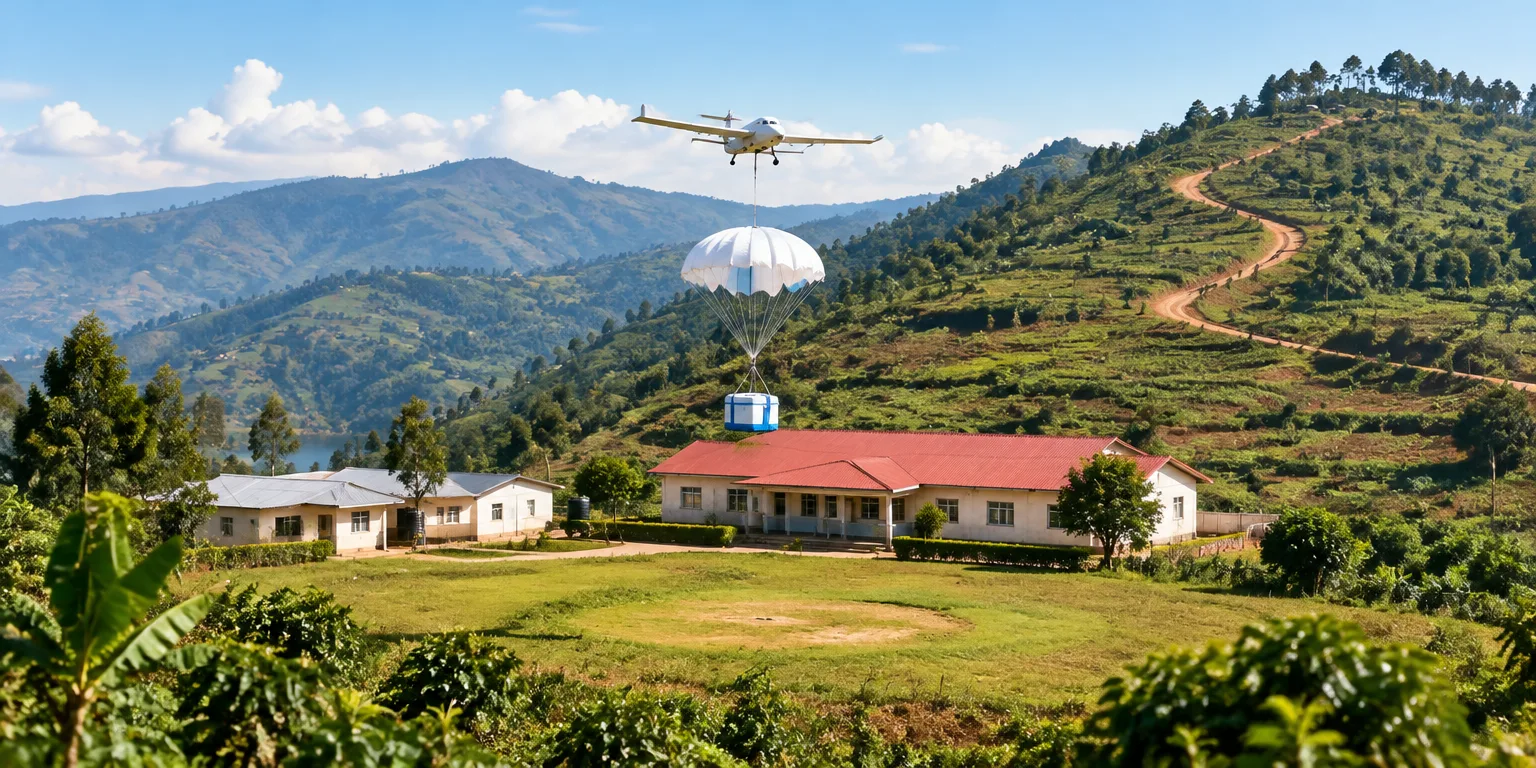
Zipline uses fixed-wing drones that launch from a distribution center and drop packages by parachute, so the hospital does not need a runway. Staff order by text or phone, and the drone flies directly to GPS coordinates near the facility.
Why did hospitals closest to drone ports benefit most?
The article reports that facilities closest to the drone ports benefited most. It does not give a reason for that difference in the passages reviewed. It suggests rural areas could adopt similar models.