In Principle, Gasoline From Air and Water Could Be Made in Hours
The recipe needs carbon, hydrogen, and energy, but the fuel costs far more than pumped oil.
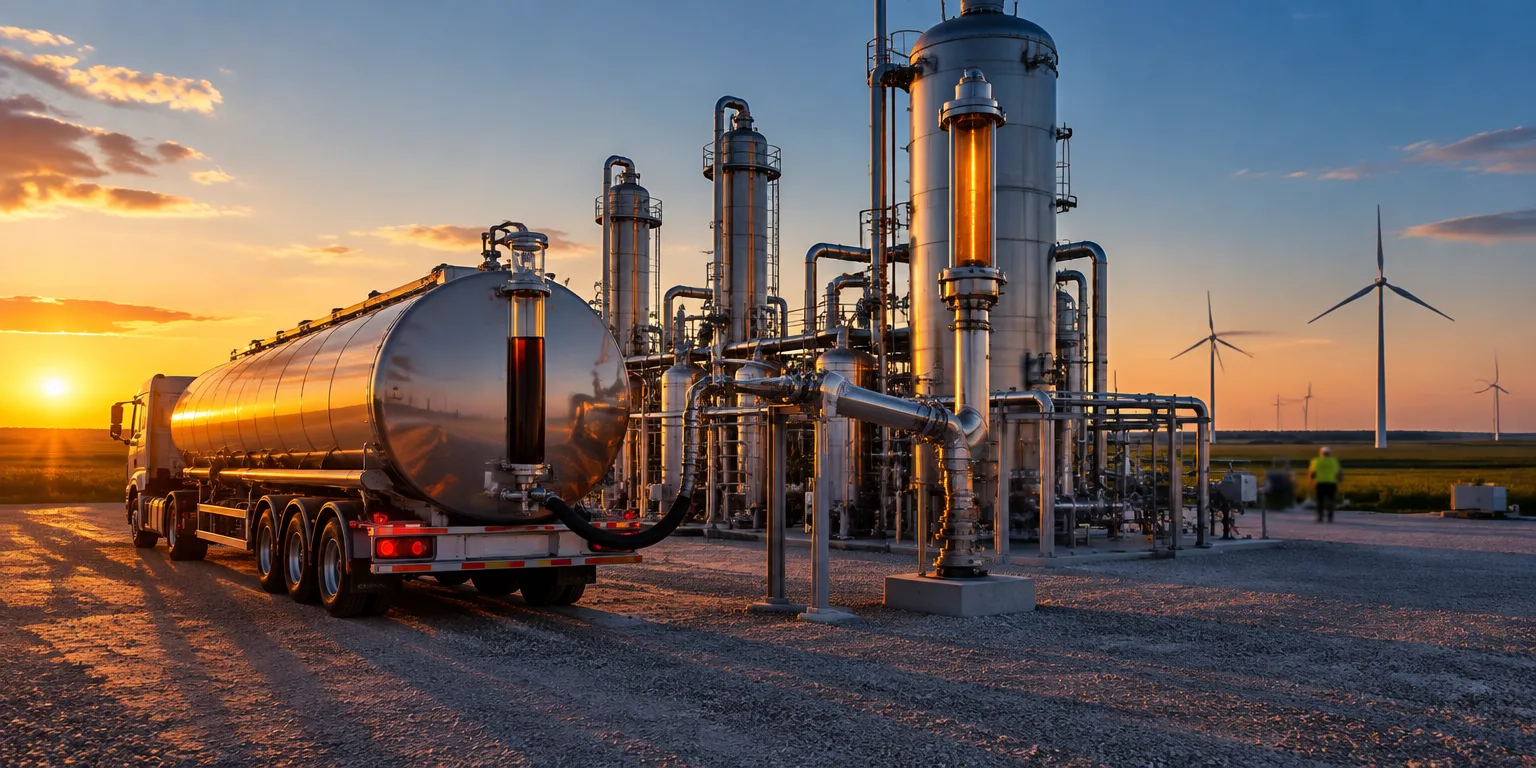
 Science & Futurism with Isaac Arthur · We Can Make Gasoline From Air. So Why Don’t We? (Narration Only)
What nature assembled in underground reservoirs could, in principle, be put together inside industrial reactors in hours.
The recipe needs only three inputs: carbon, hydrogen, plus a large supply of energy. Supply enough of each, and known reactions can finish the job.
In this approach the carbon arrives as carbon dioxide and the hydrogen arrives as water. An electric current can break water apart to free hydrogen, leaving oxygen behind, but breaking apart those stable starting molecules takes a great deal of energy, and the energy put in is later released when the fuel burns.
For methane, the simplest fuel and the main part of natural gas, one established option is a long-known chemical reaction called the Sabatier reaction. It joins carbon dioxide and hydrogen in a four-to-one ratio of hydrogen to carbon dioxide, yielding methane along with water.
Longer liquids need another step. One path first turns carbon dioxide and hydrogen into syngas, a mix of carbon monoxide and hydrogen. That mix feeds Fischer-Tropsch synthesis, which uses a catalyst, a material that speeds the reaction without being used up, to link carbon and hydrogen into longer chains.
It builds from small gases upward into diesel-like and jet-like liquids. That runs opposite to a traditional oil refinery, which takes complex crude and cracks, separates, and reshapes it into useful products.
The result is not necessarily identical molecule by molecule to crude oil, and for now it costs much more than drawing ordinary crude from an easy-flowing well. It can still serve many of those roles, and much of the existing infrastructure for tankers, pipelines, storage tanks, and engines, depending on the fuel, can keep running with small adjustments or, in some cases, no adjustment.
If these systems mature with abundant low-carbon energy, fuel could shift from something found to something made whenever there is enough power and a carbon source.
Questions people ask
Where would the carbon come from?
It can be pulled from carbon dioxide in the air, from seawater, or from more concentrated industrial exhaust. Air holds only a little over 400 parts per million of carbon dioxide, so filtering it means moving large volumes of atmosphere. Exhaust from cement plants, steel mills, and power plants is more concentrated, and the ocean holds a much larger reservoir of dissolved carbon.
Does making fuel this way use more energy than it produces?
Yes. Synthetic fuels are not primary energy sources like oil from the ground. They are ways of storing and transporting energy made elsewhere, from solar, wind, nuclear, or other sources. Every conversion loses some energy, so charging a battery directly is more efficient, but fuel is portable and easy to store for months or years.
Could synthetic gasoline run in my current car?
In principle, yes. One attraction is that synthetic fuels can move through much of the existing system of pipelines, tankers, storage tanks, and engines, with modest changes or sometimes none, depending on the fuel. But the result is not necessarily identical molecule by molecule to crude oil.