Glued Lumber Can Replace Steel and Concrete in Big Buildings
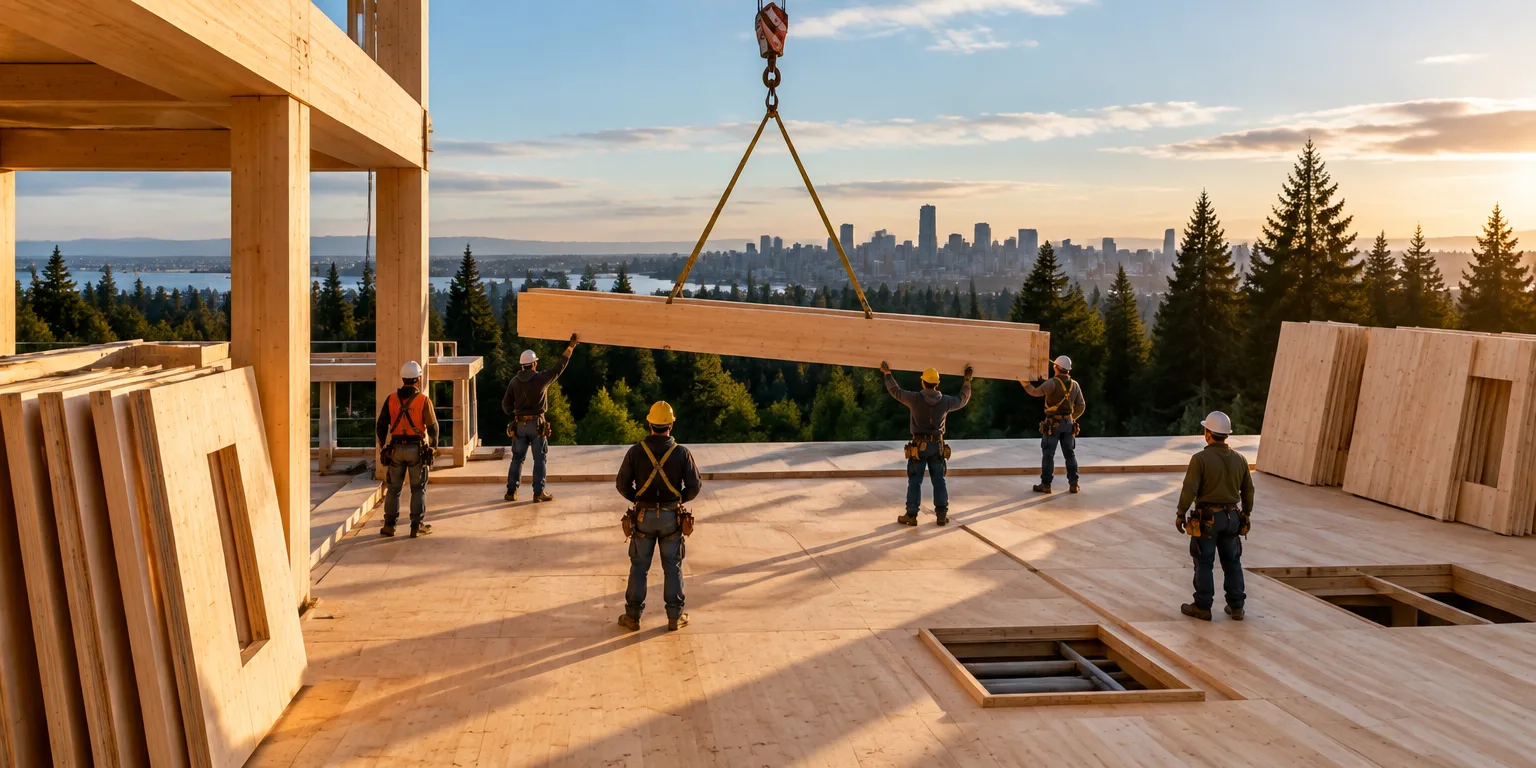
Beams arrive ready to install, so a six-person crew can do work that once took dozens.
 Marketplace · Import prices ran hot in October
Mass timber starts with standard framing boards like those used to frame houses.
Factories glue and press those boards into beams, columns, and wall panels large enough to replace steel beams and concrete, rebar, and other structural parts.
One common type is called cross laminated timber, which stacks boards in alternating directions, back and forth, to gain extra strength.
The approach has spread quickly. An industry group puts the total now at more than 1,500 apartment, hotel, office, and civic buildings, up from fewer than 100 a decade ago.
Part of the appeal is supply. The United States has abundant working forests in the Southeast and Pacific Northwest, making wood a renewable and largely domestic option at a time when tariffs are raising the cost of imported steel, concrete, and aluminum.
The wood itself is not necessarily cheaper than steel or concrete, said Wall Street Journal reporter Ryan Dezember. The savings come during construction.
Because beams arrive prefabricated, a six-person crew can set them in place. The same structure in steel reinforced concrete might take weeks, many deliveries, and dozens of laborers.
Much of the detailed work is done in the factory. Openings larger than a baseball, for pipes and other systems, arrive already cut and ready to install.
The catch is capacity. Unlike concrete, which is available in nearly every town, mass timber has only a few U.S. manufacturers, so builders must order custom parts early and sometimes wait a long time.
That tradeoff has not stopped tech developers. Google is using mass timber in three campus projects, generally for the offices around AI facilities rather than the large buildings that house computers.
For those companies, wood offers a visible sustainability story. Domestic timber holds carbon in the beams for as long as the building stands, even as the wider operation consumes large amounts of copper, natural gas, electricity, and steel.
Questions people ask
Does a wooden high-rise burn more easily than a steel one?
Yes, when designed correctly. Large timber members char slowly on the outside, which can protect the wood inside and preserve strength for a predictable period. Building codes therefore set fire ratings, sprinkler rules, and limits on height and use.
Why does storing carbon in beams matter for climate?
Trees absorb carbon as they grow, and that carbon stays locked in the beams while the building stands. Full comparisons also count logging, manufacturing, transport, and what happens at demolition, so researchers study the whole life of the building.
Could an ordinary homeowner build with mass timber?
In principle, yes, including single-family houses. The bigger obstacle is practical: finding a nearby factory, ordering custom panels early, and hiring a builder experienced with the system. That is easier for large commercial projects than for one house.