Google Needs Time to Make AI Pay Like Facebook Did
Thompson argues Google is best placed to turn AI answers into ad dollars if investors give it time.
 stratechery.com · Falling Leaves (and Stocks) – Stratechery by Ben Thompson
In its latest earnings report, Google disclosed something unfamiliar: growth in search revenue had slowed for the first time in five quarters.
Tech writer Ben Thompson wrote that "investors were predictably spooked." Search, he wrote, "might be the greatest business in the history of digital commerce," so any slowdown stands out.
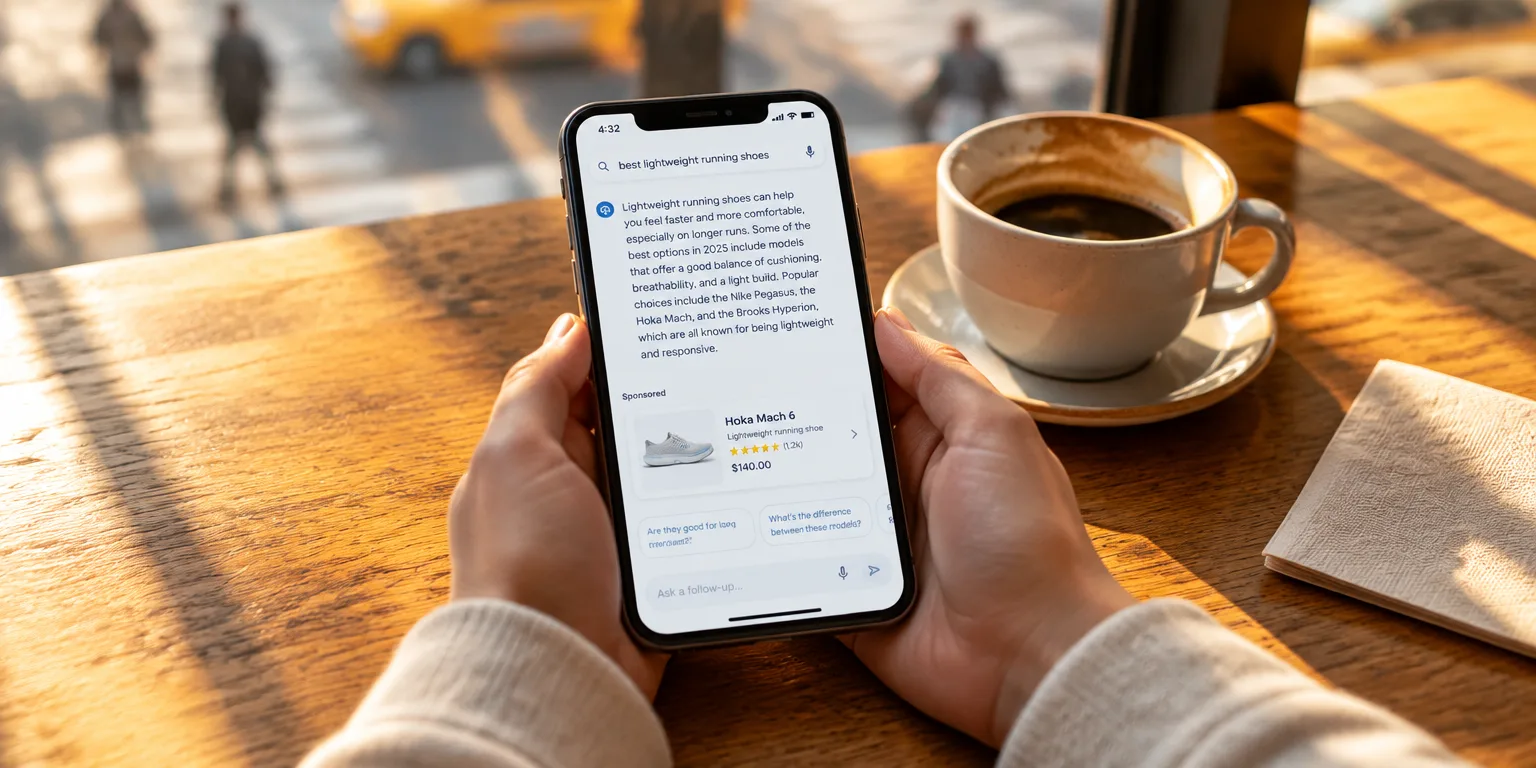
Still, he argued "the company deserves time to see if AI Mode ends up like Stories and Reels did for Facebook." AI Mode is Google's AI search feature that answers questions directly.
Stories and Reels also needed time to win over advertisers before they became large ad businesses.
In his view, Google has an edge because it already connects questions with advertisers willing to pay for answers: "if anyone can monetize AI with ads, it’s going to be Google."
That AI effort goes beyond AI Mode alone, and he admires Google's resolve in pushing ahead, even if "the rest of the Internet is a casualty." Other sites, in other words, could be collateral damage.
Questions people ask
What is Google's AI Mode?
AI Mode is Google's search feature that answers questions directly with artificial intelligence, rather than just showing a list of links. Users can have a back and forth conversation, ask follow-up questions, and see summaries built from web pages.
Why did Stories and Reels take time to pay off for Facebook?
When Facebook introduced Stories, copied from Snapchat, and later Reels, copied from TikTok, advertisers were slow to follow and the new formats initially made less money per user. Over time, Facebook rebuilt its ad tools around them, and both became large sources of revenue.
Why would Google be better at AI ads than a chatbot startup?
Google already sits between billions of queries and millions of advertisers, with systems for auctions, measurement, and local intent. That history gives it an advantage in placing useful, relevant ads next to AI answers, where a newer chatbot has to build that marketplace from scratch.