Landing on Mercury Takes More Fuel Than Leaving the Solar System
Falling toward the Sun means a spacecraft must brake hard and give up speed, often with backward planetary flybys.
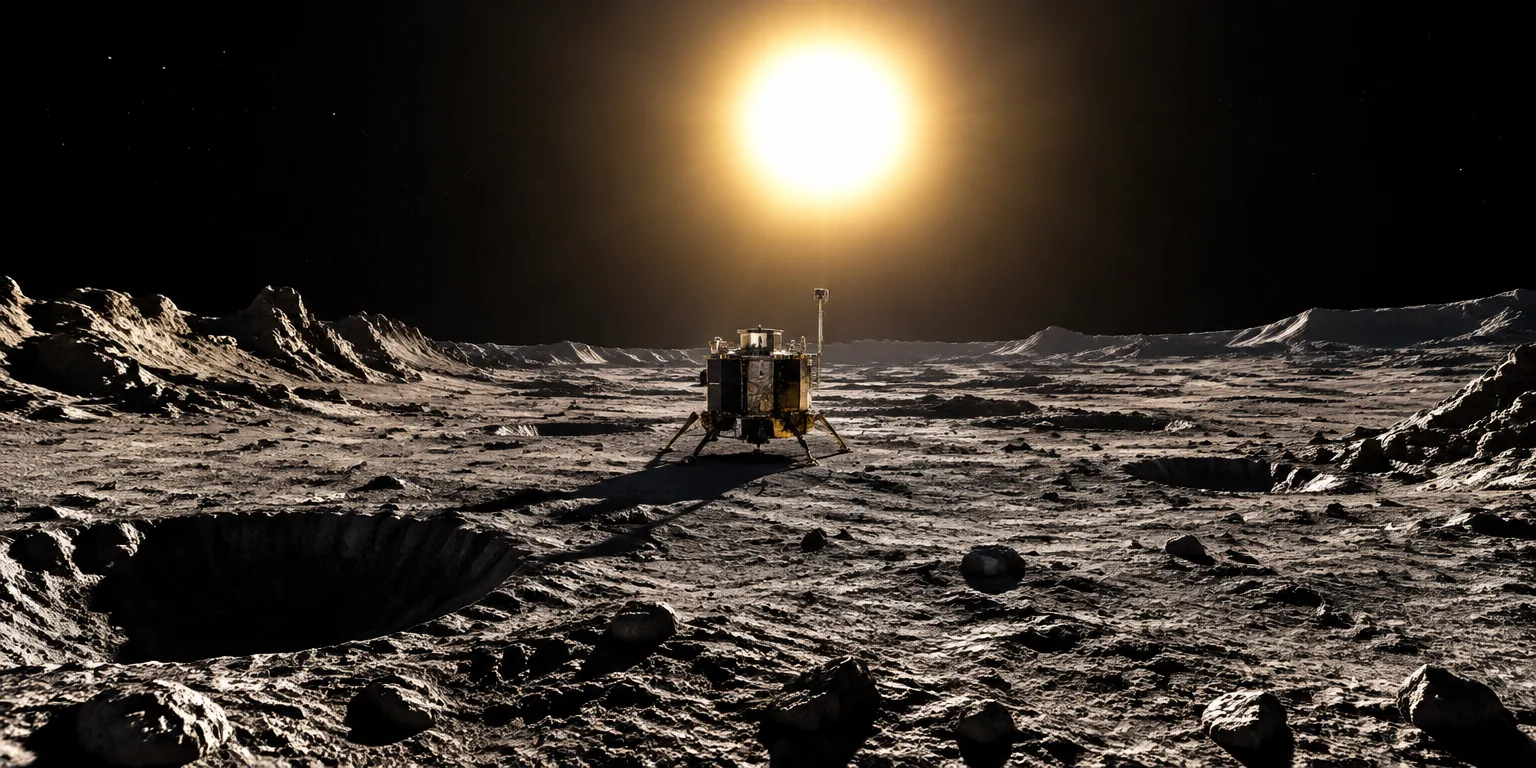
 StarTalk with Neil deGrasse Tyson · Facts for Navigating the Universe with Charles Liu
Mercury looks like the easy trip. It is a close neighbor, while Voyager, Pioneer, and New Horizons have sailed beyond the Kuiper belt toward interstellar space. Yet landing on Mercury can take more fuel than leaving the solar system entirely.
The reason is speed. Lindsey Nyx Walker, senior producer and co-author of a new book of space facts, said Mercury races around the Sun at very high speed. Any spacecraft leaving Earth also carries Earth's own orbital motion with it.
To fall inward, the craft must throw much of that motion away. As it approaches the Sun, it must brake and spend fuel slowing down, not speeding up. That is why missions use complicated gravity assists just to reach Mercury's neighborhood.
Neil deGrasse Tyson, director of the Hayden Planetarium, called it an inverse gravity assist. A normal assist sneaks up behind a planet, falls toward it, and borrows some of the planet's orbital energy to go faster. In reverse, the spacecraft gives up its own energy to go slower.
Hitting Mercury is easy. Charles Liu, the program's Geek-in-Chief, said it takes only a little aiming energy, and then gravity pulls the object in to strike. Landing gently is the hard part, because the craft must arrive slowly enough to survive.
The panel discussed explosive braking, which Liu suggested might require something like a small atomic device, and the Mars-tested method of wrapping a craft in airbags. One possibility floated was that an orbiter could carry a lander in, drop it, and let it bounce to a stop, while the hardware would still have to survive Mercury's extreme heat.
Questions people ask
What is the Kuiper belt?
The Kuiper belt is a broad ring of icy bodies beyond Neptune, including Pluto and many comets. It begins about 30 times farther from the Sun than Earth and marks the outer realm of the planetary system. Voyager 1 and 2, Pioneer 10 and 11, and New Horizons are traveling beyond it.
Has anything landed on Mercury?
No spacecraft has landed on Mercury. NASA's Mariner 10 flew past it three times in the 1970s, NASA's MESSENGER orbited it from 2011 to 2015, and the European-Japanese BepiColombo mission was built to orbit it. Landing has been avoided because braking into a soft touchdown takes so much fuel and heat protection.
How does a gravity assist work?
A gravity assist uses a planet's motion to change a spacecraft's speed and direction without much fuel. Flying behind the planet generally adds speed, while passing in front generally removes speed. Mission planners chain several such flybys together to shape a path that rockets alone could not afford.