SpaceX Catches Starship Itself With Tower Arms for First Time
The recovery brings SpaceX closer to a fully reusable giant rocket that could sharply lower the cost of reaching space.
 This Week in Startups · 8,000+ NVIDIA Employees Want Jensen Back, FAA Meltdown, Starship CAUGHT! | E2364
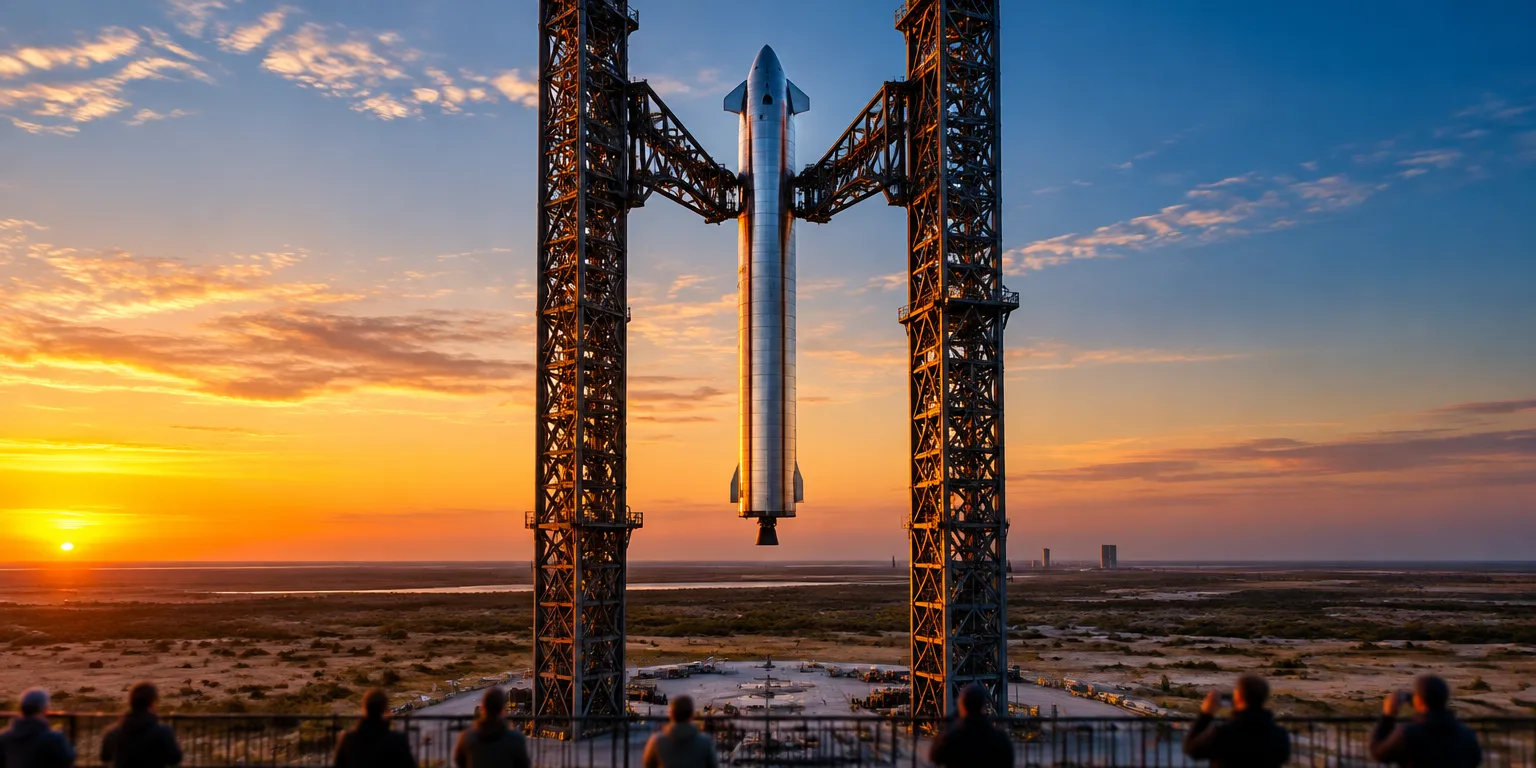
SpaceX has caught the upper part of its giant Starship rocket with the launch tower's metal arms for the first time, bringing the vehicle back intact instead of losing it. The catch follows earlier recoveries of the rocket's lower booster stage.
The achievement matters because throwing away rockets makes spaceflight enormously expensive. SpaceX founder Elon Musk has long compared expendable rockets to destroying a passenger jet after every cross-country flight.
The flight was described as around Starship's 15th, and recent flights had reached space before returning. That progress set up the attempt to recover the ship itself, not just the booster that lifts it.
Video of the maneuver shows the ship sliding between the tower's arms, often called chopsticks, as onlookers cheered. The catch looked precise, and was described as resembling science fiction in real life.
It is not clear whether this particular ship will fly again, although reuse is the aim. SpaceX has been reusing its smaller Falcon rockets for years, and spectators can watch Starship launches in person from near Starbase in Texas, where the scale is striking.
Questions people ask
What are the launch tower's chopsticks?
They are two large mechanical arms attached to SpaceX's launch tower in Texas. They close around the returning vehicle in midair, holding it so it does not need heavy landing legs.
What is the difference between the booster and Starship?
The booster is the large lower stage that lifts Starship off the pad and then separates. Starship itself is the upper stage that continues to space and, in future missions, would carry cargo or people.
Why does reusing a rocket lower costs?
Building a large rocket costs tens of millions of dollars, so discarding it each time repeats that expense. Recovering and reflying much of the hardware spreads that cost across many flights, much as an airliner does.