Manatees Have Almost No Insulation, So They Winter in Warm Water
Their slow metabolism helps them avoid overheating in warm water, but they cannot warm up fast enough in water below 68 degrees.
 Stuff You Should Know · The World Needs More Manatees
Despite their bulk, Florida manatees have almost no insulation. They carry no blubber, so they lose heat quickly in cool water.
Their diet helps explain why they struggle to stay warm. Manatees are strictly plant eaters that may spend eight hours a day grazing on seagrass, eating up to 10 percent of their body weight.
They process all that food very slowly. A slow metabolism helps a manatee avoid overheating in warm, shallow water, but it also means the animal cannot burn energy fast enough to warm itself when the water cools.
Water below 68 degrees is tolerable only for a short time. So in winter, manatees remain in the warm coastal waters of Florida and the Gulf and seek out pockets of reliably warm water.
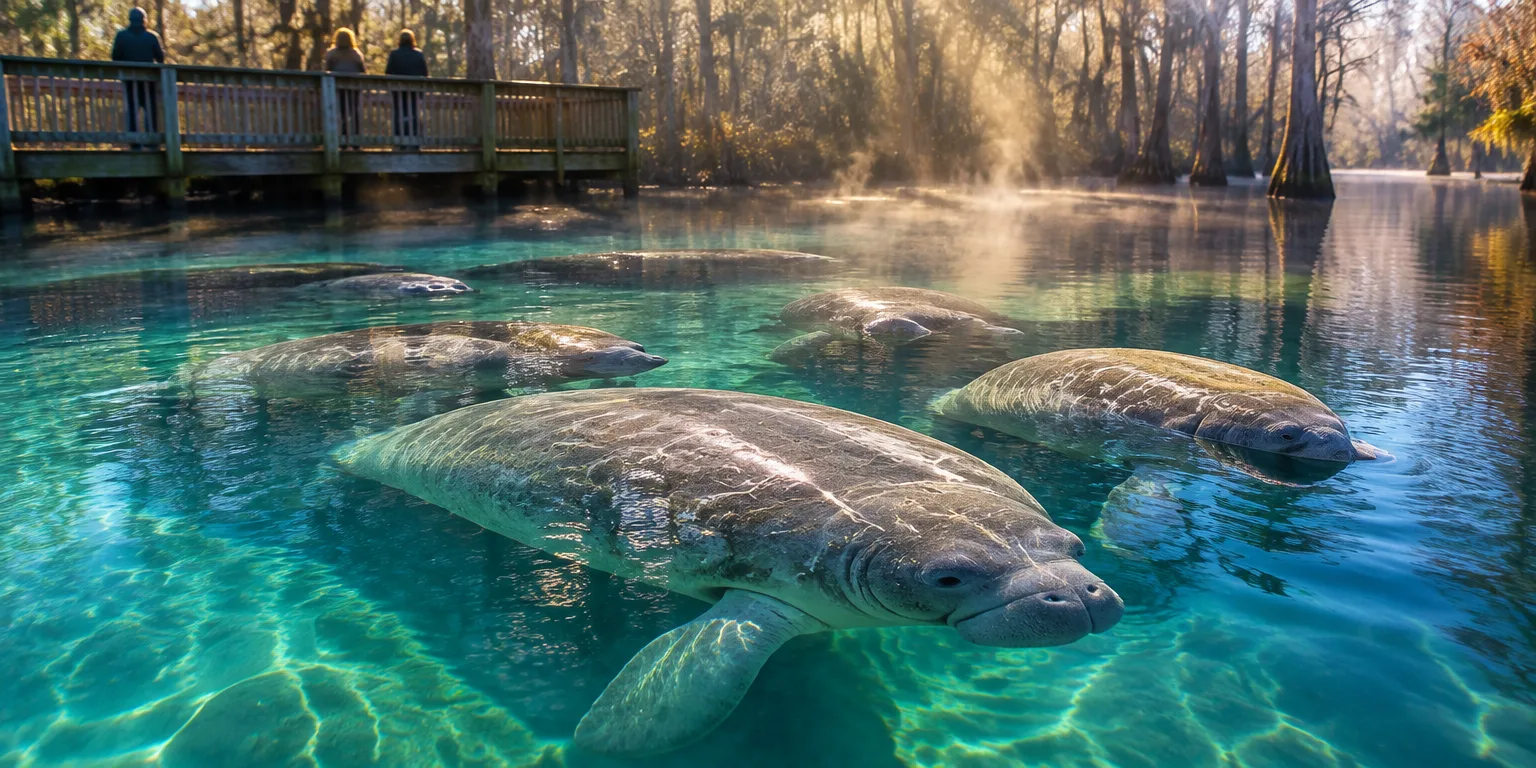
The most famous refuges are natural springs. At Blue Spring State Park in Florida, spring water holds near 72 degrees through winter, and manatees crowd together there while visitors watch from viewing platforms.
They also gather near power plants, where warm outflows heat the surrounding area. Either way, the strategy is the same: wait out the cold where the water stays warm.
Questions people ask
What happens to a manatee that stays in cold water too long?
Prolonged exposure to cold water can cause weight loss, skin problems and infection, and it can kill them. That is why animals that enter water below 68 degrees stay only briefly before moving to springs or warm outfalls.
How many manatees gather at a spring like Blue Spring?
On cold mornings, large numbers can crowd into Blue Spring, floating close together in the clear 72-degree water. The park closes the spring to swimming during those periods, while people watch from boardwalks and viewing platforms.
Do manatees use only natural springs for warmth?
No. They also gather at warm-water outfalls from power plants, where the discharge makes the nearby water warmer. Like the springs, those spots let them stay in water warm enough to get through winter.