One Analyst Argues China Is Building A Way To Trade Around America
One analyst says ports, rails, and soybeans could give Beijing trade routes that skip the United States.
 The Tucker Carlson Show · Trump’s Reaction to the Midterms, the Democrats’ Strategy, and What Happens Next in Iran
Geopolitical analyst Brandon J. Weichert argues that China's most important project in the Americas is not a military base. It is a container port.
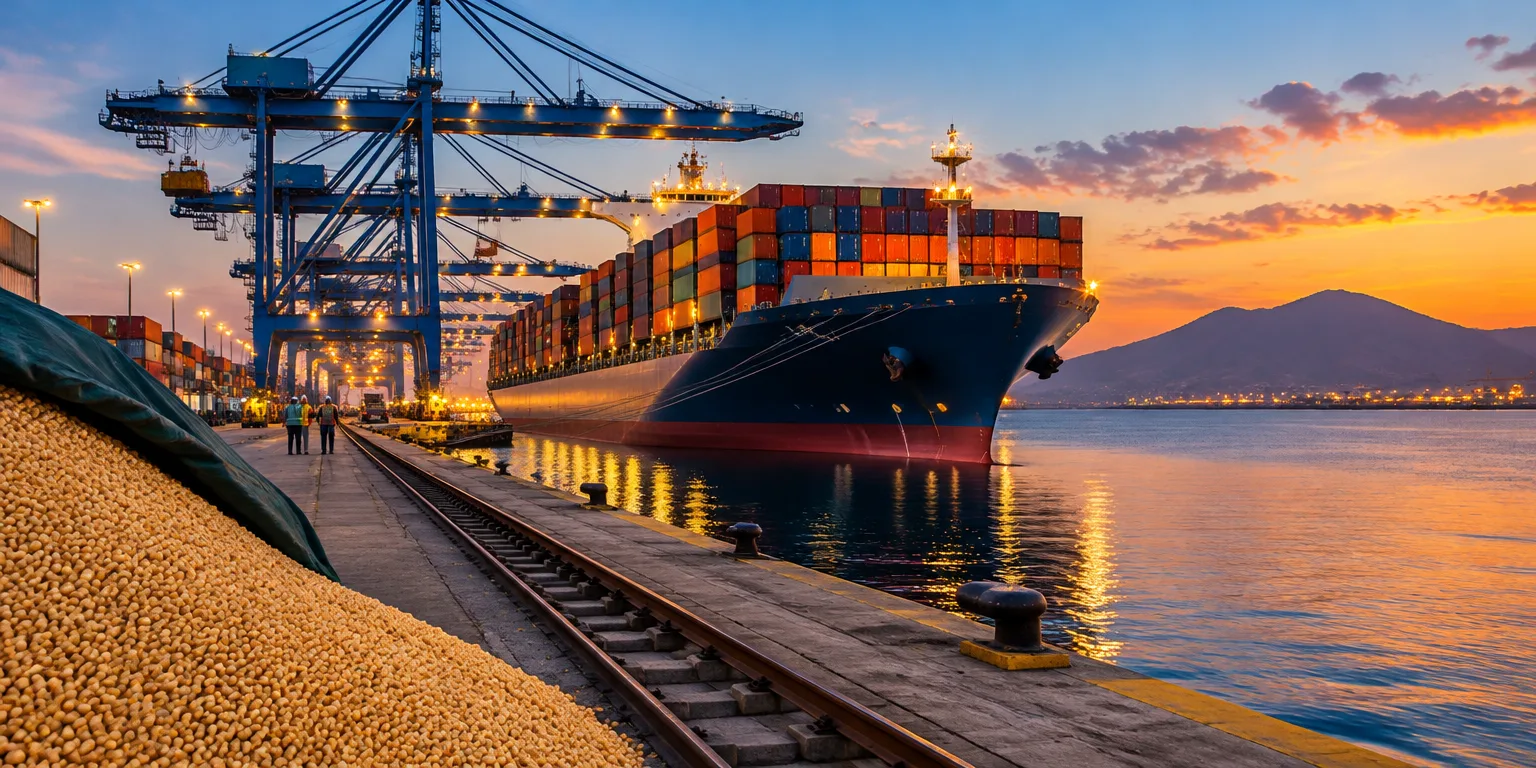
In Peru, the port of Chancay "is the largest port in Latin America," built and owned outright by China, according to Weichert. Very large container ships can sail directly between Chancay and Shanghai, without stopping in North America.
That direct route is what makes the port powerful, in his assessment. It creates a trans-Pacific shipping line that bypasses American ports and checkpoints, letting goods move between South America and China without passing through the United States.
China is then trying to connect that Pacific outlet to the Atlantic with a Chinese-built railway that would run from Peru to Brazil, linking one ocean to the other. At the narrow middle, Chinese firms already own or operate ports at both ends of the Panama Canal, along with some of the bridges over it, Weichert says.
Weichert says Argentina and Brazil filled the gap after President Donald Trump's trade war cut off American soybean exports to China. In his assessment, China relied on those two countries to offset the lost sales, a workaround that blunted tariffs and may have left China more resilient.
Tucker Carlson raised St. Croix as a smaller example, citing Chinese-built infrastructure there, while Weichert cited Chinese influence in Canada and Chinese interest in Greenland's rare earth minerals, oil, and natural gas.
Weichert calls the strategy, in his phrase, "George Kennan in reverse," meaning China is using the Marshall Plan approach the United States once used against the Soviet Union. Kennan was the American diplomat whose containment thinking shaped Cold War policy toward the Soviet Union.
After World War II, the United States relied heavily on the Marshall Plan, the American aid program that rebuilt trade and everyday life in Western Europe and made the West attractive. Weichert argues China is now using that same playbook, building ports, rails, and supply chains that let countries live and trade outside the American system.
Questions people ask
Why does a direct Chancay to Shanghai route matter?
In general, a direct ocean route lets ships skip intermediate stops, inspections, and delays. Weichert's point is about strategy rather than price: a ship sailing straight from Peru to Shanghai faces less exposure to American ports and pressure.
Does China control the Panama Canal?
The canal is a shortcut between the Atlantic and Pacific, so control of ports, terminals, and nearby bridges means influence over who loads, unloads, stores, and moves goods. It does not mean China owns the canal, but it gives Chinese firms a commercial foothold at a chokepoint.
Did South America really replace American soybeans for China?
Weichert says so, but he gives no trade data. In reality, Brazil is now the world's largest soybean exporter, and China is its biggest buyer.