One Researcher Argues War Drove the Rise of Civilization
In Geary's account, raids pushed farming villages to unite and nomads to scale up, creating soldiers, makers, and markets.
 Modern Wisdom · How War Shaped Human Evolution - David Geary - #1172
The question was how much of civilization can be attributed to war. David Geary, who studies how competition shaped human evolution, answered directly: "I think war was the primary driver of the building of civilizations."
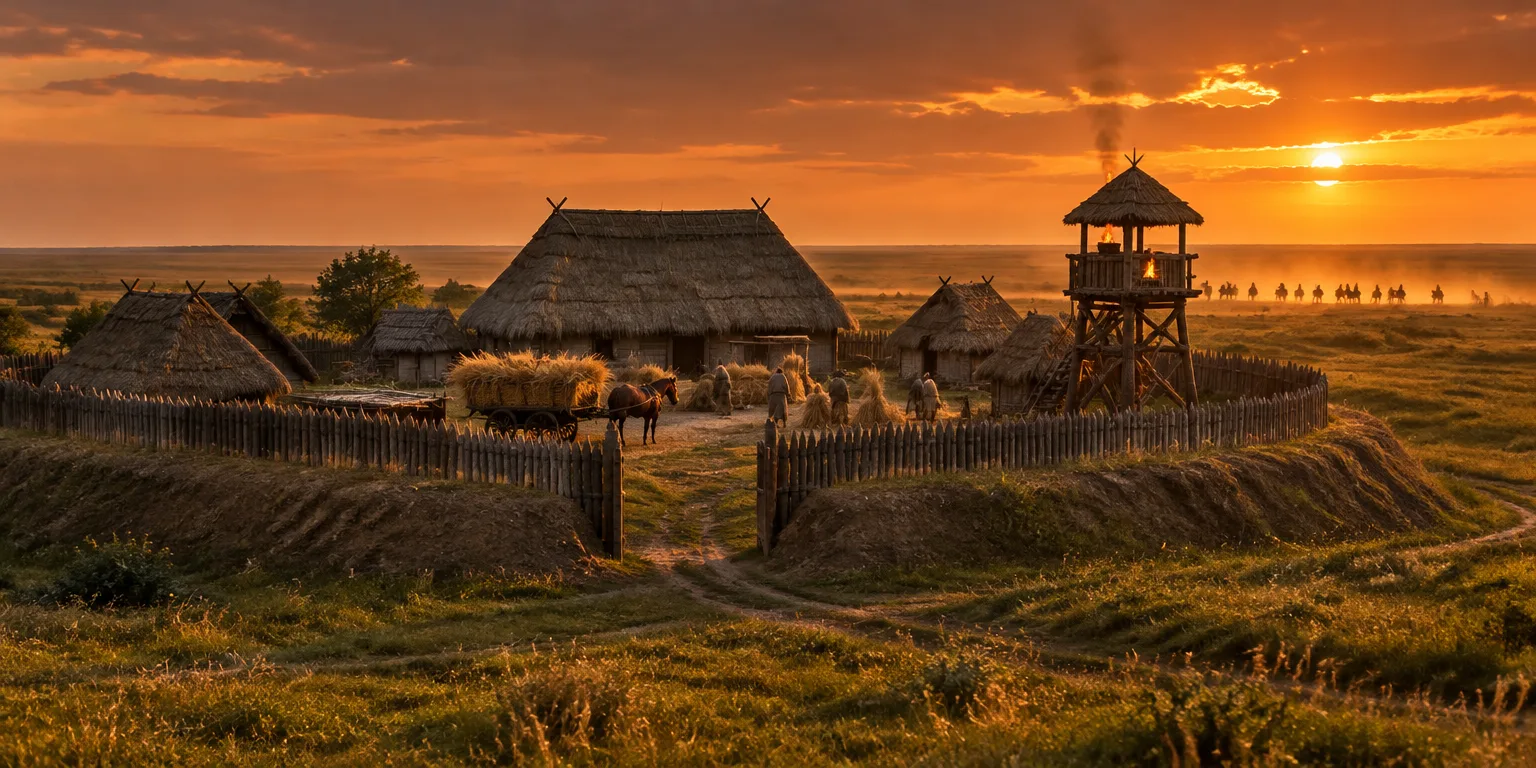
Geary said the pressure came from clashes before empires, when nomadic raiders invaded farming communities and threatened harvests and lives, and the advantage went to larger and larger coalitions.
In his account, the farming communities united and began building defensive structures to protect themselves. The nomads then needed to unite into larger and better organized groups to stay competitive.
That back and forth created an arms race, in his account, with both sides growing, tightening organization, and developing new technologies as each tried to keep up with the other.
In Geary's account, growth then forced specialization. Not every man could serve in the military, so an expanding society needed weapons makers, people to bring in the harvest, and entrepreneurs to run markets.
Geary argues that between-group competition drove the building of large groups, with defense or offense against rival groups as the primary benefit.
Modern city life, in Geary's description, shows how far cooperation went: a lot of us live in large cities and layered societies, drive down streets and shop in safety, while different people do different jobs.
That cooperation is striking because it joins nonrelatives, Geary argues, while in most other species cooperation is typically among kin. He says many social scientists do not like to hear that humans are a violent species and focus on the cooperative side, but he argues they will never fully understand human evolution.
For Geary, competition did not have to stay bloody but could later shift into trade and other nonviolent contests between groups. His formulation: "More violence, more push for large-scale cooperation."
Questions people ask
Did the need for defense really shape early cities and states?
In Geary's account, yes. He says farming communities united and built defensive structures when threatened by nomadic raiders, and that pressure favored larger and more organized groups.
Are humans unusually cooperative with strangers?
Compared with most other species, yes. People routinely cooperate with strangers through laws, markets, and shared public spaces. Kinship still matters, but large societies depend heavily on rules and institutions that let nonrelatives trust one another.
How can trade be a form of competition between groups?
Geary suggests it can be. Once groups are organized, they can compete for advantage through trade, technology, and economic influence rather than killing. The contest continues, but the weapons change.