Print Steady Sellers in Bulk, the Rest on Demand
Bulk printing is cheaper per shirt, but only pays when demand for a design is high and steady.
 hdl.handle.net · Introducing Make-to-stock to Make-to-order Platforms
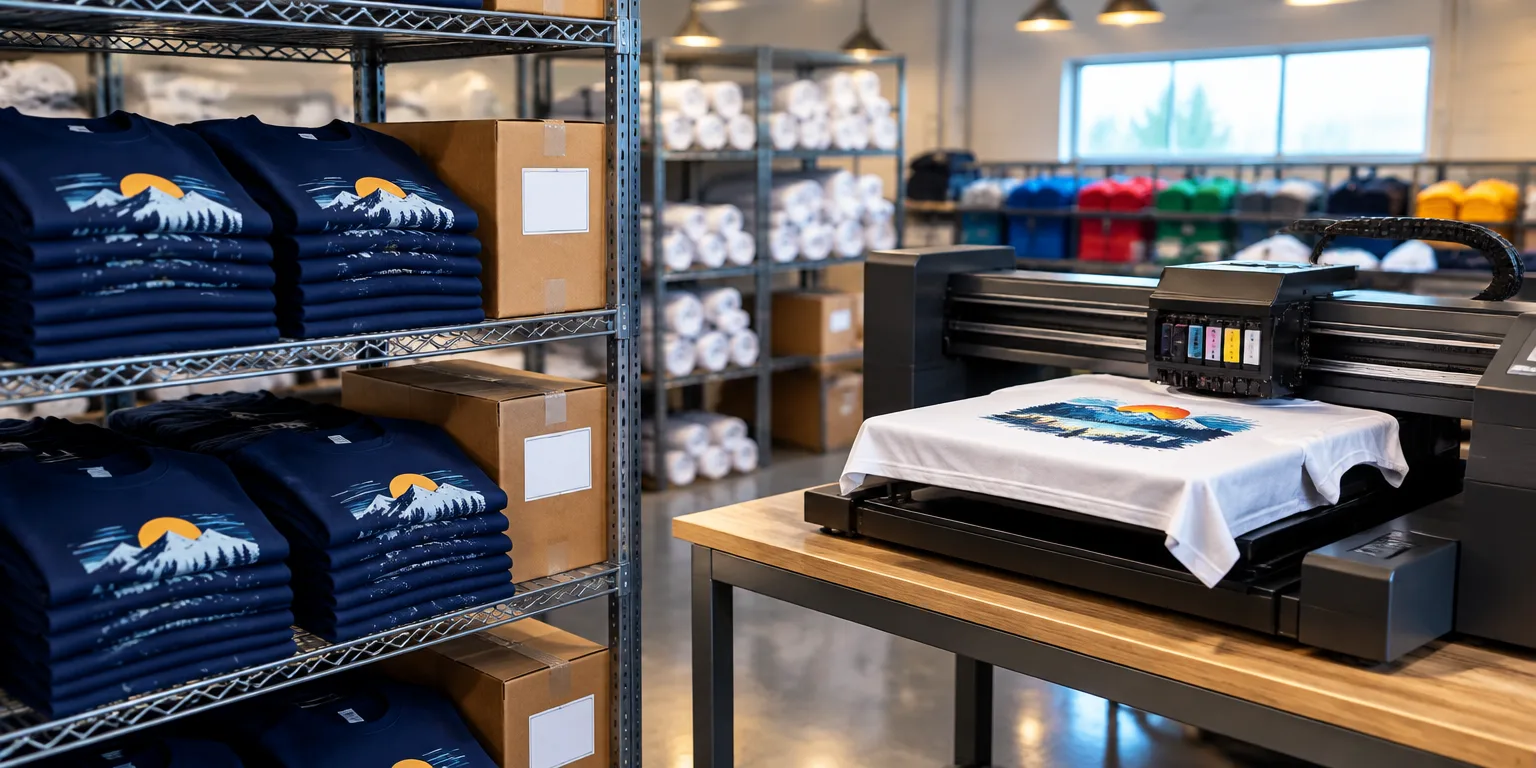
On a print-on-demand site, shirts are printed after an order arrives. That avoids piles of unsold shirts, but each shirt costs more to make than with bulk printing.
The bulk alternative is to print finished shirts ahead of time and keep them on the shelf. The cost per shirt is lower, but the platform must forecast demand for each specific design, and wait through longer lead times to get the shirts.
Guess wrong and it pays twice. Too many means leftovers nobody wants, and too few means running out of stock. With many designs and uncertain tastes, printing only after an order arrives looks like the rational choice.
In a 2021 academic dissertation, researcher Yuankun Li proposes splitting the job. Print a predetermined base quantity in bulk, fill orders from that stock first, and switch to one-at-a-time printing only when the stock runs out.
Think of it as base plus surge. Cheap bulk supply covers the predictable part of demand, and faster, more flexible on-demand printing absorbs the variable remainder. Inventory researchers use the name tailored base-surge sourcing for the same base-plus-surge approach.
The catch is that bulk adds a set cost for each design to cover setup and storage, whatever it sells. So the math only works when demand for a design is large and steady enough to cover that overhead. When sales are thin or wildly variable, the platform is better off staying all on-demand.
Questions people ask
What does the platform keep in stock in a pure on-demand system?
It keeps stacks of plain, unprinted shirts, often called blanks. When an order arrives, it prints that one design on a blank and ships it, which avoids guessing which design will sell, since each order is printed only after it arrives.
Do customers wait longer when a shirt is printed on demand?
Not much, if blanks are on hand. The idea is that on-demand printing has effectively no lead time once blank materials are available, which is why speed is its big advantage over bulk.
Why would offering too many designs make bulk printing uneconomic?
It splits total sales into smaller slices. To take a made-up illustration, if a hundred orders spread across fifty designs, no single design sells enough to cover its bulk setup cost. Concentrated sales in a few designs make bulk work.