Robots Should Learn About the World Before They Learn to Drive
Once AI understands physics and people, 20 to 30 hours of driving footage can be enough, Oliver Cameron argues.
 This Week in Startups · Odyssey CEO Oliver Cameron is 90% sure we live in a simulation | E2358
Oliver Cameron, the chief executive of robot software company Odyssey, traces his approach to eight years building driverless cars. That experience convinced him the industry had been training artificial intelligence the wrong way.
Cameron argues that AI should learn "a very general set of concepts before it tries to accomplish a task."
In driverless cars, in his account, engineers "just show the same task over and over again": here is how you drive a car, here is how you drive a car. The system looked capable until something unusual happened. Then it got stuck or did something dumb.
His explanation is that the AI had only ever seen "the world through the lens of a car," so it had no broader understanding to fall back on.
He compares the fix to how people learn to drive. People accumulate 17 years of general life experience, then need only about 20 to 30 hours of lessons. Odyssey aims to do the same for machines, building a general foundation model, meaning a general AI system trained on broad experience that other companies can then adapt, with roughly 20 to 30 hours of driving footage.
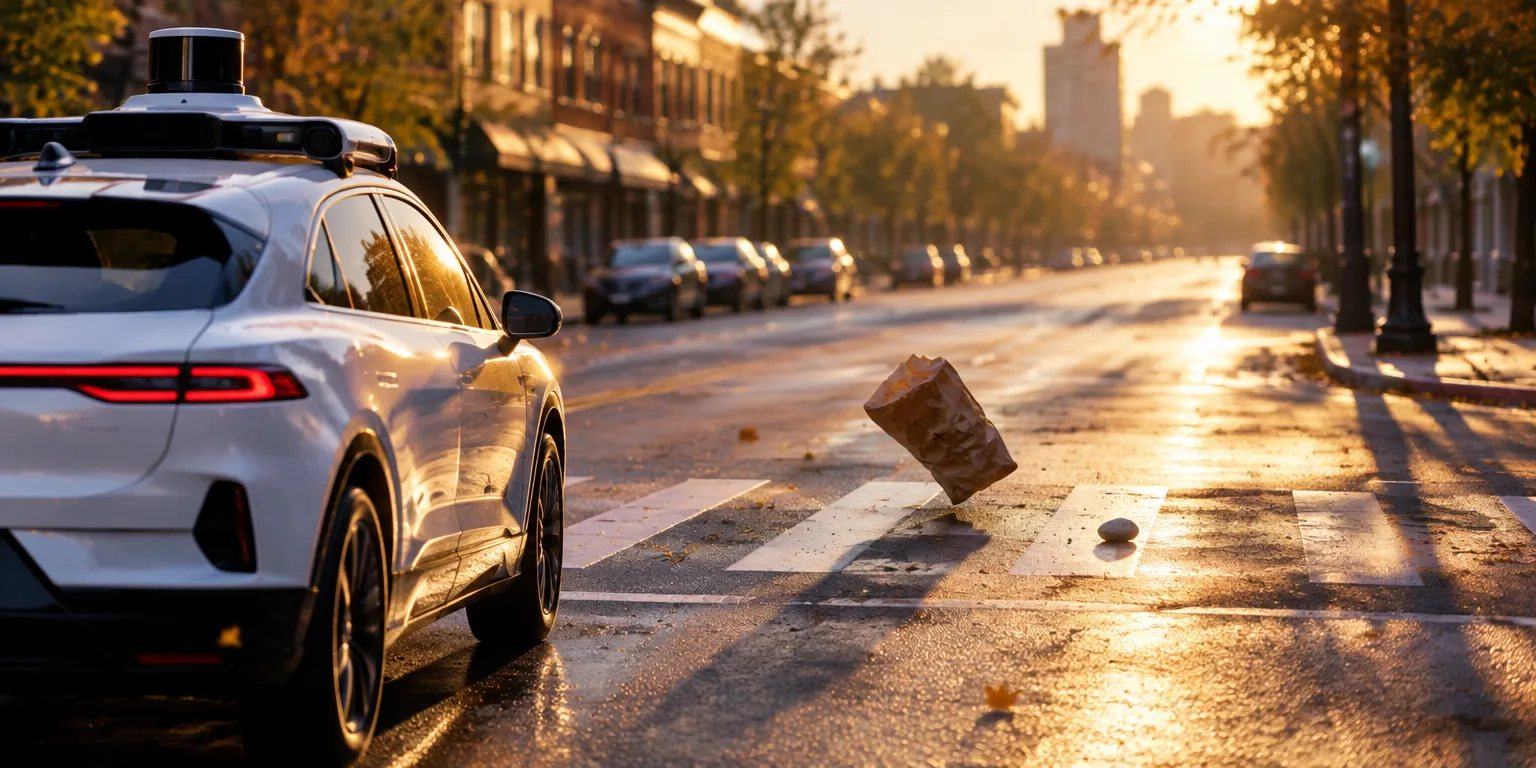
Lon Harris asked how watching video alone can teach touch, like judging weight or knowing a blowing paper bag is safe to hit while a rock is not.
Cameron did not directly explain how a robot would learn to judge weight. That gap is this account's observation, not Cameron's claim, since what he offered next was an analogy of an attentive learner watching "many, many thousands of years of video" and taking exhaustive notes.
What such note taking teaches is, in his telling, a grasp of physics. He says getting the physics right is one of the most important goals for his team. By practicing the job of predicting how the world will evolve next, he claims, the model learns concepts like gravity and fluid dynamics.
Odyssey sells that foundation, called Odyssey 3, to makers of robots, humanoids, self-driving cars, and drones, which add their own training and put it to work. Cameron said in the interview that the company already has revenue. He said robot labs had become more willing to adapt a model they did not build rather than building everything themselves.
Questions people ask
What is a world model?
A world model is AI trained to predict what happens next in a scene, rather than to perform one task like steering. By practicing prediction over large amounts of video, it picks up patterns that look like physics, motion, and cause and effect.
Do all robot companies train only on video?
No. Cameras are cheap and video is abundant, which makes visual training practical at scale. Other teams also use laser sensing, radar, touch sensors, and physical trial and error, especially for grasping and delicate assembly.
Is learning to drive really like human driver training?
Only as an analogy. Humans bring bodies, balance, fear, and years of playground and social experience to those lessons. For AI, Cameron argues the 20 to 30 hours works when the foundation already understands the broader world.