Sunset Power Can Run Out Before Sunrise
A full charge at a 7 p.m. sunset can be gone by 5 a.m.
 Half as Interesting · Why This Giant Bag of CO2 is Actually Useful
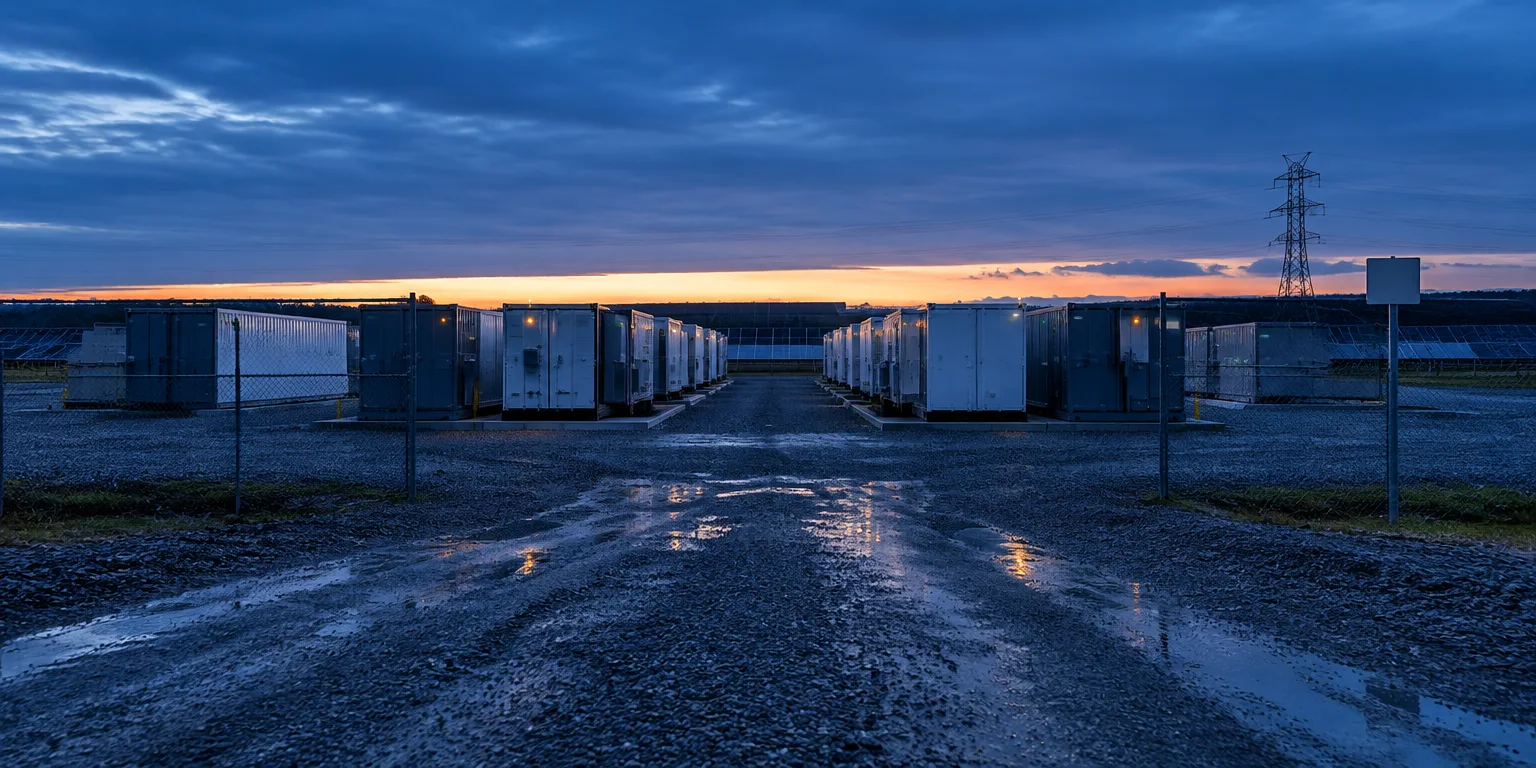
The big batteries that back up solar and wind farms are often supersized versions of the lithium-ion batteries in phones and e-bikes. At grid scale, they hold a charge for only about four to eight hours.
That stored sunshine is meant to cover the hours when the wind does not blow and the sun does not shine, when people still want air conditioning, hot kettles, and television.
The overnight math is tight. If the sun sets at 7 p.m., a fully charged battery can be out of power by 5 a.m., leaving early risers short before dawn, let alone through cloudy days or windless weeks.
Adding more lithium-ion batteries can store more energy, but each added battery needs lithium and other minerals that are costly to mine and harmful to land and water to produce.
Questions people ask
Why not just build bigger lithium-ion batteries to last longer?
They can, and utilities often do. Adding more battery containers adds more hours of storage, but the cost rises almost in direct proportion because each hour needs more lithium, land, and equipment. That is why four to eight hours has become the common economic sweet spot for lithium-ion on the grid.
Are there grid batteries that last longer than eight hours?
Yes. The oldest and most common is pumped-storage hydropower, which pumps water uphill when power is plentiful and lets it fall through turbines later. Newer options include iron-air batteries that can discharge for up to 100 hours, and systems that store energy with gravity or compressed gas.
Why is getting lithium environmentally damaging?
Mining lithium uses large amounts of water and energy, and processing it and related minerals can damage land and water supplies. Supplies are also geographically concentrated, which makes the materials expensive and subject to price swings and supply-chain risk.