Peter Sellis Says SpaceX Will Phase Out Falcon 9 Sales to Bet on Starship
Sellis calls the Falcon 9 the greatest launch system ever, and says SpaceX is signaling a shift to Starship.
 Lenny's Podcast: Product | Career | Growth · 90 minutes of unfiltered product advice from Snap and Discord’s product chief | Peter Sellis
Peter Sellis says he has no inside information about SpaceX. He has something closer.
"I sleep next to a SpaceX engineer every night, so that helps," said Sellis, the former Snapchat and Discord product leader, whose wife works as an engineer at the rocket company. He described himself as second party, not first party, to what happens inside the company he calls the greatest company in the world.
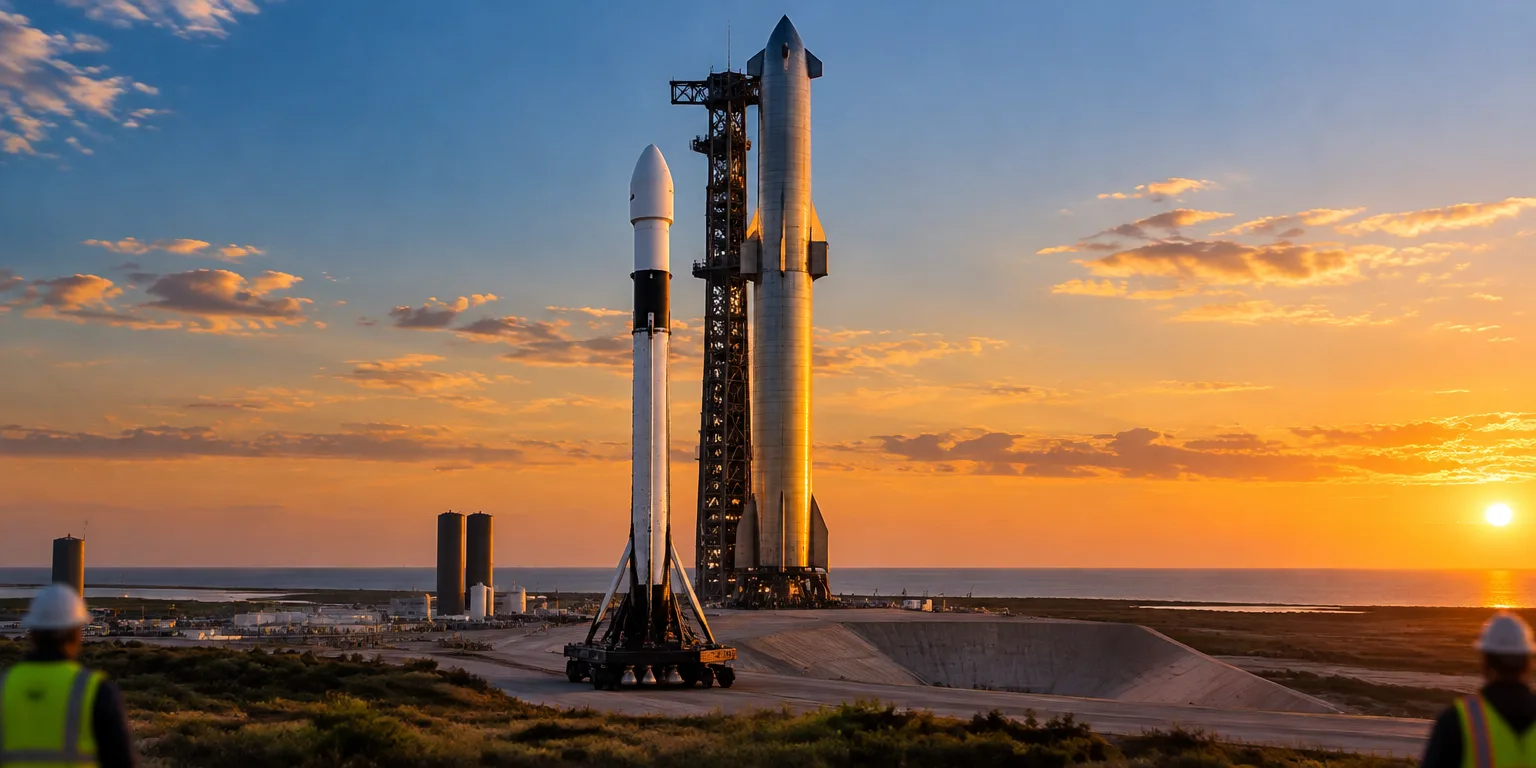
What caught his attention, he said, was word in the week before he spoke that SpaceX is starting to wind down the Falcon 9. Sellis described the Falcon 9 as SpaceX's primary launch system, "the greatest launch system in the world ever by far," reusable and the most cost effective way to carry weight to low Earth orbit and to geostationary orbit.
Every country on the planet, he said, would give up its gross domestic product to have technology that can launch and reuse rockets this way. "The Falcon 9 would be the future for literally every other country, nation state on the planet," Sellis said.
Sellis said SpaceX is gradually signaling a shift away from that workhorse, telegraphing that "the Falcon 9 is the past." He did not present it as complete or for every mission, but as a gradual phaseout of Falcon 9 sales.
By Sellis's account of the company's reasoning, the replacement is Starship, a heavier lift vehicle for the future SpaceX wants. In his telling, SpaceX has concluded it needs that larger vehicle to reach its vision.
Sellis described a future plan in which, starting in a few years, customers will no longer be able to book a Falcon 9 launch. The change would be gradual, he said, because the company still has customers and other obligations.
Sellis called the move "Cortez level burn the ships upon arriving," meaning SpaceX is committing fully to the new rocket with no way back. He said the underrated part of SpaceX is that willingness to burn the ships and focus on what is next.
He framed it as a living answer to the late Harvard professor Clayton Christensen's innovator's dilemma. In Sellis's telling, SpaceX is "completely willing to build the thing that will compete against ourselves and make the thing that we built irrelevant."
Inside the company, he said, people greet the plan with enthusiasm. Everyone he talks to there says some version of "Yeah, it's gonna be awesome" and "Yeah, we're gonna do this," a stance he conceded looks insane to outsiders.
Lenny Rachitsky, the startup and product writer, tied the decision to the mission of making humanity multiplanetary and getting to Mars. Working backward from that goal, continued investment in the smaller rocket makes no sense, he said. Sellis added that SpaceX and Tesla publish essentially 10-year plans, and he argues everything SpaceX is doing now was already discussed about a decade ago.
Questions people ask
What exactly is the Falcon 9?
The Falcon 9 is SpaceX's workhorse rocket, first flown in 2010. Its first stage returns to Earth and lands vertically so it can fly again, which sharply cut the cost of getting satellites and cargo to orbit.
How is Starship different?
Starship is SpaceX's much larger, fully reusable rocket system, with a booster called Super Heavy. It is designed to carry far more weight to orbit and to be refueled in space for trips to the Moon and Mars.
What is the innovator's dilemma?
It is the idea, described by Harvard professor Clayton Christensen, that successful companies fail by protecting what already works and ignoring a new technology. Sellis argues SpaceX is avoiding that trap by replacing itself.