Starving Explorers Dragged Their Data Across the Ice, and Scientists Still Use It
The Greely expedition ended in disaster, but the data the men refused to abandon became its lasting achievement.
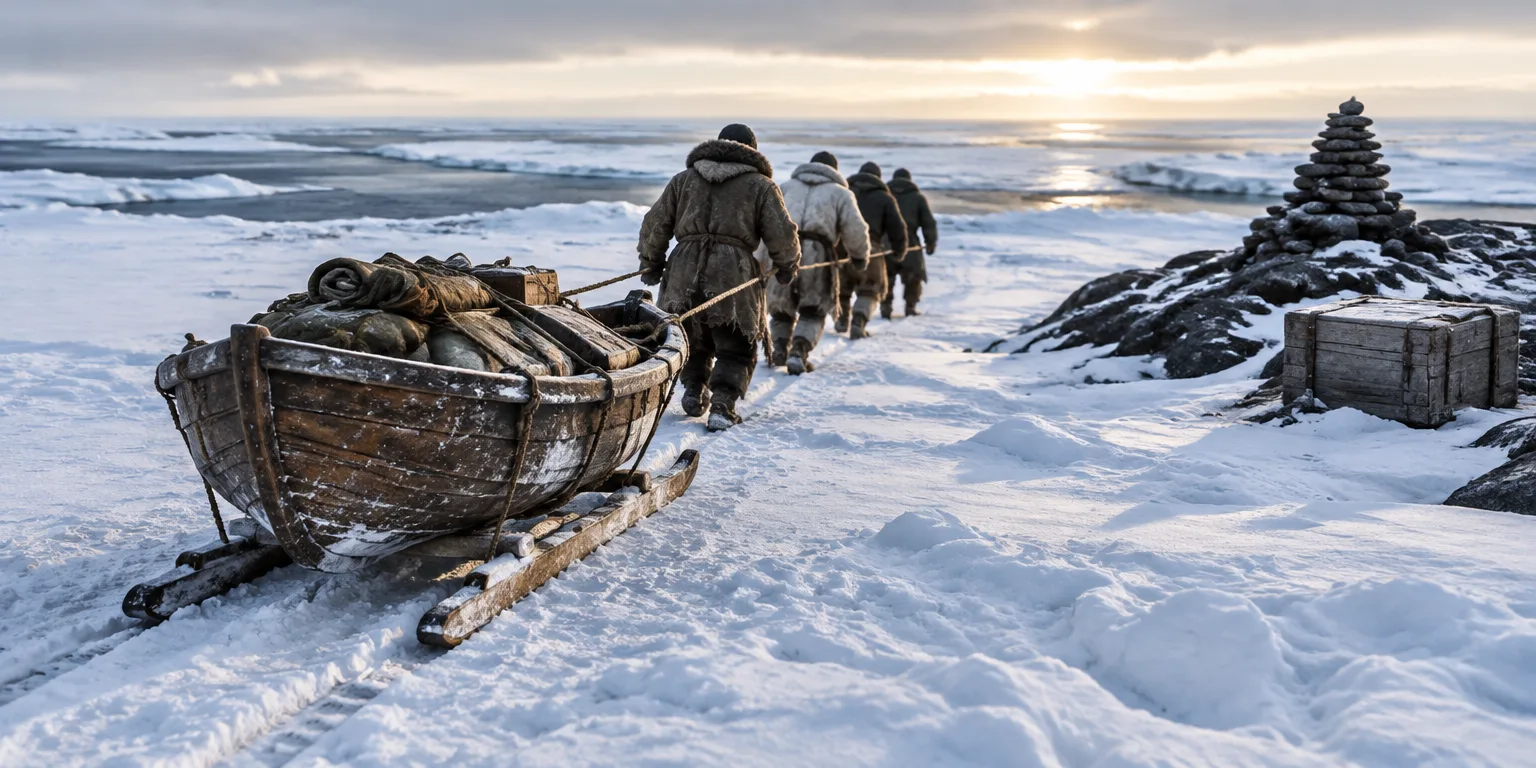
 American History Tellers · Greely Arctic Expedition | The Longest Winter | 3
In 1883, 25 starving American explorers dragged two years of weather records across the Arctic ice, and scientists still use that data to measure climate change 140 years later.
The party was led by U.S. Army officer Adolphus Greely. On September 9, after abandoning their failing steam launch, the 25 men converted lighter boats into sleds and hauled about 6,500 pounds of supplies and scientific records across the frozen sea.
After reaching Cape Sabine, the men built a cramped shelter they called Camp Clay. Greely ordered the crates of records hidden in a rock cairn, so the data from two years of work would survive even if the men did not.
Rescuers later retrieved the crates, and only six men ultimately lived to return home. In 1888, Greely published the findings as more than a thousand pages bound in two books, with photos and detailed accounts, that became a model for later Arctic study and is still used to track how much the Arctic, and the Earth, has changed.
Questions people ask
What exactly was in those scientific records?
The records were systematic weather and climate observations made during two years at Fort Conger in the high Arctic, plus photographs and detailed accounts of their explorations. Because they were collected with discipline, in the same place, over a long period, they provide a rare baseline from the 1880s.
Why is 140-year-old data still useful to climate scientists?
There was no satellite era data, and few people wintered that far north in the 1880s. A continuous, careful set of temperature, wind, and ice observations from that period lets modern researchers compare then and now, and calculate how fast the Arctic has warmed.
How many men survived the expedition?
Of the 25 men who left Fort Conger, six were alive when rescue came in June 1884. One more died on the voyage home, leaving six survivors who reached Portsmouth, New Hampshire, that August. Nineteen members of the expedition died of starvation, illness, drowning, and execution.