Babies Are Not Afraid of Bugs. They Learn It From Us.
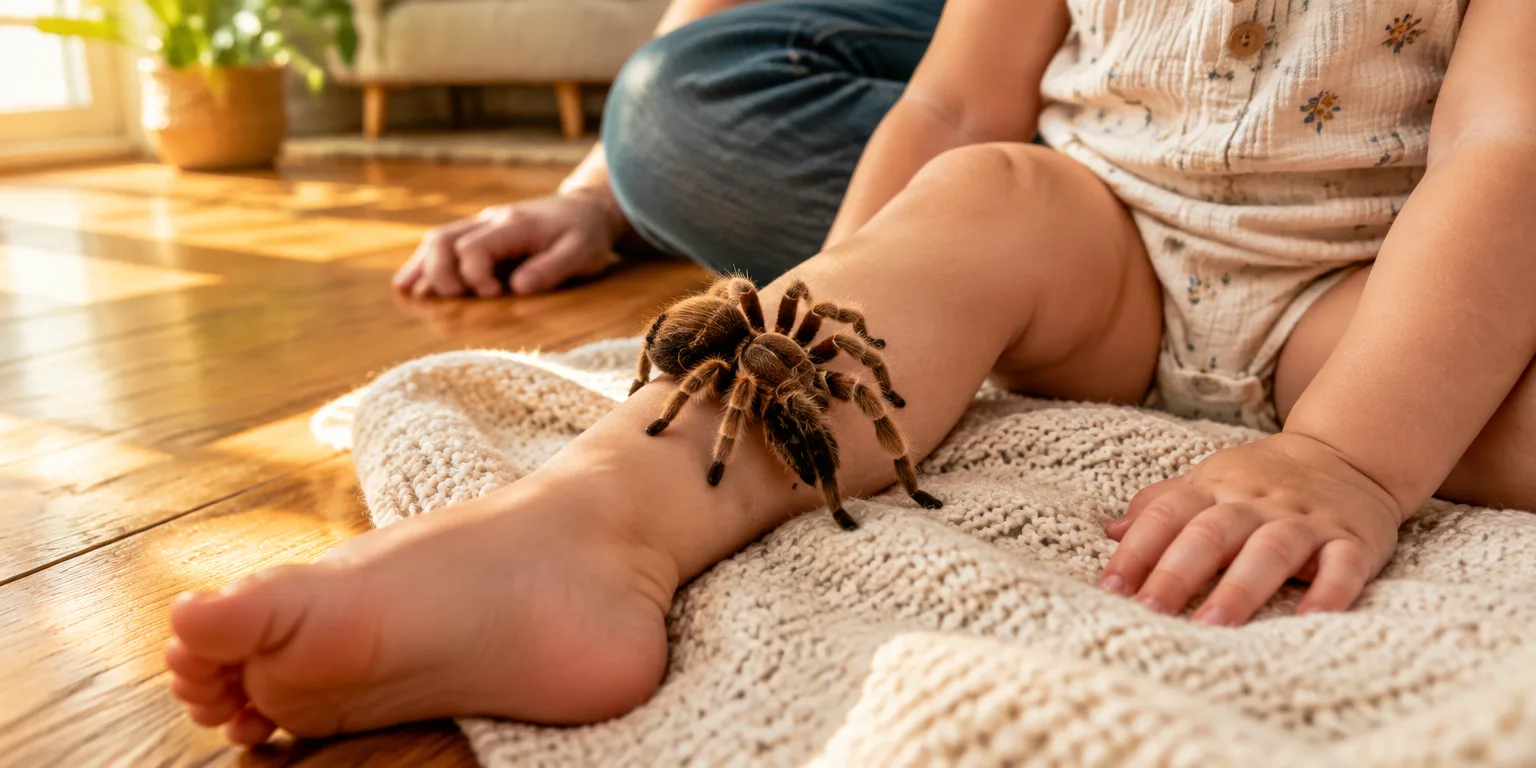
In work at Rutgers, infants let a tarantula walk on them until a familiar adult flinched.
 Science Vs · Where Have The Insects Gone?? With Dr. Jessica Ware
When Jessica Ware, an entomologist, was asked why so many people have a visceral freak-out around bugs, she did not hesitate.
Was it built into us by evolution, or did we pick it up somewhere?
"It's your parents, man," she said. "If there's one time that you could blame your mom, it's now."
Fear, Ware argued, is copied, not inherited. To make the case, she pointed to work by colleagues at Rutgers University, who would bring babies in and show them a tarantula, a large hairy spider, and let it walk all over them. The babies did not mind.
They let the spider roam. They showed aversion only when a parent, or another caregiver with whom they spent a lot of time, showed aversion first. Then the babies followed the adult's lead.
Ware said similar work has been done with snakes and other animals. No one is born knowing to avoid a cobra, she said. We learn to avoid one because we are told many times that a bite is dangerous.
To show what she meant, Ware imagined meeting a scorpion for the first time with no warnings. She would likely find it interesting, she said, and wonder about its curled tail, the drop of liquid at the tip, and what happens if you poke it. She holds back because she has been told that scorpions are the bad guys.
Ware sees the lesson at home. She has two children. Her daughter stayed home with her until she was close to turning one and never became afraid of insects. Her son started day care at six weeks old, around teachers who were uneasy around bugs, and he became fearful of them.
"I'm his mother, and I'm not afraid of insects," Ware said.
Questions people ask
How does a baby learn fear just by watching an adult?
Child psychologists call it social referencing. In uncertain moments, babies check a trusted adult's face and voice, then borrow that reaction. A calm look signals safety, while a gasp or pulled-back hand signals danger.
If I am squeamish around bugs, how can I avoid passing that on?
Ware does not prescribe a method, but psychologists generally suggest modeling calm curiosity. Narrate what you see in a neutral voice, keep your body relaxed, and watch from a comfortable distance rather than forcing contact. Over time, your child borrows the calmer response.
Should children still learn to be careful around some insects?
Yes. Learning caution is different from learning panic. Children still need clear, calm rules about stinging insects, biting insects, and unfamiliar wild animals. The goal is respect and distance, not a scream.