The Movie Raptors Were Not Really Velociraptors
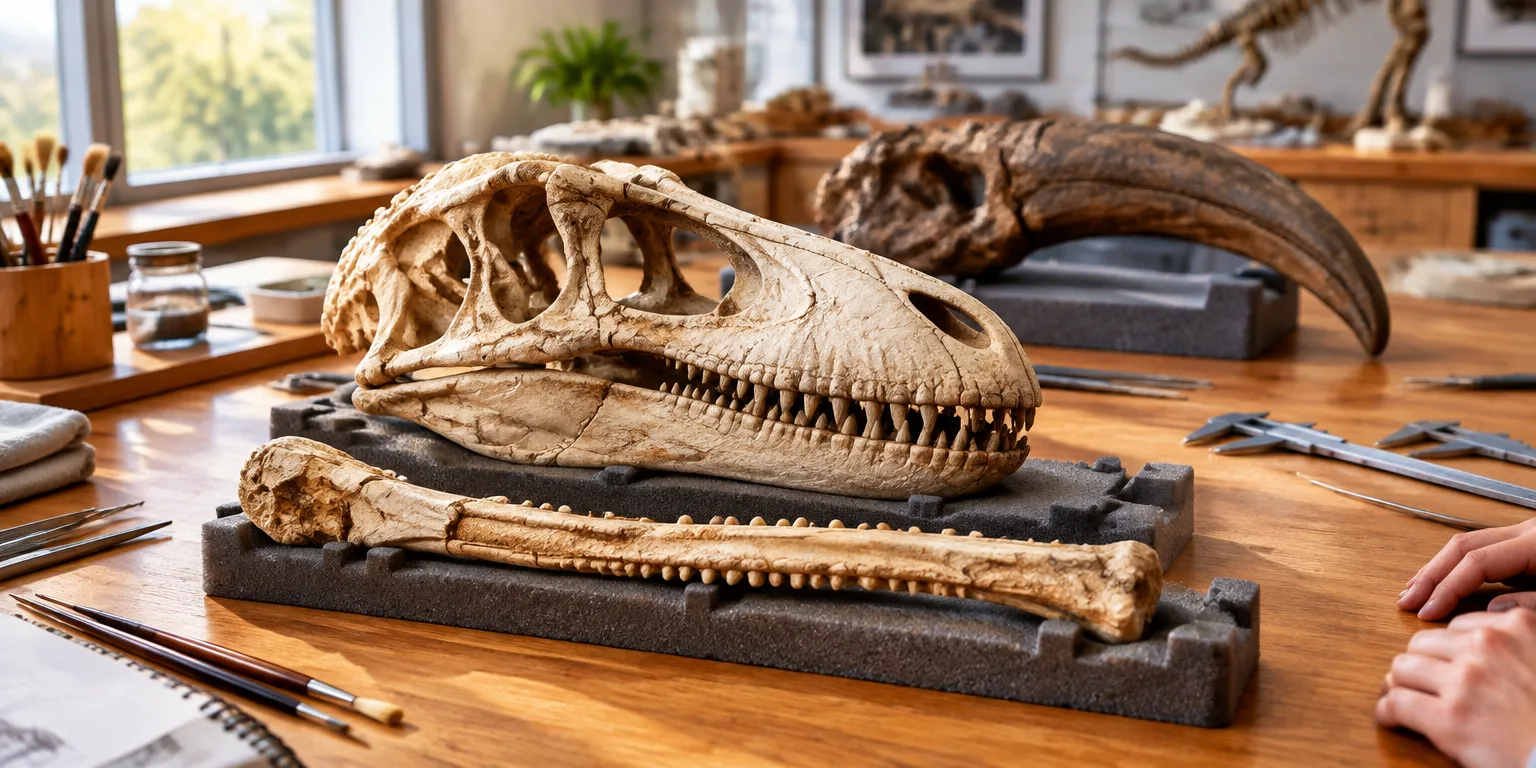
Its skull was house-cat sized and its arm bone shows marks where feathers likely attached; an AI summary read aloud suggested the name was easier to say.
 The Joe Rogan Experience · #2580 - Kenneth Lacovera
The movie raptors were not really Velociraptors.
The real animal's skull was about the size of a house cat.
Paleontologist Kenneth Lacovara describes the animal as a sort of angry turkey, small enough that, as he put it, meeting one in a kitchen would be "more of an opportunity than a problem."
The movie-sized animals were closer to a different raptor, Deinonychus.
One explanation read aloud from an AI summary was that the filmmakers kept Velociraptor because it was more dramatic and easier to say.
Bone evidence points to feathers, with small quill knobs on Velociraptor's arm bone where feathers likely attached, much as on a turkey or vulture.
The first film reflected the best science of 1993, Lacovara says, but later movies kept the old scaly look even as the evidence for feathers grew.
Questions people ask
How can scientists tell it had feathers from just bones?
The main clue is a row of small bumps on Velociraptor's forearm bone, called quill knobs, where feather shafts anchor in living birds. Paleontologists also find preserved feathers on many close theropod relatives. Together, the anatomy and the family pattern make feathers a strong inference.
What was Deinonychus, the bigger stand-in, actually like?
Deinonychus was roughly human-sized, about 11 feet long and built for powerful legs and large curved foot claws. It was also likely feathered, like its smaller relatives. There is no good evidence it was as clever or coordinated as the movie pack hunters.