The Northern Maya Were An Old Civilization, Not Southern Refugees
A foundation three centuries older than the pyramid above it, plus far older cave art, points to deep roots in Yucatan.
 National Geographic · Lost World of the Maya (Full Episode) | National Geographic
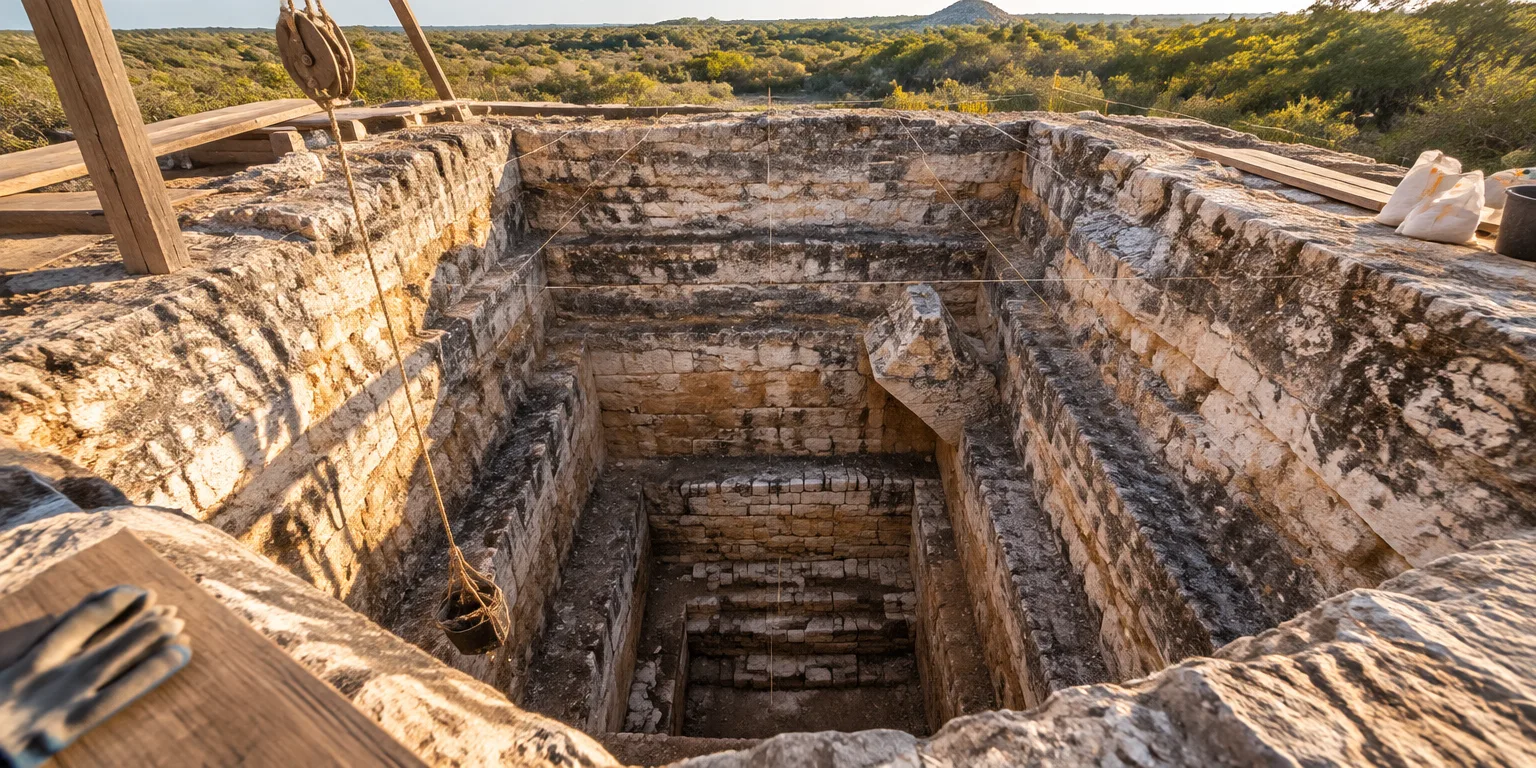
At Kiwik, a forgotten Maya town in Mexico's Yucatan region, archaeologist George Bey sank a shaft straight through a 30-foot pyramid shrine built around 800 A.D. Bey, who had worked at Kiwik for three decades, was acting on a hunch that a royal tomb lay beneath.
Twenty-one feet down, his team found something stranger than a tomb. There was a vault stone, the angled rock used to hold up building ceilings, not pyramids, and below the pyramid's base lay the stepped foundation of an older building.
Pottery fragments dated that foundation to about 500 A.D., some 300 years older than the pyramid above it. That date did not fit the story scholars had long told.
That story held that Maya civilization was born in the south, in Guatemala's Mirador Basin, and that after wars and famine around 700 A.D., refugees fled north. In that account, a refugee king founded Kiwik and built its pyramid.
But the foundation predates that refugee arrival by at least two centuries. Seventeen miles away, another find pushed the timeline back much further.
Archaeologist Fatima Tec Pool descended 230 feet through a narrow cave to a walled-off sacred chamber littered with deliberately broken offering vessels. Deeper inside were wall paintings, including a skinny underworld jaguar and a ghostly hunt with deer.
Judging by how they were painted and the offering pottery left with them, researchers dated the murals to around 100 B.C.E., making them some of the earliest Maya murals known from Mexico.
For Bey, the finds point to one possibility for Maya history. His argument is that the north was not settled late by outsiders but hosted its own deep-rooted society.
He believes a later king at Kiwik built his pyramid directly over an ancestor's palace, with its temple, residence, and throne room, to claim ancestral power. That would make the pyramid builder a descendant of a long local dynasty, not a southern transplant.
Bey puts it this way: "There may have been multiple cradles" and "Guatemala can no longer lay sole claim to the title birthplace of the Maya."
Questions people ask
Where exactly is Kiwik?
Kiwik is a small ancient Maya town in the Puuc hills of Yucatan, Mexico. At its height around 800 A.D., Bey estimates it held perhaps 3,000 to 4,000 people, modest compared with giant southern cities but typical of northern towns.
How can broken pottery date a building or a painting?
Maya archaeologists date pottery by its shape, decoration, and firing technique, which changed in known sequences, and sometimes by scientific tests on associated material. Cave paintings are harder to date directly, so researchers combine painting style with the age of offering pottery left in the same sealed chamber.
What is lidar and why does it matter for the Maya?
Lidar fires rapid pulses of laser light from an aircraft and times their return to map ground elevation. Because some pulses slip through leaves and branches, software can strip away forest canopy to reveal roads, platforms, and buildings hidden below.