In One Test, the Same Dough Tasted Like Bread Dry and Like a Doughnut in Oil
Oil fills the gaps between pan and dough, turning spotty char into even, golden browning.
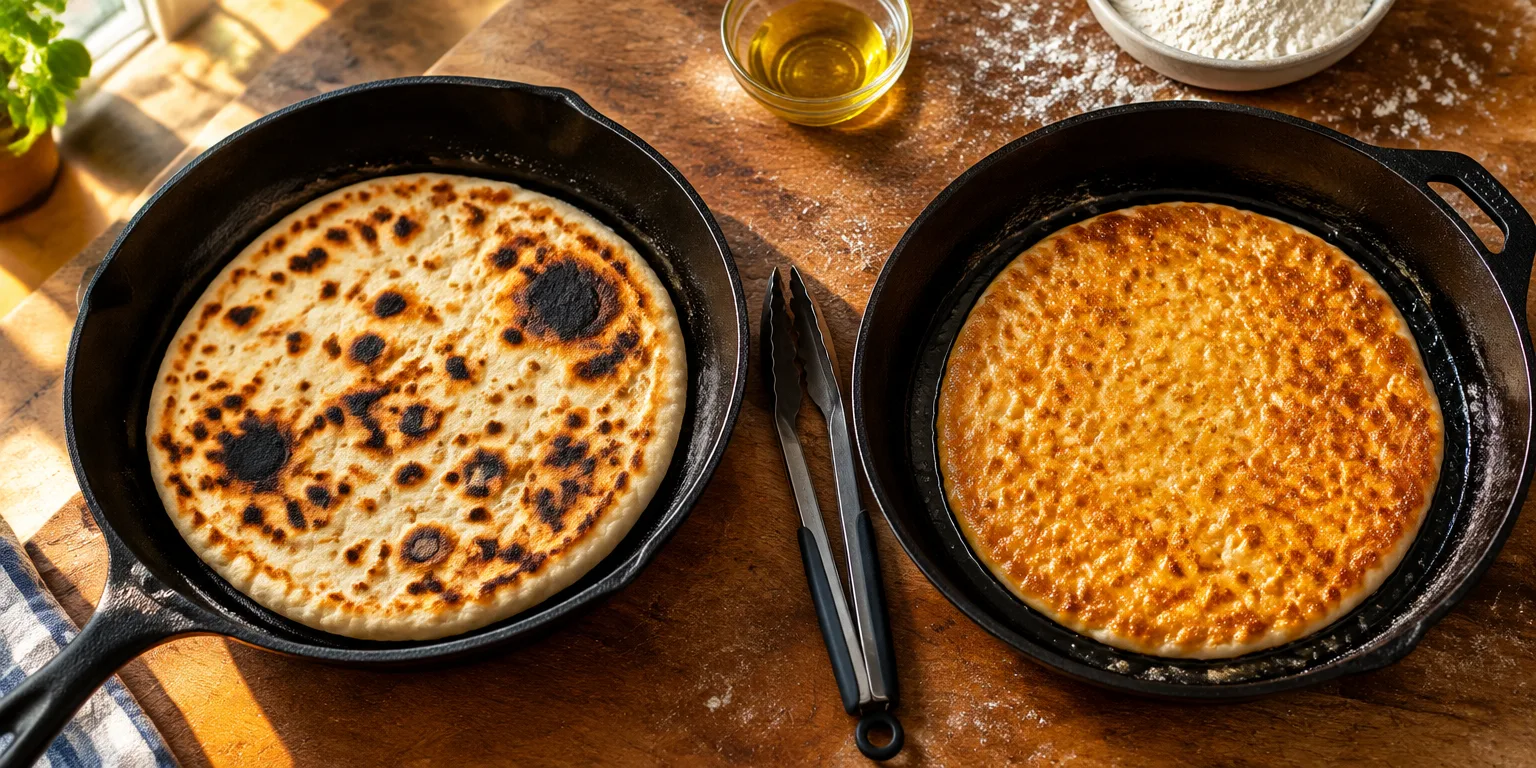
 Adam Ragusea · Why we cook food in oil
In a side-by-side test, a cook found the same pizza dough, used as a stand-in for Indian-style flatbread, tasted like bread when cooked dry and like a doughnut when cooked in oil.
Cooked in a dry pan, the dough developed sharp, highly localized black spots where it touched the hot metal. Cooked with oil, it turned an even, golden brown all over.
The difference is heat contact. Oil acts as a thin layer that fills the tiny gaps between pan and uneven dough and carries heat broadly across the surface, so more of it can brown.
The bread-versus-doughnut comparison was the cook's impression from that single tasting. The test did not show why the flavor changed.
Questions people ask
Why might more browning change flavor?
Browning is not just color. When sugars and proteins get hot enough, generally above about 330 degrees, they undergo the Maillard reaction and caramelization, creating many new flavor compounds that taste toasty, nutty, and sweet. The test did not show whether that explained the doughnut impression.
Does the oil itself add the doughnut flavor?
Probably not much. Most plain cooking oils are neutral in flavor, while flavored fats like butter, ghee, or sesame oil would add more of their own taste. The cook did not test how much the oil's own flavor mattered here.
Is dry-cooked flatbread a real style, or just an experiment?
Yes, cooks do it all the time. Many Indian flatbreads like chapati and some naan are traditionally cooked on a dry griddle or directly over a flame for a chewy, wheaty result. Rubbing them with ghee or oil afterward adds richness without changing how they browned.