The Slimy Blob in Your Kombucha Is Alive
Brewers call it the Mother, and it turns sweet tea into the tart, fizzy drink.
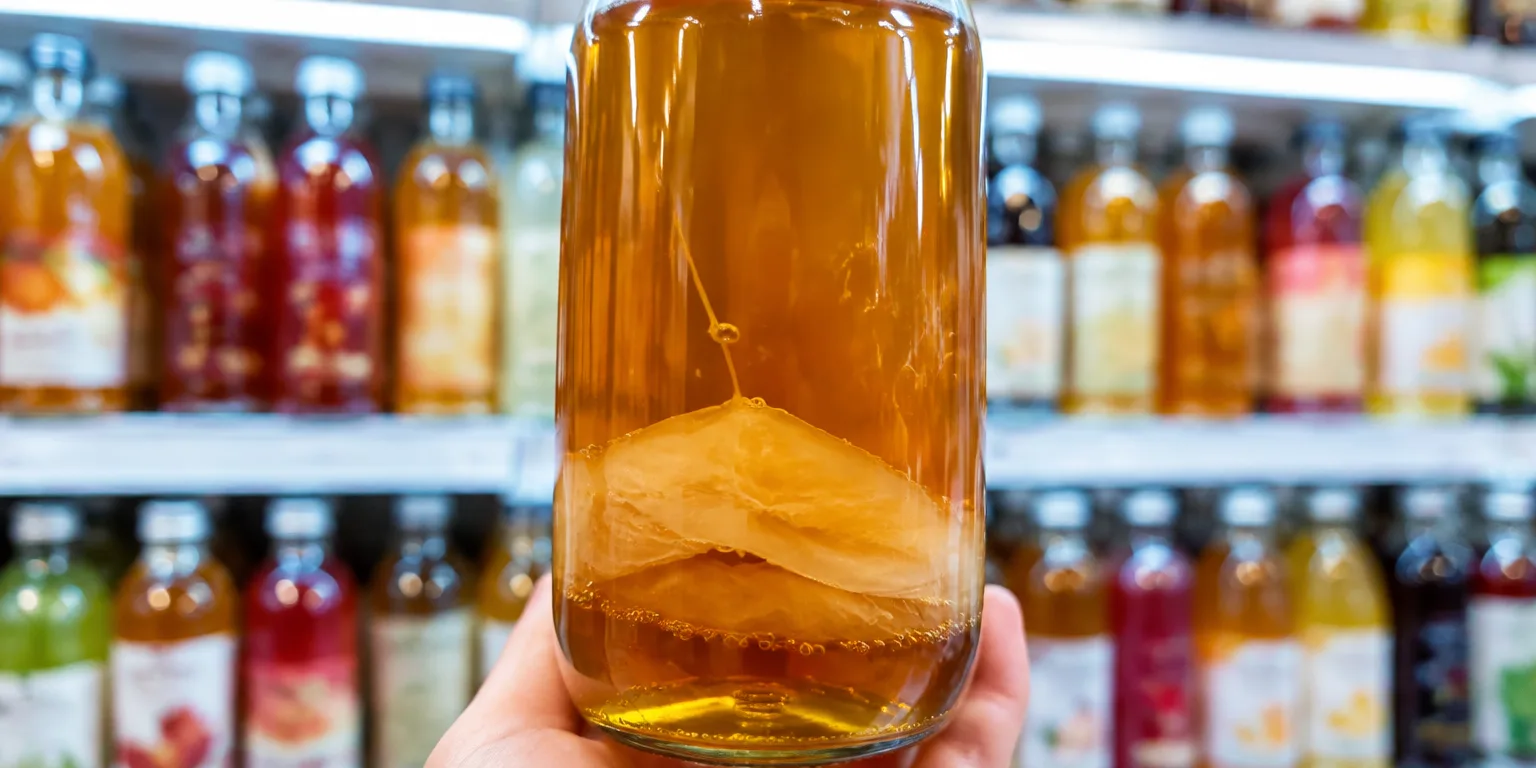
That slimy blob at the bottom of a kombucha bottle is alive.
In a humor essay about a trip to Whole Foods, the writer describes walking through sliding glass doors into "cool, moist air that smells of strawberries and orchids".
The first thing she sees is a wall of 42 kombuchas, which she jokingly calls rotten tea.
She singles out "the glob of mucus at the end of the bottle", writing that she believes the thing is called the Mother, and jokes that anyone who has swallowed it knows what she means.
Brewers describe that blob as a living colony of bacteria and yeast that feeds on sugar in sweet tea and ferments it into the tart, sour, and lightly fizzy drink.
Brewers say it is the culture that makes kombucha, not a sign the tea has gone bad, despite the essay's joke about rotten tea.
Questions people ask
What is the blob actually made of?
Brewers describe the Mother as cellulose fiber made by the bacteria, holding some of the yeast and bacteria that ferment the tea. They treat it as a normal part of unfiltered kombucha, though many drinkers strain it out because of the texture.
Why does kombucha taste sour and fizzy?
The sour taste comes from acids the bacteria make as they eat sugar, mainly acetic acid, the same acid in vinegar. The fizz comes from carbon dioxide released by the yeast during fermentation. Together they give kombucha its sharp, sparkling bite.
Can you use the Mother to make kombucha at home?
You can, and many people do. A piece of a Mother plus sweetened black or green tea will start a new batch at room temperature in a week or two. The main rules are clean jars, no metal, and patience while the culture works.