The Top Gun Producer Made Up a Criminal Past to Match His Movies
Classmates remembered a shy, suit-wearing teenager, not a teenage felon elected class president from jail.
 Behind the Bastards · Part One: Don Simpson: The Producer of Top Gun Also Ruined Hollywood
At age 15, Don Simpson called himself "the baby face Nelson of Anchorage," a car thief with four felony convictions who had still been elected class president while sitting in jail. It was a compact story, with crime, punishment, and unlikely triumph in one package. None of it checked out.
Simpson, the film producer who would help make Top Gun, Beverly Hills Cop, and Bad Boys, spent his fame revising a quiet Alaska boyhood into the kind of rebel origin his movies celebrated.
Biographer Charles Fleming, who interviewed people who grew up with Simpson in Spenard, heard a different memory. They described a pleasant, chubby, and shy boy, well-mannered and quiet, who avoided the fistfights common at North Star Elementary and West Anchorage High.
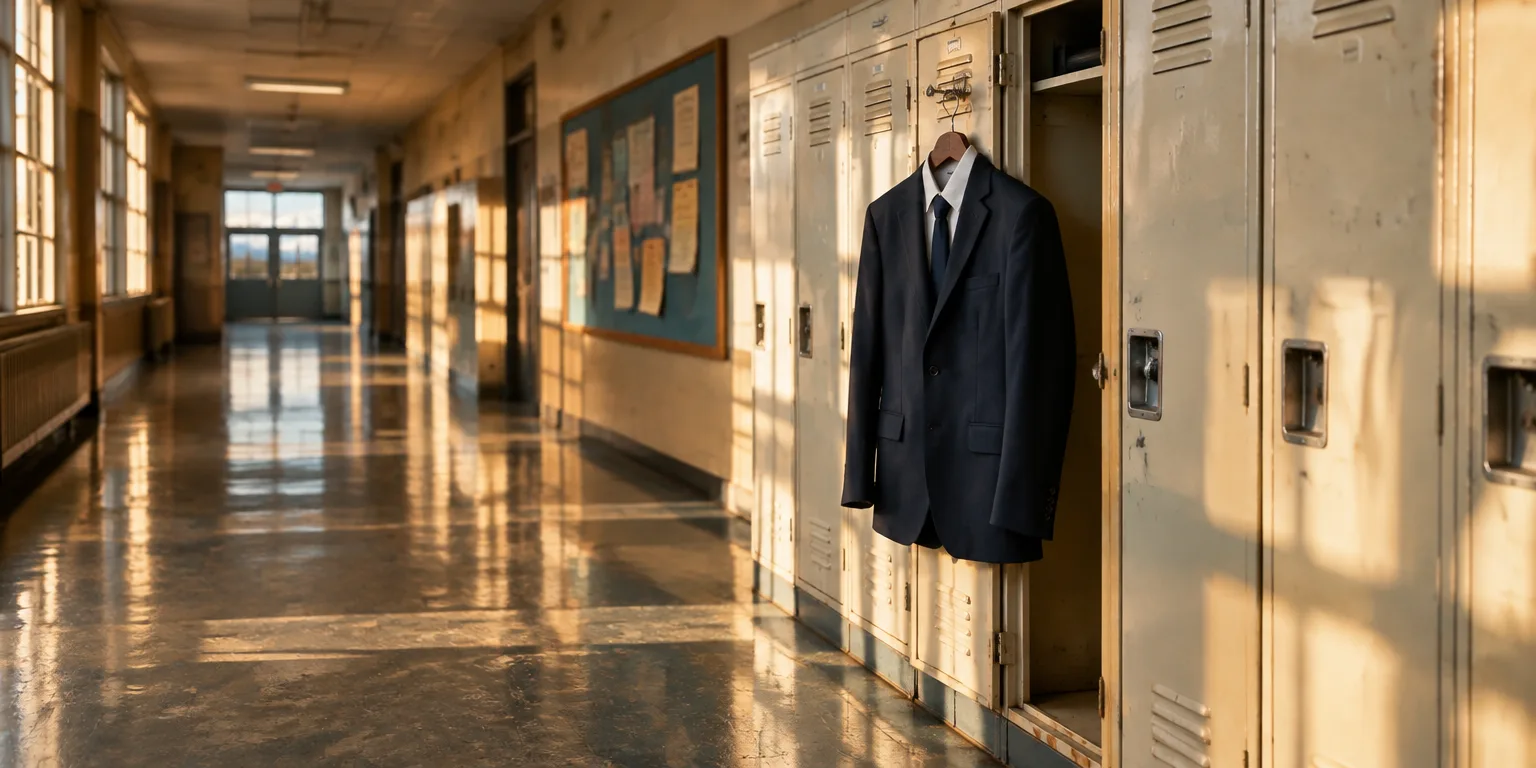
Classmates said he had friends among boys and girls, danced well, did not smoke or swear, and dressed so carefully in full suits that he was voted best dressed. Classmate Bowen later recalled that Simpson did not even join the parking-lot scuffles other boys treated as routine.
Simpson told wilder versions. He said he had been killing moose to keep his family fed since he was seven, and that Spenard offered nowhere to buy food, though shops served the town. He painted his father as a stern outdoorsman with a fierce temper who hurled him into a wall and kicked him as he fell.
The details sounded cinematic rather than specific, the kind of beating imagined for a movie rather than remembered from a house. College records also undercut another favorite boast, that he had been elected president as a freshman while facing charges, at a school where officials said there was no freshman government to lead.
Other variations kept the same shape. Sometimes a small-town policeman threatened him with prison and set him straight. Sometimes it was a judge offering a choice between college and prison. Each version ended with the same fork in the road, trouble on one side and rescue on the other.
Researchers found no criminal record for Simpson as an Alaska youth. Childhood friend Butcher Miller remembered his parents differently, as quiet, hardworking people who stretched to buy Don a car and send him and his brother to college, opportunities they had not had themselves.
Some corporal punishment was likely extremely common in Alaska in the 1950s. But his peers suggested he had it no worse than anyone else, and certainly was not an out-of-control teen forced to choose between college and prison.
The boring truth may have been the motive. A conservative kid who wanted out of Alaska later gave himself a past dramatic enough to justify the escape, a delinquent with a heart of gold who finds redemption just in time.
Questions people ask
Was any of the abuse Simpson described true?
There may have been some. People who knew the family do not rule out harsh discipline, which was common in 1950s Alaska, and one former assistant recalled Simpson's mother saying she shut him in a closet for hours. What friends dispute is Simpson's cinematic account of uniquely monstrous parents and constant beatings.
Did Simpson actually have a juvenile criminal record?
Researchers found no record of it. Biographers report no Alaska criminal record for Simpson, and neither classmates nor school and college officials recalled felonies, jail time, or elections won from a cell. The crime wave appears to have existed only in interviews he gave after becoming famous.
What movies did Simpson go on to make?
He became one of Hollywood's most successful producers of the 1980s and 1990s. With partner Jerry Bruckheimer, he helped make Flashdance, Beverly Hills Cop, Top Gun, Bad Boys, and The Rock, films built around brash outsiders who break rules and still win.