Two Obvious Suspects Looked Guilty, but Tests Cleared Them
A radio host's cruel jokes and a boyfriend's vanishing act made both men look like killers.
 Dateline NBC · Hunted
In Clovis, New Mexico, morning listeners knew Jeff McNaughton as Duffy Moon, the talkative half of a popular radio show. On the air he mocked his divorce from ex-wife Laura, calling her a bad cook and picking apart "who she was as a person," as her mother, Lucky Beardmore, put it, adding that the whole town heard it.
Laura's sister Crystal said Laura was hurt and embarrassed that years together and children together had become public business. She said Laura felt the town knew their business because he put it out.
A week before Laura was found dead, Jeff had taken part in a Christmas fundraiser in which he was buried in a hole until donations reached a target. Investigator David Loera recalled Jeff joking about how he could get his wife into one of those holes, a remark that stuck with him.
That history made Jeff an early focus, and railroad conductor Joel Delaney, the man Laura had been casually seeing, soon joined him. Joel would be cleared by a lab test and a tight timeline, Jeff by a polygraph and confirmed whereabouts.
Jeff broke down when district attorney Matt Chandler showed him Laura's tattoo in a briefing, and Jeff said that was her tattoo. He denied killing her and gave what Loera called far from the most solid alibi, leaving Loera unsure if the grief was real or a radio performer's performance.
Joel had planned to meet Laura after work the night she died. Friends at a bar said he left for about 90 minutes to two hours and came back showered and in different clothes, around the estimated time of her death.
After two days in Albuquerque, Joel agreed to answer questions and said Laura called around 10:15 p.m. to cancel, saying something came up. He repeated that he went home, changed and returned, then grew defensive under repeated questions and stopped the interview before a planned polygraph.
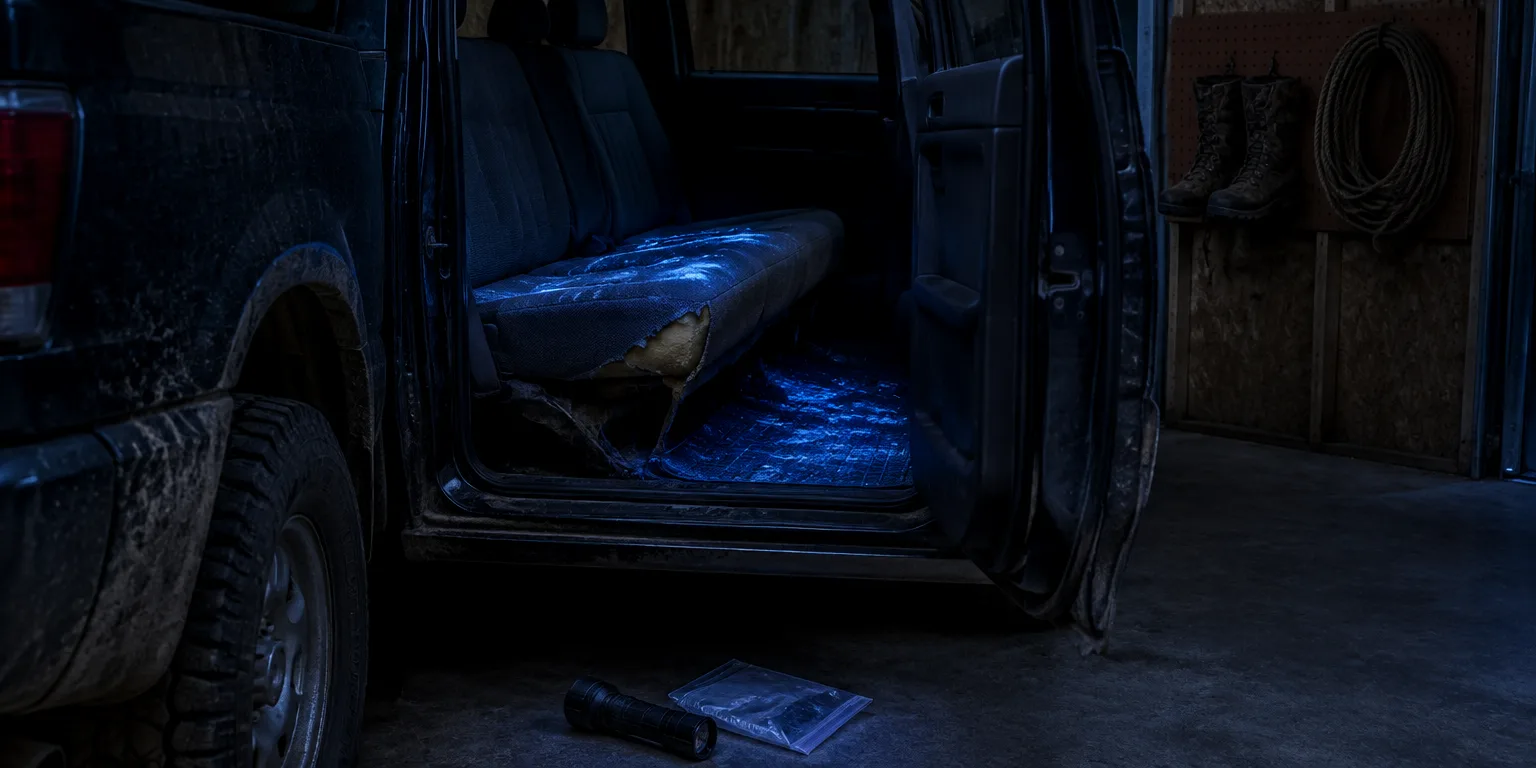
With his permission, police treated the back seat of Joel's pickup truck with luminol and it lit up with blood that looked cleaned up or soaked in. Joel first said he could not explain it, then said it was blood from hunted birds, and detectives removed a section of seating for testing.
Bird hunter Josh Cookta said hunters put birds in the pickup bed, not the back seat, and Matt Chandler said he had never put game in a truck back seat. Joel had agreed to take a polygraph, then consulted a lawyer who advised him not to take it, and polygrapher Patrick Whitney said pulling out like that made him a little more suspicious.
Then the lab found the blood was not human, confirming his bird-blood account. Police also concluded Joel had not been away from the bar long enough to commit the killing, and cleared him.
Jeff then took his polygraph. Whitney asked if he strangled Laura or knew for sure who did, and Whitney said Jeff answered no without difficulty and passed with flying colors. Jeff had said he had remained at home with his daughters, and investigators said they confirmed his whereabouts that day.
Loera described the frustration as extreme. With the ex-husband and the boyfriend ruled out, investigators had to keep their eyes open and look at everyone else in town who knew Laura.
Questions people ask
How does luminol find blood that was cleaned up?
Luminol is a chemical that glows blue when it touches iron in blood, even after someone tries to wash it away. Police spray it in a darkened car or room to find stains they cannot see. A glow is only a screen, so a lab must later test whether the stain is human blood.
How reliable are polygraph tests?
A polygraph measures breathing, sweat, heart rate, and blood pressure while an examiner asks yes or no questions. The theory is that lying causes stress that changes those signals. Courts often bar the results because anxiety, health, and technique can affect them, so police use them as an investigative tool rather than proof.