Van Gogh's Starry Night Shows What He Felt, Not What He Saw
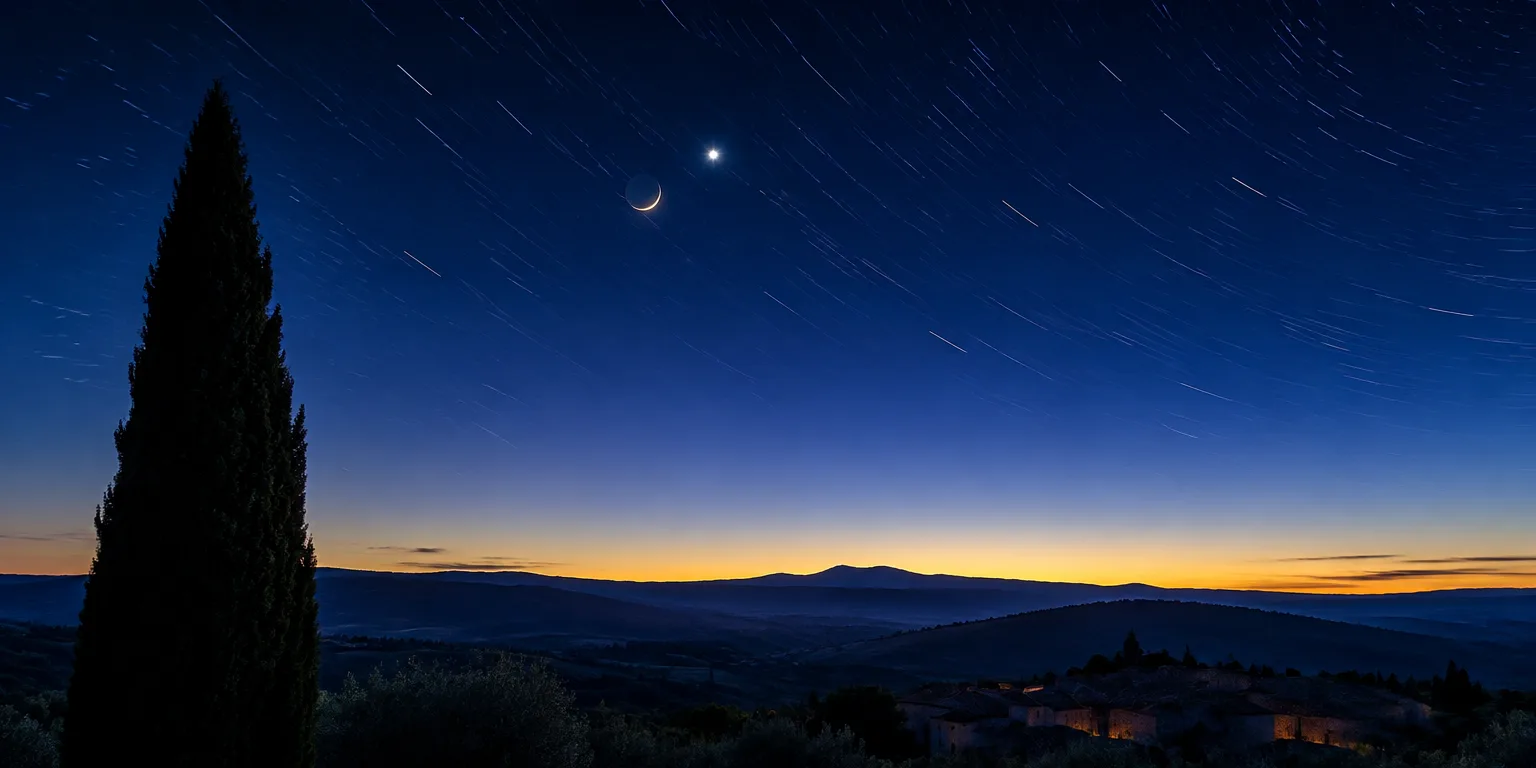
The crescent moon and Venus pin the scene to predawn in the summer of 1889.
 StarTalk with Neil deGrasse Tyson · Cosmic Queries – Curiosity, Conspiracies & the God Particle with Jordan Klepper
Vincent van Gogh's The Starry Night does not show the sky as it ever looked, even on the night he painted it. It shows what he felt when he looked at it.
That is the verdict of astrophysicist Neil deGrasse Tyson, who keeps a chart of the real stars, moon, and planets from that night behind his desk for comparison.
The clues are the crescent moon and the bright planet Venus beside it. Their angle to each other and their height above the horizon match the early morning sky over southern France around 4:30 to 5:30 a.m., near the summer solstice in 1889.
The swirls and glowing orbs are invention, not observation. That difference, Tyson says, is the point, a chance to share an artist's inner response to the night sky.
Questions people ask
Where was Van Gogh when he painted The Starry Night?
He was a patient at the Saint-Paul-de-Mausole asylum in Saint-Remy-de-Provence in southern France. He painted the picture in June 1889, largely from the view outside his east-facing window, combined with memory and imagination.
Why does Venus look like an especially bright star?
Venus is covered in thick clouds that reflect sunlight very efficiently, and it orbits closer to the Sun than Earth does. When it appears near the horizon before sunrise or after sunset, it can outshine every star in the sky. That is why it is often called the morning star or the evening star.
Are the swirling stars in the painting completely imaginary?
No, although they are greatly exaggerated in size, brightness, and motion. Van Gogh worked from a real predawn sky containing the Moon, Venus, and stars, then transformed them with spirals and halos. Astronomers have also noted that some swirling forms resemble wind and turbulence patterns in nature.